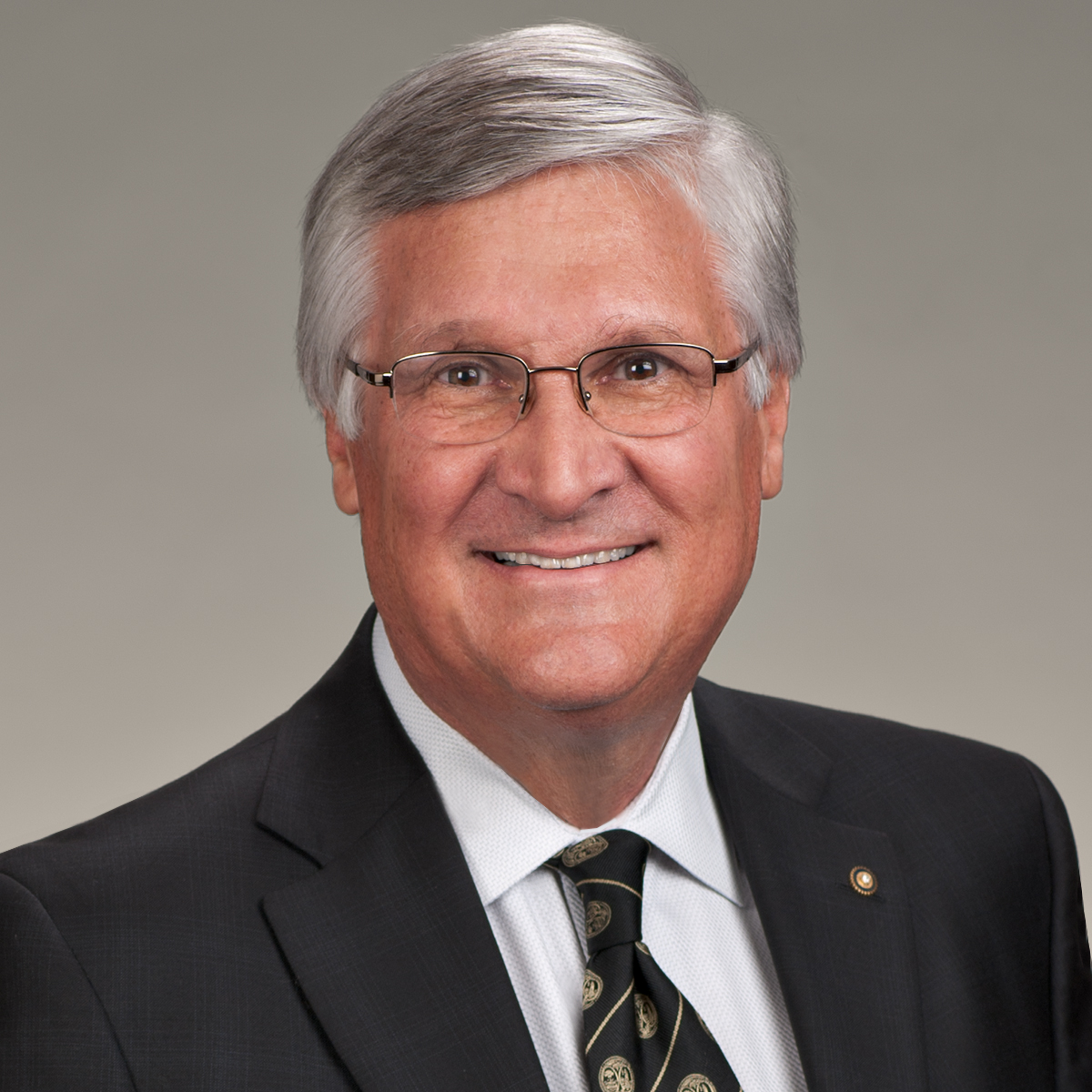
Hall of Fame attorney is a master of the fine art of legal storytelling
Articles
Spotlight
View more from News & Articles or Primerus Weekly

By Brian Cox
True to his Southern heritage, attorney Joel W. Collins, Jr. is a born raconteur.
Quick with a quip or quote, he is equally adept at delivering amusing anecdotes and can provide detailed, passionate retellings of cases from years past. An accurate account of his storied legal career would fill a book.
Fortunately, Collins has written one.
“The First Fifty Years Are the Toughest: A Lawyer Looks Back on His Life” offers a sampling of the hundreds of cases Collins has been involved with since he earned his law degree in 1968. He wrote the book during COVID when he had some extra time on his hands. He’s handed out more than 1,700 copies to friends, families, colleagues, and his students.
“My wife says I give one of these books to anybody I suspect can read,” says Collins wryly, adding with a smile. “I tell people all the time that this is one of those books that once you put it down, you have a hard time picking it back up.”
Collins’ legal memoir is a captivating and engaging look back at an accomplished law career that spans decades and offers a host of tips and insights handy for any young attorney looking to emulate Collins’ success.
“I believe one of the best ways for any lawyer to improve his or her ability is to read anything and everything about the law and the legal profession,” writes Collins. “If a lawyer aspires to be a capable courtroom lawyer, reading books about a trial lawyer provides the opportunity to learn about investigating, fact gathering, researching, preparing and presenting a case in such a way as to represent a client to the best of one’s ability.”
The cover photograph sets the tone. Five-year-old Joel Collins stands in a football uniform, a ball tucked securely in the crook of his right arm. His left fist is clenched. His face bears a fierce, almost comic grimace. He looks as though he is charging headlong into a defensive line that only he can see. People called him “Joe Too.”
The image carries metaphorical weight.
Collins grew up in Chester, South Carolina, the son of Joel Wyman Collins – “Big Joe” – a legendary high school football coach who played in the 1928 Clemson–Carolina rivalry game for what is now Clemson University. His father played tackle and, Collins notes with pride, was the only player on the field for the entire 60 minutes of the game.
Big Joe was strict and demanding but loving.
“You could get a spanking for talking sassy,” Collins says. “But he was a great coach and a great motivator.”
Players adored him. They visited long after their playing days were over.
His mother, by contrast, embodied gentleness and quiet strength. Collins says one of the proudest days of his life was when she was selected as Clemson Mother of the Year at his alma mater. She lived to be 103.
Collins spent his junior year of high school attending Riverside Military Academy in Gainesville, Georgia. He recalls the superintendent directed the students each day at chapel to “Hold yourself up and be somebody.”
Collins would take the advice to heart.
In 1961, when he was 17, Collins headed off to Clemson to begin a relationship with the university that would last a lifetime.
“I tell people I arrived on the Clemson campus with matching luggage,” he says. “Everything I owned was in two Piggly Wiggly grocery bags.”
He initially declared a major in ceramic engineering. An older brother and a brother-in-law were engineers; it seemed like the sensible path. But an aunt in Houston once told him, when he was about 10, “I always thought you’d be a lawyer.” The comment lingered.
After a year of engineering studies, he pivoted to English with an eye toward law school. He became the first in his family to attend law school, graduating from the University of South Carolina School of Law in 1968.
That same year, as war escalated in Vietnam, he joined the Judge Advocate General’s Corps. His first trial, at Fort Leavenworth in Kansas, involved prosecuting seven inmates at the Army Disciplinary Barracks. He secured convictions against all seven.
Not long after, he received orders sending him to Vietnam. He landed at Tan Son Nhut Air Base and was assigned to the 23rd Infantry Division near Chu Lai. He tried case after case – sometimes back-to-back – in a war zone.
“I later told people my experience in Vietnam taught me how important preparation is for trial lawyers,” he writes.
He also taught soldiers about the Geneva Conventions and the laws of warfare – a responsibility that deepened what he describes as a lifelong “love affair with the U.S. Constitution.”
Throughout his professional life, he has collected books on America’s founding era, the War for Independence, and constitutional history. He taught about the Constitution at the United States Military Academy and today teaches a constitutional course at the South Carolina Honors College, often described as one of the nation’s premier public honors programs.
On the first day of class, he gives his students a leather-bound copy of the Constitution and other founding documents in which he writes “Aim High.” On the day of their final exam, he gives them pizza and a signed copy of his memoir with a personal note.
“When I talk to my class,” he says, “I tell them we look at the virtues celebrated in our founding fathers – integrity, dedication, commitment to high standards.” He quotes Winston Churchill: “The greatest virtue of all is courage. That’s the virtue that makes all the other virtues possible.”
And then he quotes Edmund Burke: “The means by which Providence raises a nation to greatness are the virtues infused into great men.”
To Collins, these are not abstractions. They are guideposts.
After his military service, Collins returned to South Carolina and became an Assistant U.S. Attorney from 1974 to 1979. He prosecuted white-collar cases, including what he describes as the first Medicaid fraud case in the United States.
His next career step led him to Nelson, Mullins, Riley, & Scarborough, a small firm that at the time had around 20 lawyers. A mere three years later, he was ready to open a solo practice. In 1984, he combined his practice with Stanford E. Lacy to establish Collins & Lacy, P.C., a firm devoted to professional liability and complex civil litigation.
Over time, Collins has defended health care providers, lawyers, financial advisors, pharmacists, insurance professionals – anyone whose livelihood hinged on reputation and licensure.
His office displays mementos from a life in trial practice: a blown-up latent fingerprint, a bronze hammer fashioned from a truck transmission pin, and a note slipped to him by a colleague after a particularly effective cross-examination reading simply, “Fandamntastic.”
He believes that law is a profession, not a business.
“I don’t let people call it a business,” he says. “We are here to carry on the lofty goals of the legal profession.”
He became national president of the American Board of Trial Advocates (ABOTA) in 2015 and previously served as president of the ABOTA Foundation. In 2008, he spoke in Lisbon, Portugal, demonstrating the American jury system to Portuguese lawyers and judges.
Within his own firm, Collins emphasizes relationships. He makes it a point to invite every new lawyer to lunch at the Palmetto Club where he presents them with a copy of his book and asks about their families, their hobbies, and their ambitions.
“I get to know them, and I think developing a relationship like that is important,” he says. “Lawyers who practice together need to socialize. It’s easy to lose someone who’s not really your friend.”
His book is peppered with kernels of professional wisdom gleaned from decades of practicing law.
He writes, “When lawyers speak of the ‘facts of the case,’ they are referring to the facts on the table so far. There are often rocks concealing other facts which could lead to a contrary factual conclusion… The job of any lawyer, especially a defense lawyer, is to look under every rock.”
He likes to tell people that “The main difference between a jury trial and a school play is cross-examination.”
And: “Originality is remembering everything you have heard and forgetting where you heard it.”
And: “Conflicts of interest going in look like a BB gun hole. Coming out, they look like a 12-gauge shotgun.”
Or: “Jurors who take notes are paying close attention and they are usually leaders during deliberations.”
In his memoir’s final chapter – spanning more than 50 pages – Collins recounts his defense of state legislator Luther Langford Taylor Jr., who was indicted in 1990 under the Hobbs Act for alleged extortion tied to a proposed off-track betting bill.
Collins took the case when his firm was small. Taylor could pay only $30,000. Collins would ultimately devote what he estimates to be hundreds of thousands of dollars’ worth of time over seven years in his efforts to clear Taylor.
From nearly the outset of the case, Collins believed the prosecution was withholding exculpatory evidence. As a former prosecutor, he knew how investigative files were built. He pressed for discovery but was accused of speculating. Motion after motion was dismissed.
At trial, a jury convicted Taylor on all charges, but on appeal Collins won reversal of the conviction and a new trial. With renewed discovery under a new U.S. Attorney, Collins was proved right – documents poured in, including hundreds of FBI 302 reports and tape recordings that had not been produced before trial.
The presiding judge ultimately dismissed the indictment with prejudice in a blistering 97-page order, criticizing the government’s silence and misrepresentations. Taylor, who had developed pancreatic cancer, lived just three weeks beyond the dismissal.
“I consider it the worst case of prosecutorial misconduct in the history of the United States,” Collins says, still visibly stirred.
He credits his wife, Rhonda, to whom he dedicated his memoir, for getting the ruling that dismissed the case against Taylor.
“She spent untold hours reviewing the enormous file in the ‘evidence room’ the judge ordered to be created,” says Collins with pride. “And she just blew them away with her affidavit and testimony at the final hearing.”
Collins’ long, distinguished career has produced numerous accolades. He has received the Governor’s Order of the Palmetto, South Carolina’s highest civilian honor, and induction into the inaugural class of the South Carolina Lawyers Weekly Hall of Fame.
Collins humbly concedes that he’s been told many times over the years that he possesses a gift for storytelling.
“I think that is a great asset for an attorney,” he says. “When a lawyer stands up and talks to a jury in an opening statement or in a closing argument, he needs to tell a story. And it needs to be compelling and interesting. That comes kind of naturally to me. I don't have to struggle with that.”