

Charleston, South Carolina, U.S.
Articles
Travelogues
View more from News & Articles or Primerus Weekly

By Tom Kirvan
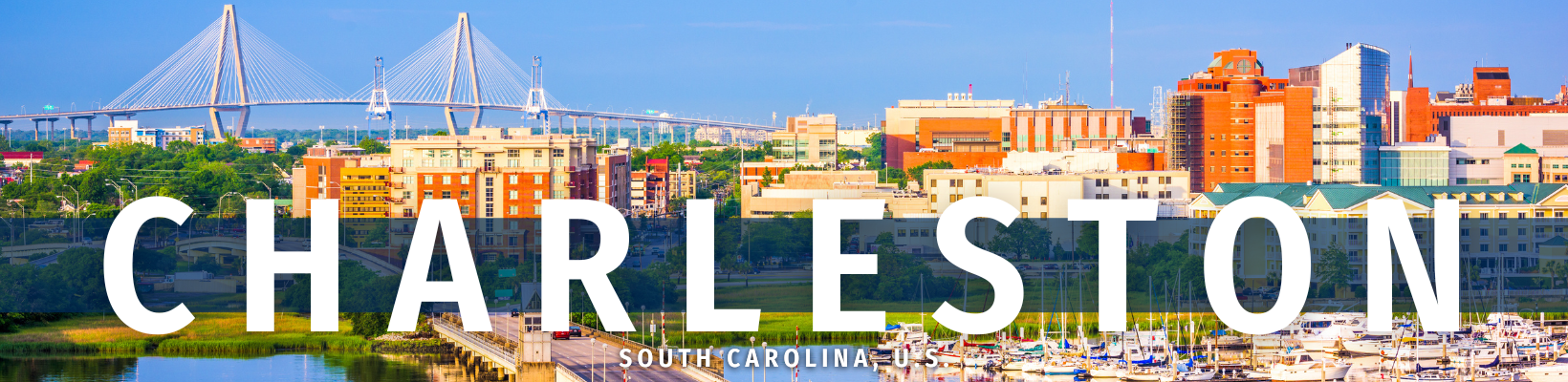
Charleston stands at the meeting point of land and sea, history and refinement. Founded in 1670, the city is defined by its relationship with water, as two rivers, the Ashley and Cooper, converge here before opening into Charleston Harbor and the Atlantic Ocean beyond. That geography shaped Charleston’s rise as one of the most prosperous colonial cities in America and continues to shape its identity today.
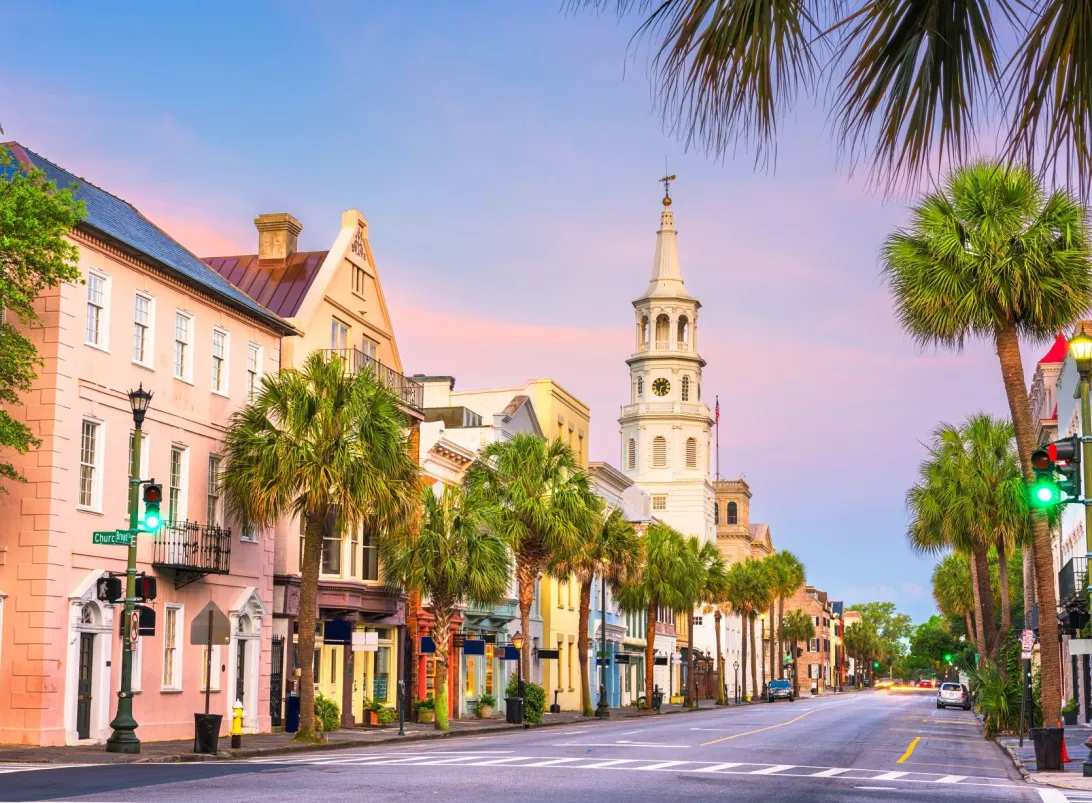
The Historic District unfolds in a series of narrow streets lined with pastel townhouses, wrought-iron gates, and hidden gardens. Rainbow Row, a stretch of Georgian homes painted in soft hues along East Bay Street, has become one of the city’s most recognizable images, originally restored in the 20th century to preserve Charleston’s architectural legacy. Just steps away, the Battery promenade traces the southern edge of the peninsula, offering sweeping views of the harbor and Fort Sumter in the distance.
Charleston’s architecture tells a story of adaptation. Earthquakes, hurricanes, fires, and war forced builders to innovate, resulting in distinct features like piazzas – long, shaded side porches designed to catch coastal breezes – and elevated foundations to manage flooding.

February 25-27, 2026
Hank’s Social Hall
10 Hayne St., Charleston, SC 29401
History here is unavoidable and often sobering. Charleston was a major hub of the transatlantic slave trade, and its wealth was built in large part by and with enslaved labor. Sites like the Old Slave Mart Museum and the recently opened International African American Museum confront that history directly, offering context and perspective essential to understanding the city’s past and present. Nearby Fort Sumter, where the first shots of the U.S. Civil War were fired in 1861, anchors Charleston’s role in American history.
Yet Charleston is far from frozen in time. The city’s cultural life is vibrant and evolving. Spoleto Festival USA, to be held this year from May 22 to June 7, transforms Charleston into an international arts destination, featuring opera, theater, dance, and music performances staged throughout historic venues. In May, the Charleston Wine + Food Festival celebrates the region’s culinary heritage, highlighting Lowcountry traditions rooted in Gullah Geechee culture.
Food is central to Charleston’s identity. The city is often credited with shaping Southern cuisine through dishes like shrimp and grits, she-crab soup, and rice-based recipes tied to the tidal plantations that once surrounded the city. Today’s chefs reinterpret those traditions with modern technique while honoring their origins, making Charleston one of the most influential food cities in the country.
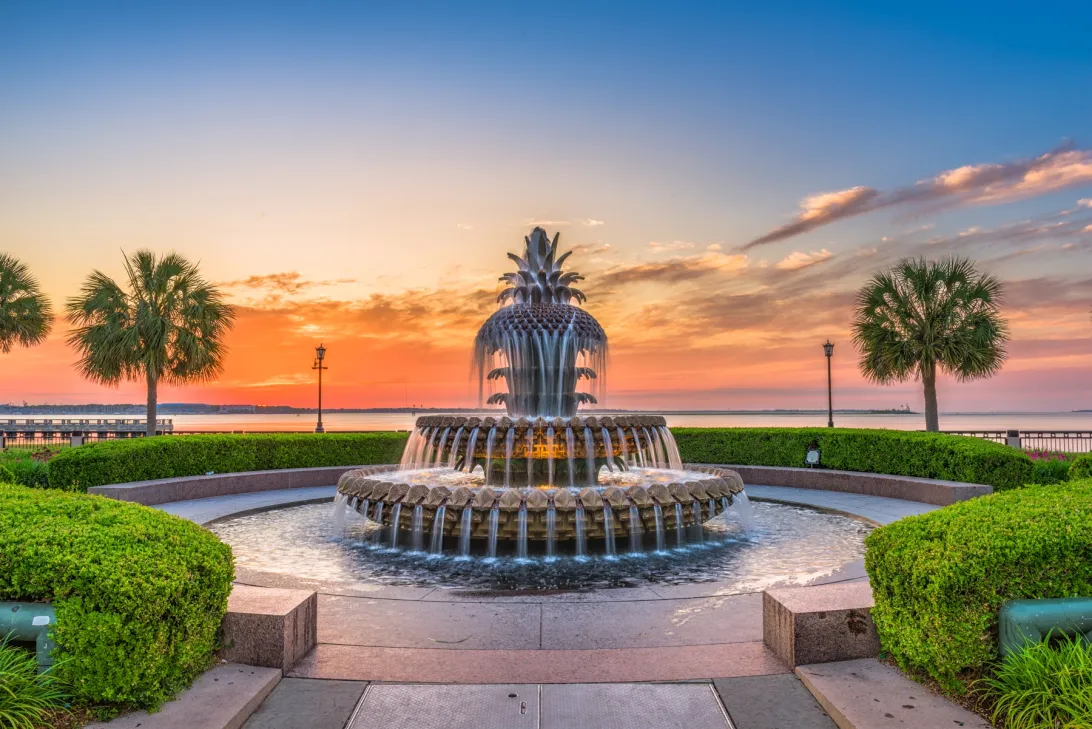
Water remains Charleston’s constant companion. The Pineapple Fountain at Waterfront Park symbolizes hospitality. Sailboats and shrimp trawlers move steadily through the city’s harbor. Dolphins are a common sight near the docks, reinforcing the sense that nature and city life coexist closely here.
The largest city in South Carolina with a population of approximately 157,000 residents, Charleston counts Boeing, Mercedes, and Bosch among its major employers, while the College of Charleston is home to 12,000 students.
Charleston’s charm lies not only in its beauty but in its restraint. It is formal without being cold, historic without being precious. The city invites slow exploration: listening to church bells echo down cobblestone streets, watching the light shift across pastel facades, and understanding how centuries of triumph and tragedy shaped a place that feels profoundly alive.