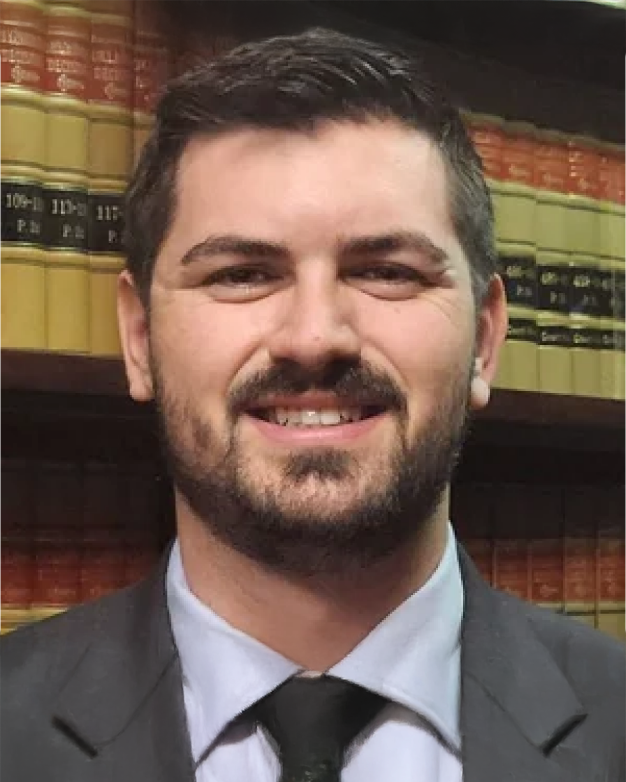
Tulsa attorney finds motivation, purpose and pride in legal calling
Articles
Spotlight
View more from News & Articles or Primerus Weekly

By Brian Cox
Phillip Berry credits law with bringing clear direction and a sense of purpose to his life. He characterizes his decision to go to law school as an opportunity for a life pivot.
“I know what it’s like to not be in the right place,” reflects the young attorney. “I know what failure and missteps and mistakes look like. But when I went to law school, it felt right. I knew I was doing the right thing.”
For many years leading up to attending the University of Tulsa College of Law, Berry says it felt like he was just going through the motions, treading water with no destination in mind.
He grew up in Gatesville, Texas, a small town near Temple and Fort Hood that has five of the nine prisons and state jails for women operated by the Texas Department of Criminal Justice.
“It’s the kind of place where you either have a parent in the military or one that works for the prison system,” says Berry, whose mother taught inmates, helping them earn associate’s degrees. His father is an accounting practitioner and runs a small gold-and-silver shop.
Berry’s early life revolved around sports. In high school, he had what he calls “tunnel vision” for football. He actually bulked up his senior year to play defensive end, getting up to around 250 pounds. After the season ended, however, he stopped working out, which contributed to greater weight gain over the next few years. He eventually reached 315 pounds, which he believes reflected the absence of purpose and passion he felt at the time.
“I never really put any stock in anything in high school,” he says. “I was just going through the motions.”
Other than sports, the one thing that sparked his zeal was his involvement with the People-to-People Student Ambassador program. He took part in the program for several years, traveling for weeks to England, France, Germany, Italy, Greece, Australia, India, China, and others.
“We did a lot of community service – helping at schools, cleaning up rivers, and stuff like that,” he says. “I think that really helped mold me and opened my eyes to other walks of life and what more is out there.”

For a while, he had felt “boxed in” in Gatesville, where there wasn’t much diversity. The travel gave him perspective, and later, the law would give him direction.
Though going to college was given, he went with no clear vision of what he wanted to do. At Tarleton State University, which was about an hour north of his hometown, he decided to major in accounting, thinking he might follow in his father’s footsteps. It was a choice made more out of expediency than enthusiasm, however.
“Honestly, I hated accounting,” he says. “I thought it was boring.”
What he did find interesting, though, was business law. He connected with the professor, Judd Leach, who was funny, personable, and quick to engage. Berry started dropping by Leach’s office after class, and the professor encouraged Berry to think about law school.
“I don’t know if he realizes how much he influenced me,” says Berry, “but he pushed me in this direction, and I ended up going down the path to law school.”
Berry recalls another professor who offered an equally pivotal jolt, though of a less encouraging nature. He once forgot to wear a suit for a presentation in an accounting class, and the professor told him bluntly he wouldn’t make it into law school unless he got his act together.
“It was a wake-up call,” Berry says. “The comment helped me get my mindset straight.”
The emotional support of his wife, Shiloh, was also a critical component to his mental adjustment. The couple met in high school and began dating in 2014. They married seven years later, right before Berry started law school. Shiloh, now a physical therapy assistant, was one of the people who helped him through periods of self-doubt.
“She stuck by me through everything,” he says. “We grew so much together that we’re completely different people today from when we met.”
While at Tarleton State, Berry and a friend, Jordan Spratt, launched a sports journalism venture covering semi-pro soccer in Shreveport, Louisiana. Berry threw himself into the project, pushing to expand with the hope of covering the NBA and NFL. Unfortunately, the young entrepreneurs overextended themselves, running a website and podcast until the business went bankrupt.
“It was kind of a low point,” Berry says, “but it taught me what it means to fail.”
The COVID-19 shutdown became an unlikely turning point. Berry had taken the LSAT before the pandemic and done well without much studying. He decided to take a year off to improve his score. When the world stopped, he took the opportunity to reset.
He applied to the University of Tulsa College of Law – six-and-a-half hours north of Gatesville – and was accepted. His older brother, a medical student at Oklahoma State in Tulsa, had introduced him to the city. He and Shiloh married a month before they moved.
“I used every penny I had left for our wedding and honeymoon,” he says with a laugh.
The decision to move to Tulsa to attend law school wasn’t easy. After all, he and his wife had lived in the same small town their entire lives. Their support system and everything they found familiar was there.
“I was battling with whether to move my wife away from her family,” says Berry, but ultimately it was Shiloh who encouraged him to take the leap.
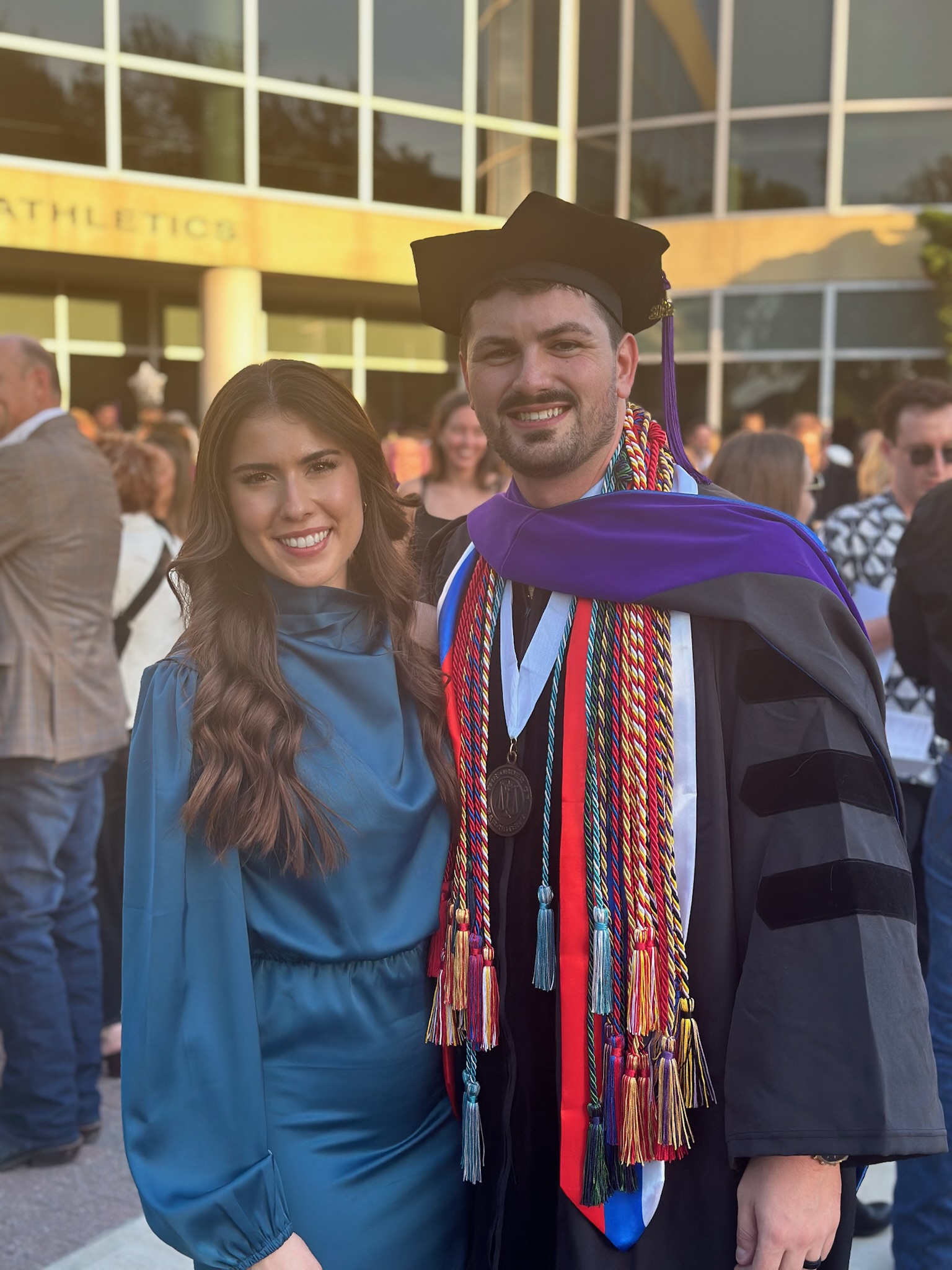
“There was a part of me that wanted it more for her,” Berry says. “I knew I couldn’t just sit around and go through the motions anymore.”
Shiloh’s faith in him became his motivation. He felt it was time for her to reap what she had sowed in him and their relationship.
“I give her a lot of credit because that was a big thing for her to move,” says Berry.
Berry had no lawyers in his family – his relatives were tradesmen and ranchers. His maternal grandfather, Nickola Grba, had immigrated from Serbia, making his way to Texas via South Chicago. Berry entered law school without a model to follow.
“I had a new mindset, but I was a little scared to jump in that water,” he admits.
His direction sharpened further when he met Shena Burgess, a professor of trial skills at the law school, a former Deputy Chief Public Defender for Tulsa County, and a partner at Smiling, Smiling & Burgess. Her class was selective and sought after. Students had to earn a spot in the competitive class, and Berry placed among the top 16 who got to choose Burgess, an achievement and opportunity that would change the course of his academic and professional career. Burgess also coached the American Association of Justice Trial Team that competes against law schools nationwide.
“That class is really where I think my life shifted because I met some of my closest friends there,” Berry says.
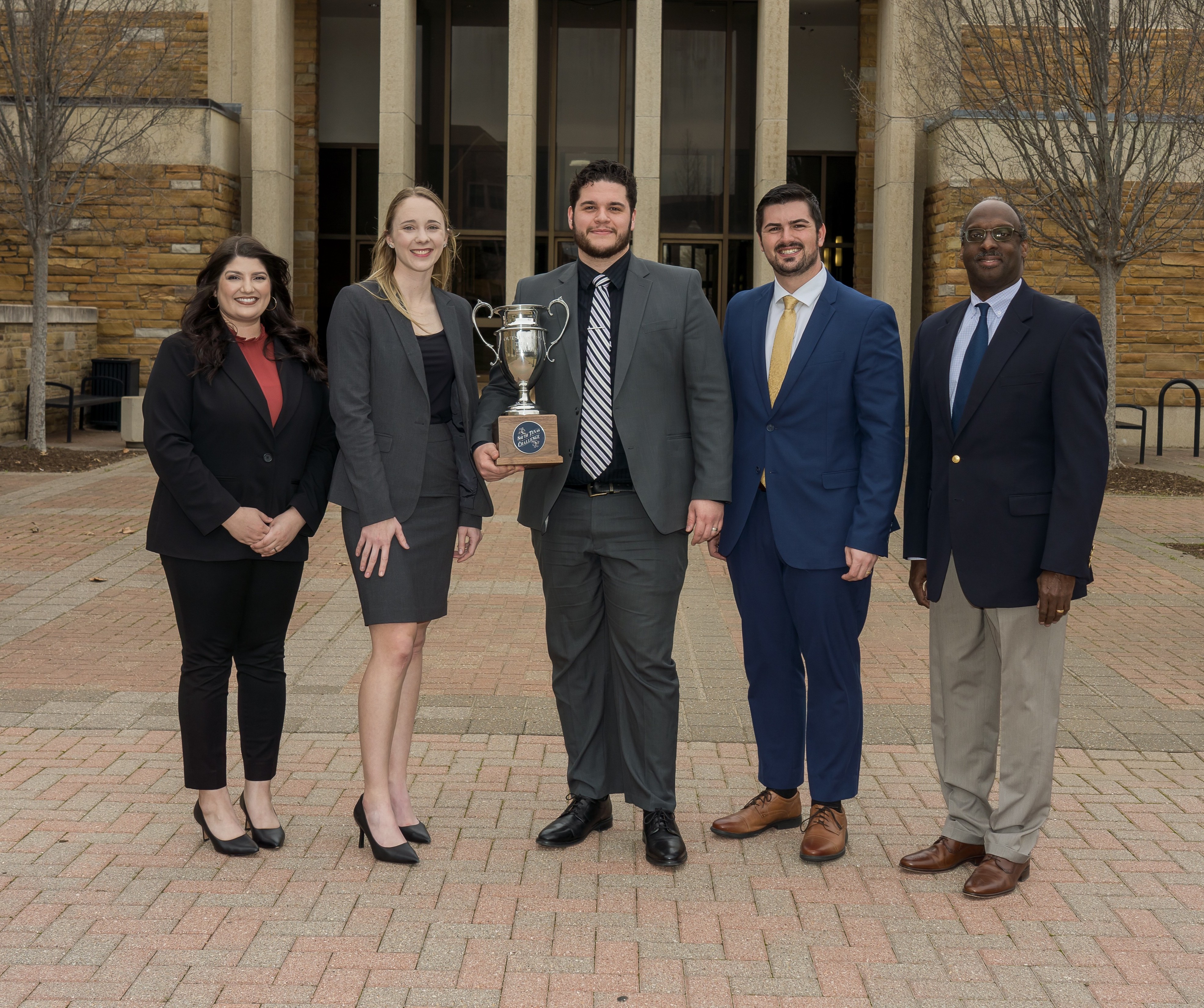
Burgess, he adds, is “unbelievable.” Her mentorship confirmed what he had begun to suspect: litigation was his calling. He was a member of her trial skills team that won an award for Outstanding Brief at the Mock Trial Challenge at South Texas College of Law Houston.
Litigation hooked Berry as nothing had before and gave him the direction he needed.
Law school, once intimidating, became a source of momentum. He joined the Student Bar Association and the Board of Advocates, revived the Business Law Society as its president, worked as a legal writing assistant, competed on the appellate law team, and participated in the Buck Colbert Franklin Legal Clinic. The more involved he became, the more focused he felt.
“Being on the trial skills team gave me the confidence to realize I was so much more than just going through the motions and passing by,” he says.
As his studies intensified, Berry’s personal discipline grew, too. He began exercising, eating healthier, and losing weight – progress that paralleled his growing confidence. The pounds he shed seemed symbolic of the uncertainty he’d left behind. By the time he graduated with his J.D., he had lost nearly 100 pounds.
That discipline carried into his professional life.
“When you’re litigating, there’s a person on the other side who’s always working every second, getting better, doing their part, and every second I’m not, I’m falling behind,” he says. “That thought keeps me motivated.”
After graduation, he accepted a position at Smiling, Smiling & Burgess, where he had externed and later worked during his 3L year. A prime factor in Berry joining the firm was the opportunity it offered him to continue under Burgess’s mentorship.
“I’ve worked very closely with her,” he says. “I continue to want to learn from her. That’s why I’m here, really – to continue to learn from her.”
The firm primarily serves institutional clients and represents companies and individuals in civil litigation defense, insurance defense, and trials in all federal and state courts. It has been a member of Primerus since 2004.
Staying in Tulsa also felt natural; it was a bigger city, but small enough for Berry and his wife to feel at ease.
Today, Berry approaches his work with the same mindset that helped him transform his life: stay humble, stay motivated, and keep learning.
“I try to be kind to everyone,” he adds. “You can never go wrong with being kind to someone. Generally, that kindness will be rewarded because you never know how that kindness will come back around. Maybe the stranger you held the door for will be a prospective juror.”
The former athlete still thrives on competition – running 5Ks, playing volleyball and pickleball, and following the Houston Texans and San Antonio Spurs – but his truest drive now comes from the courtroom and the people who believed in him.
“I decided I needed to stay with these people who had given me a chance and stuck with me and put time and resources into me,” he says. “These people care about my success. If other people care about your success, those are the kind of people you want to be around.”