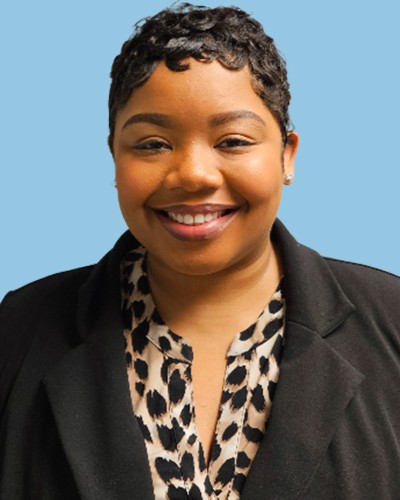
A true ‘Golden Girl,’ Michigan attorney personifies authenticity
Articles
Spotlight
View more from News & Articles or Primerus Weekly

By Brian Cox
Myisha Howard remembers the meeting that changed the course of her life like it was yesterday.
She was sitting across from Professor DeLois Leapheart, her mock trial coach at Northwood University in Midland, Mich., when Leapheart challenged her to envision her future after earning her degree.
What was next? What did she really want? Leapheart urged Howard to reach for her potential.
“She was the first person to really ask those questions to me,” says Howard. “She really got me thinking.”
Leapheart challenged Howard to see beyond the present moment, beyond the mock trial courtroom, and into a future where her talent could create real change. She told Howard that while her presence and performance were undeniable in person, her academic transcripts didn’t reflect that excellence.
“She told me, ‘I know how great you are – but someone reading your transcripts won’t,’” recalls Howard. “’You need to work on making the paper part as magnificent as the in-person part.’”
Those words stuck. Today, in her office at Cardelli Lanfear Law in Troy, Mich., Howard keeps a plaque on the shelf that reads: “But Did You Document It?” It’s a daily reminder of that conversation with Leapheart – and of the professor’s deeper lesson that if it’s not on paper, people won’t fully know the truth.
Howard grew up on the east side of Detroit and graduated from the prestigious Cass Technical High School. She was raised primarily by her two grandmothers, Elattrice Ishmeal and Bessie Mays, who she credits with instilling in her a powerful sense of self-worth and determination.
Her paternal grandmother, Bessie Mays, was a particularly strong influence. A woman from the South who went back to nursing school in her 40s to escape an unhappy marriage and become a registered nurse, she embodied the message she passed on to Howard: “Ain’t nothin’ to it but to do it.”
Howard worked hard. In school and from society at large, she was made to feel that if she wasn’t perfect, her failures would be catastrophic.
“My failures would be the end of the world,” she recalls feeling. “If I made a mistake, there would be no coming back from it.”
In high school, Howard was an accomplished athlete. She swam, performed modern dance, and played softball. Many of the lessons she learned playing sports helped armor her for the challenges of attending a predominantly white university and then Drake Law School in Iowa where she was one of a handful of Black students.
“I was blessed to have great coaches and mentors who taught me how to keep functioning through fatigue, how to keep going when things didn’t go my way,” Howard says. “It’s okay to be bad at something at first. You just keep showing up.”
Northwood University recruited Howard out of Cass Tech, offering her a scholarship and the chance to study business. She majored in advertising and marketing with a minor in sports management – thinking at first that she’d go into the sports world. But then a debate class led to an invitation to join the mock trial team. The rest was history.
“I saw a video of the 2009 national championship round,” she says. “I watched the opening statement and thought, ‘Oh, I can do that. I can do that one thousand percent.’ That was it.”
Mock trial spoke to her competitive spirit and her quick thinking. She traveled nearly every weekend with the team to invitationals around the country – New York, D.C., Connecticut, and everywhere in between. The program was intense, but transformative.
Still, it wasn’t easy. Northwood was conservative and overwhelmingly white. Howard, one of the few Black students, often felt like she was in a different world from where she’d grown up. But she adapted.
She didn’t have much of an alternative, in one sense. It was either adapt or go back home, and she couldn’t do that without a degree.
“I couldn’t go back home so I had to make it work,” she says. “I had to find myself. I had to dig my feet in and wrap my mind around where I was and embrace the differences. Once I got into it and found my tribe, I had a blast in college.”
Howard says she would have to make similar decisions many times in her life, but adjusting and finding her place at Northwood was the first, and it taught her what those types of decisions meant.
Leapheart’s encouragement pushed Howard toward law school. A Black female attorney herself, Leapheart underscored how severely underrepresented Black women are in the legal world.
Howard set her eyes on Drake University Law School in Des Moines. She applied in part because a legendary mock trial competitor from Northwood had also gone to Drake.
“He was like the LeBron James of collegiate mock trial,” she says, laughing.
Howard didn’t even look up where Drake was until she got her acceptance letter and called her grandmother to share the news. “She asked, ‘Where’s Drake?’ I said, ‘Des Moines.’ And she goes, ‘Where’s that?’”
They figured it out together.
Drake was Northwood “on steroids,” Howard says. The microaggressions were constant and exhausting. Criminal law and constitutional law classes were especially tense.
“By my 2L year, everyone knew – if you’re in class with me, you better frame that answer right,” she says. “Things never change if everybody’s quiet. If nobody has the courage to point out the things that are wrong, they don’t change.”
The experience taught her that law wasn’t just about theory. It was lived. It was real. And while she didn’t want to go into criminal law, she did know this: she wanted to help people. She just had to find the right way to do it.
At Drake, she joined the Children’s Rights Clinic, where she represented kids in the foster system. She also coached middle school mock trial teams.
“That’s what I had to offer at the time – coaching, mentoring, showing up for these kids and saying, ‘You can do this, too.’”
After graduation, Howard came back home to Detroit and began working with Lakeshore Legal Aid, helping tenants during Michigan’s eviction moratorium. She calls herself a “COVID lawyer” – sworn into legal practice in November 2019 and knee-deep in crisis by March 2020.
“Lakeshore is one of my favorite places I’ve ever worked,” she says. “All the glitz and glamour of being a lawyer did not matter. I learned so much during that time about what being a lawyer really is. It’s not just about winning cases and it’s not just about a particular problem, but people need someone to go to when they literally don’t know what to do.”
She went on to practice estate planning, preparing estate plans for UAW members, and later practiced family law at Steslicki & Ghannam, PLC in Plymouth, Mich.
But not long after, life threw Howard a devastating curveball. Her mother, Janice Ishmeal, passed away in 2022, just one day after Howard’s first wedding anniversary. Three months later, her grandmother, Elattrice Ishmeal, passed, too.
“That was a lot of life in a little bit of time,” she says.
After navigating through the grief of losing her mother and grandmother so close together, Howard accepted a position with Cardelli Lanfear Law. It was the ideal firm culture she was looking for at that point in her career.
“I love the firm because I wanted to find somewhere I could be nurtured and mentored, and I could feel part of a team. They do a really good job of that,” she says. “They’ve opened a lane for me to figure out what kind of lawyer I want to be – and support me in that.”
Her focus now is family law and estate planning, fields she believes will allow her to change the world, one client, one case at a time.
“You’re not going to solve the world’s race or poverty issues in one swoop,” she says. “I want to help Black families stay together, protect their assets, and build generational stability. This is me taking small bites out of a big problem.”
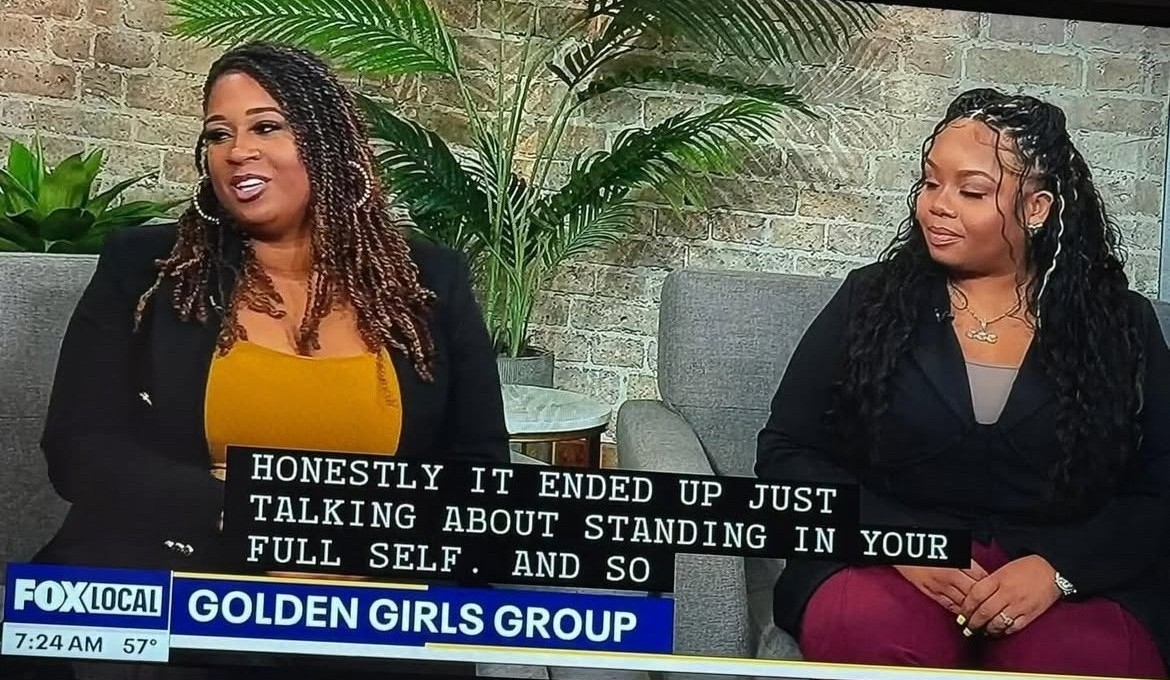
Howard also co-leads a nonprofit called Golden Girls Group, originally launched as a podcast with her friend Destinee Williams. Now called “The Surviving Superwoman Show,” the podcast centers around the mental health and well-being of professional women of color.
“We talk about the complexities of wearing all these hats,” she says. “Being a lawyer for 12 hours, then coming home to be a wife or a mother or a friend. Everyone calls us strong – but strength takes a toll.”
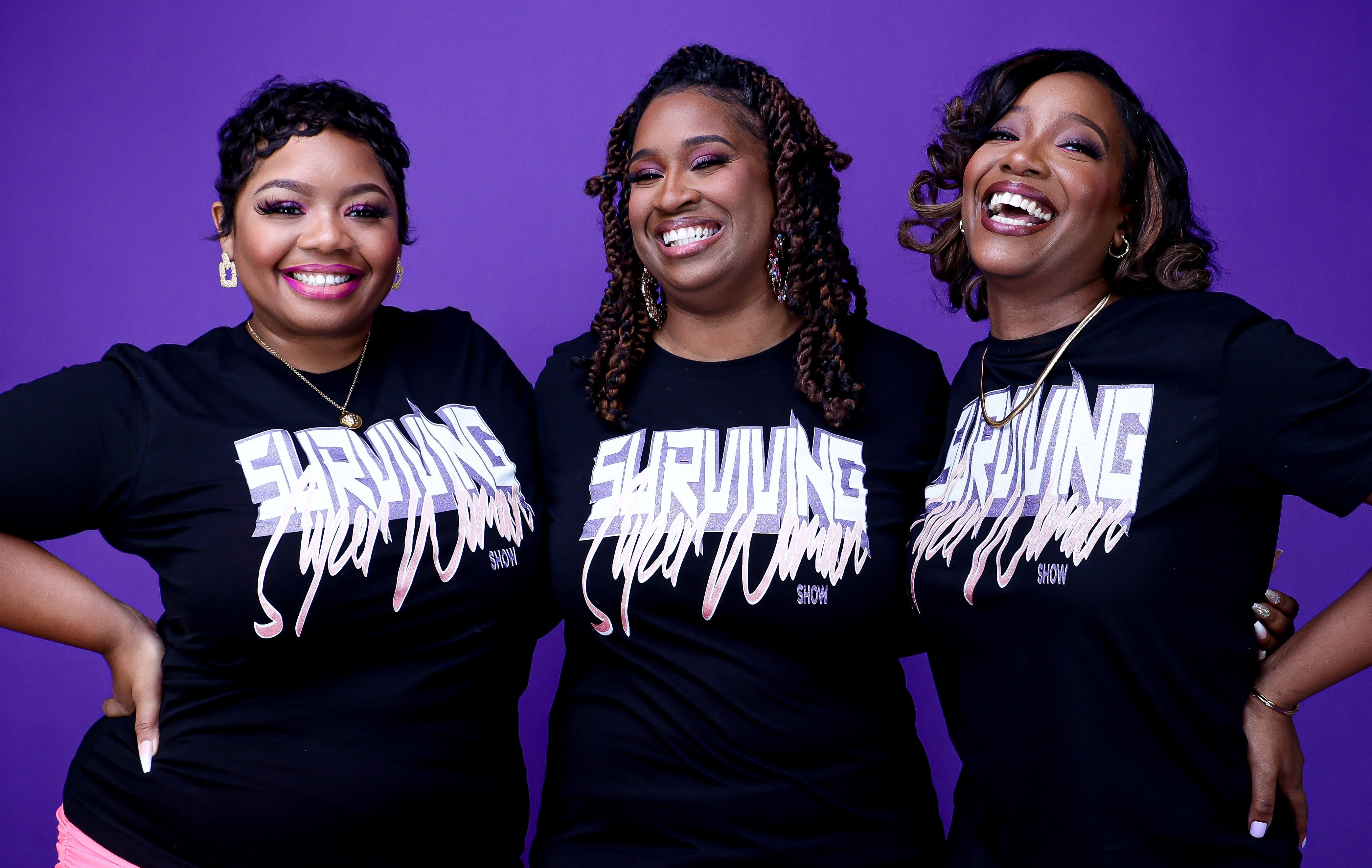
On one episode of the podcast, the women talk about the challenges of their careers. Howard says that one of her “superpowers” as a lawyer can be seen in the courtroom.
“When you hire me and you expect a zealous advocate in the courtroom, I am exactly that,” she says.
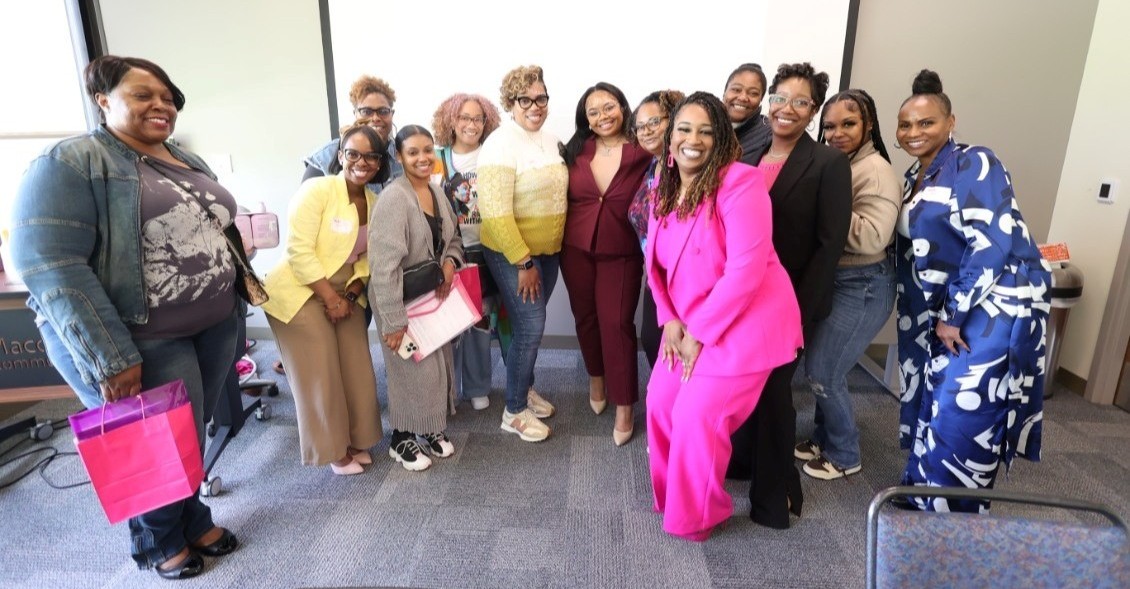
The Golden Girls Group has hosted live shows, summits, community games, and mental health conferences. Their goal is to build a support network for women.
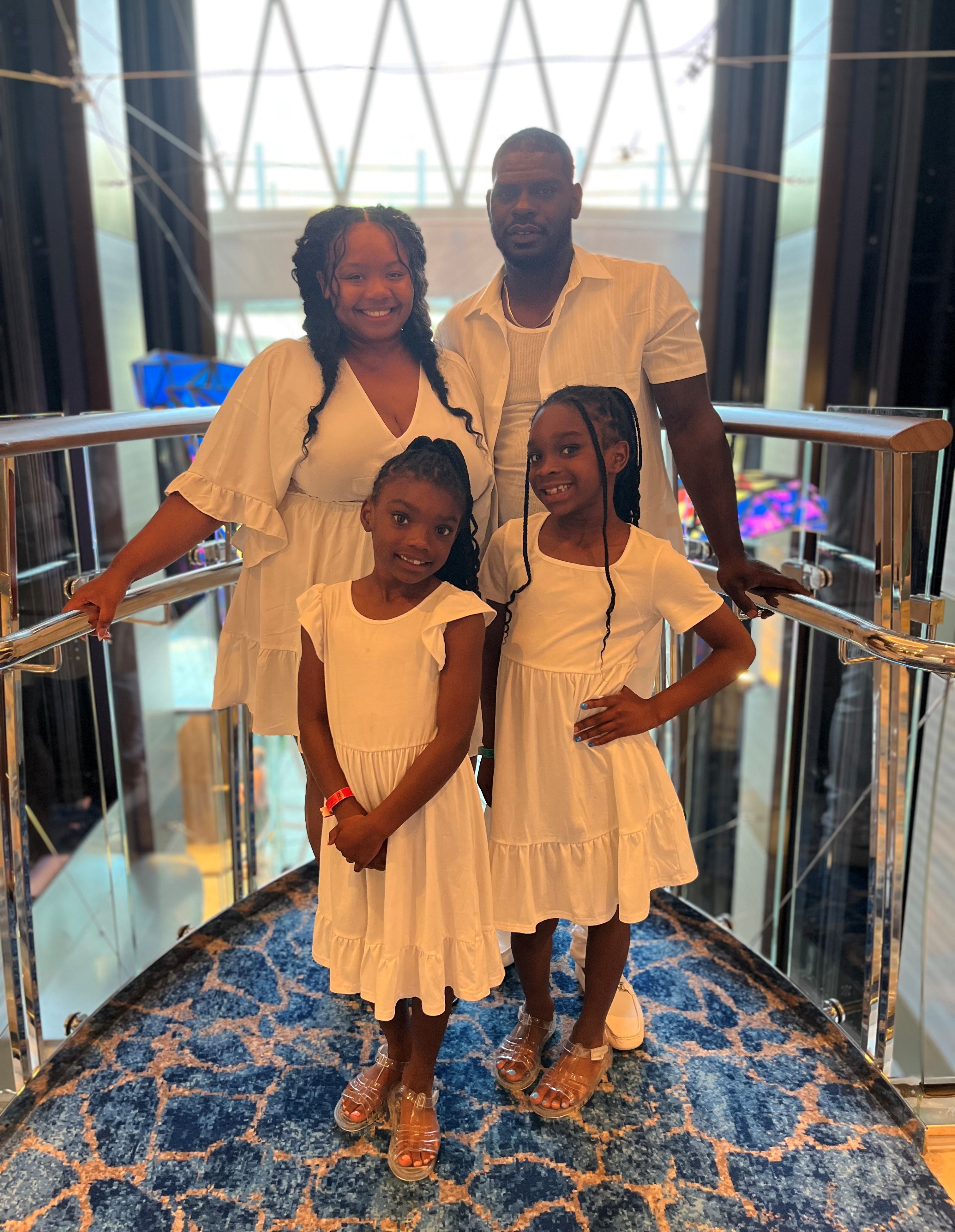
Howard is also a lifelong braider, fitting in appointments when time allows. She’s a stepmom to two girls – Kennedy, 8, and Kandice, 7 – and lives in Centerline with her husband, Jau’Ron, whom she met online just before passing the bar.
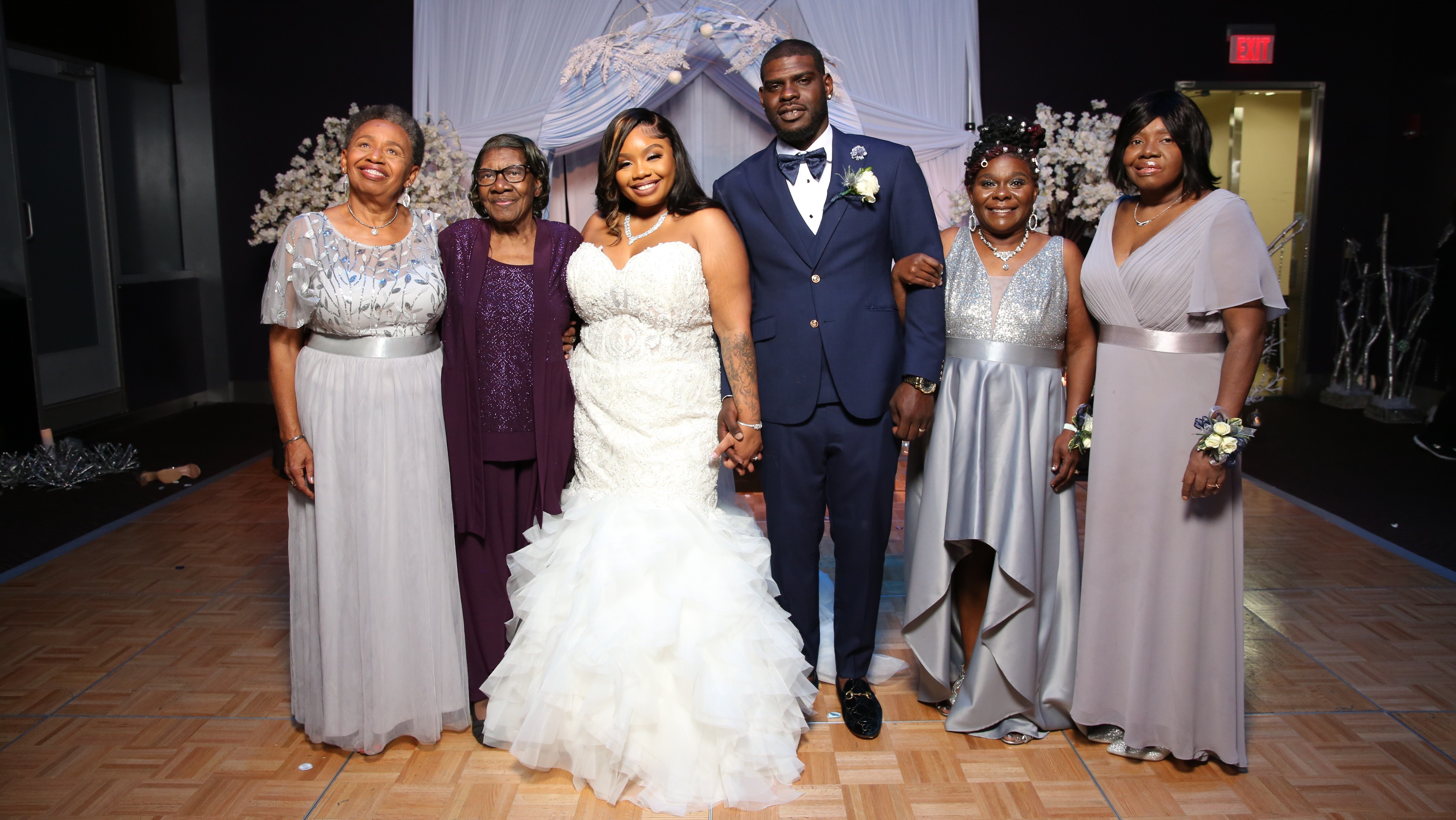
Her tattoos tell the rest of her story. An hourglass on her forearm reminds her to be mindful of time.
“We live like we’re always on someone else’s clock, but you have to own your time,” she says. “What am I doing with it? Is it aligned with my purpose?”
Another tattoo reads simply: Truth.
It’s a reminder to live authentically; that who you are naturally is acceptable and where you come from is acceptable.
“I’ve learned that what makes you different is what brings value into the room,” says Howard. “The way you speak, the way you look, who you are – just be that.”