Miami Beach, Florida, U.S. Travelogue
Articles
Travelogues
View more from News & Articles or Primerus Weekly

By Tom Kirvan
Miami Beach is one of the most recognizable coastal cities in the United States, a place where geography, culture, and history converge in ways that feel both glamorous and effortlessly casual.
Situated on a chain of barrier islands between the Atlantic Ocean and Biscayne Bay, Miami Beach is physically separate from mainland Miami yet inseparable from its global reputation. With a population of some 80,000 residents, the city swells dramatically in size during peak tourist seasons, when visitors from around the world arrive to experience its beaches, nightlife, and cultural events.
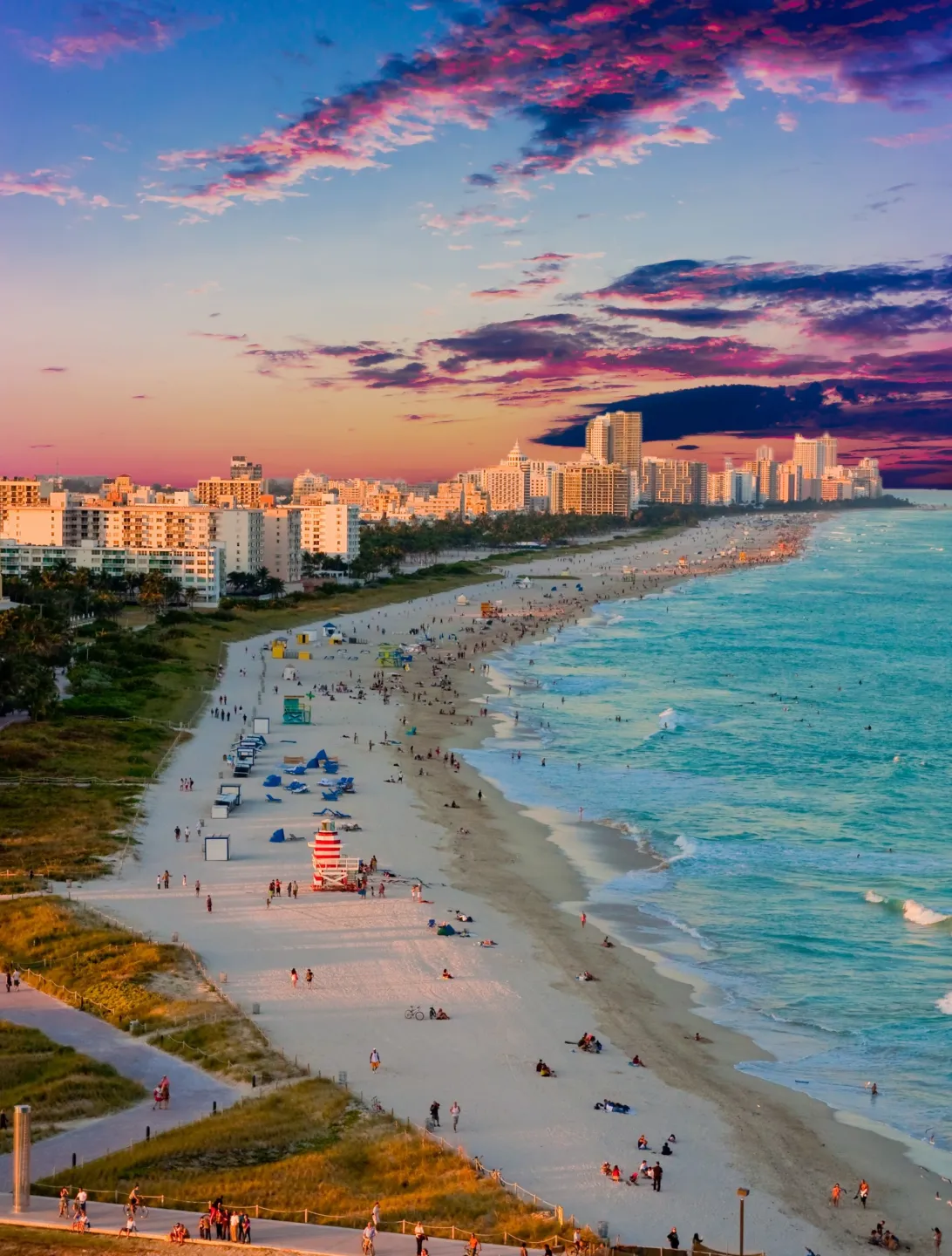
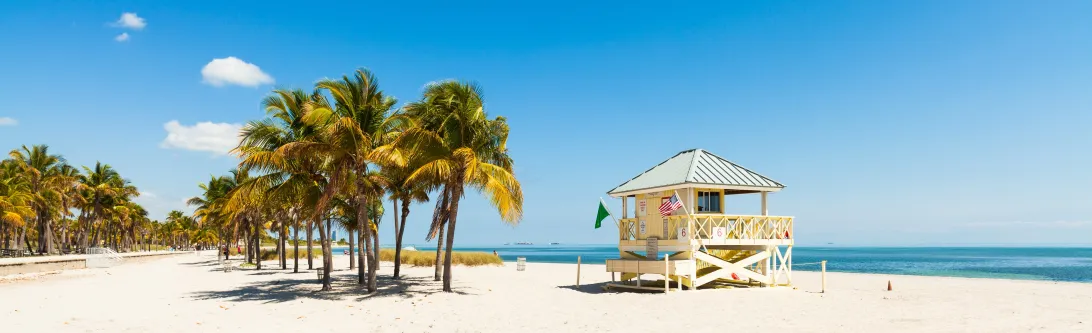
Geography defines nearly every aspect of Miami Beach’s identity. The city stretches north to south along a narrow strip of land, with the Atlantic on one side and calmer bay waters on the other. Its flat, low-lying terrain makes the ocean ever-present, visually and practically. Palm-lined streets, canals, and waterfront homes create a setting that feels both tropical and urban, all deeply layered in sunny south Florida vibes. The climate is subtropical, marked by warm temperatures year-round, humid summers, and mild winters that draw seasonal residents and tourists escaping colder regions.

May 14-16, 2026
Nobu Hotel Miami Beach
4525 Collins Ave.
Miami Beach, FL 33140
Economically, Miami Beach is driven largely by tourism, hospitality, and real estate. Hotels, restaurants, nightclubs, and entertainment venues form the backbone of the local economy, generating significant revenue and employment. Luxury real estate also plays an outsized role, with some of the most expensive oceanfront and bayfront properties in Florida. In recent years, the city has increasingly positioned itself as a cultural destination as well, investing in arts programming, historic preservation, and international events that extend beyond traditional beach tourism.
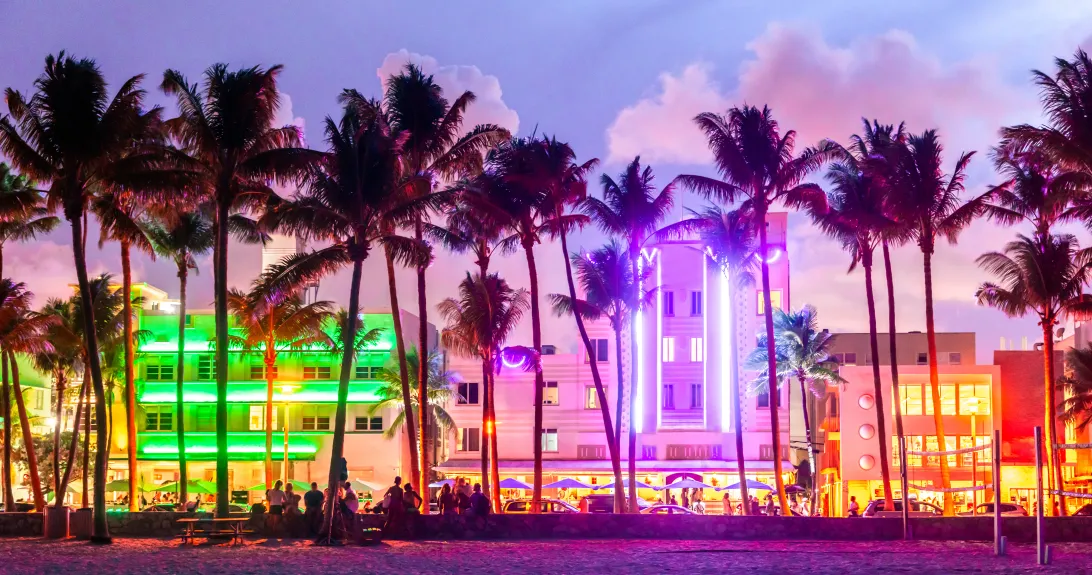
Sightseeing in Miami Beach goes far beyond sunbathing. South Beach, with its wide shoreline and vibrant energy, remains the city’s most famous neighborhood, but it is also one of the most architecturally significant. The Art Deco Historic District contains hundreds of preserved buildings from the 1920s and 1930s, characterized by pastel colors, geometric designs, and neon accents. These structures are not simply aesthetic backdrops; they tell the story of Miami Beach’s rise as a resort city during the early 20th century.
Beyond South Beach, neighborhoods like Mid-Beach and North Beach offer a quieter, more residential feel while still providing easy access to the ocean. Cultural institutions such as museums, performance spaces, and galleries contribute to a growing arts scene that complements the city’s nightlife reputation. Outdoor recreation is equally central, with biking and walking paths along the beach, water sports in Biscayne Bay, and public parks woven throughout the city.
Historically, Miami Beach has undergone dramatic transformations. Originally inhabited by Indigenous peoples, the area was largely undeveloped until the early 1900s, when developers envisioned a luxury resort destination. The city boomed in the 1920s, stalled during the Great Depression and World War II, and then reinvented itself multiple times in the decades that followed. By the late 20th century, Miami Beach had become synonymous with fashion, music, and international pop culture, cementing its image as a global playground.
That international character is reflected in the city’s population and cultural life. Miami Beach is notably diverse, with strong influences from Latin America, Europe, and the Caribbean. This diversity shapes everything from cuisine to language to the rhythm of daily life. Spanish is widely spoken alongside English, reinforcing the city’s role as a cultural bridge between the United States and the wider world.
Major events and festivals are central to Miami Beach’s annual calendar. Art Basel Miami Beach is perhaps the most prominent, transforming the city each December into a global center for contemporary art and attracting collectors, artists, and celebrities. Other events include music festivals, film festivals, and large-scale cultural celebrations that bring international attention and positive economic impact. Seasonal events, parades, and community gatherings also play an important role in maintaining a sense of local identity amid constant global attention.