

Jackie Robinson
Articles
Famous Quotes
View more from News & Articles or Primerus Weekly

By Tom Kirvan
“Life is not a spectator sport. If you’re going to spend your whole life in the grandstand just watching what goes on, in my opinion you’re wasting your life.”
So said Jackie Robinson, the man who broke the color barrier in Major League Baseball in the spring of 1947, ending a long period of segregation that for decades degraded the national pastime.
Robinson was born on January 31, 1919, in Georgia, the son of a sharecropper and the grandson of former slaves. He grew up in Pasadena, Calif., raised by a single working mother of five children. He graduated from Pasadena Junior College and then took his talents to UCLA, where he became the university’s first four-sport letter winner, excelling in football, basketball, track and field, and baseball.
He served in the U.S. Army during World War II, but was court-martialed and honorably discharged for refusing to move to the back of a segregated military bus.
Robinson began his baseball career with the Kansas City Monarchs of the Negro Leagues in 1945, later jumping at the chance to become the first African American to play with the all-white Montreal Royals, a farm team of the Brooklyn Dodgers that was guided by General Manager Branch Rickey.
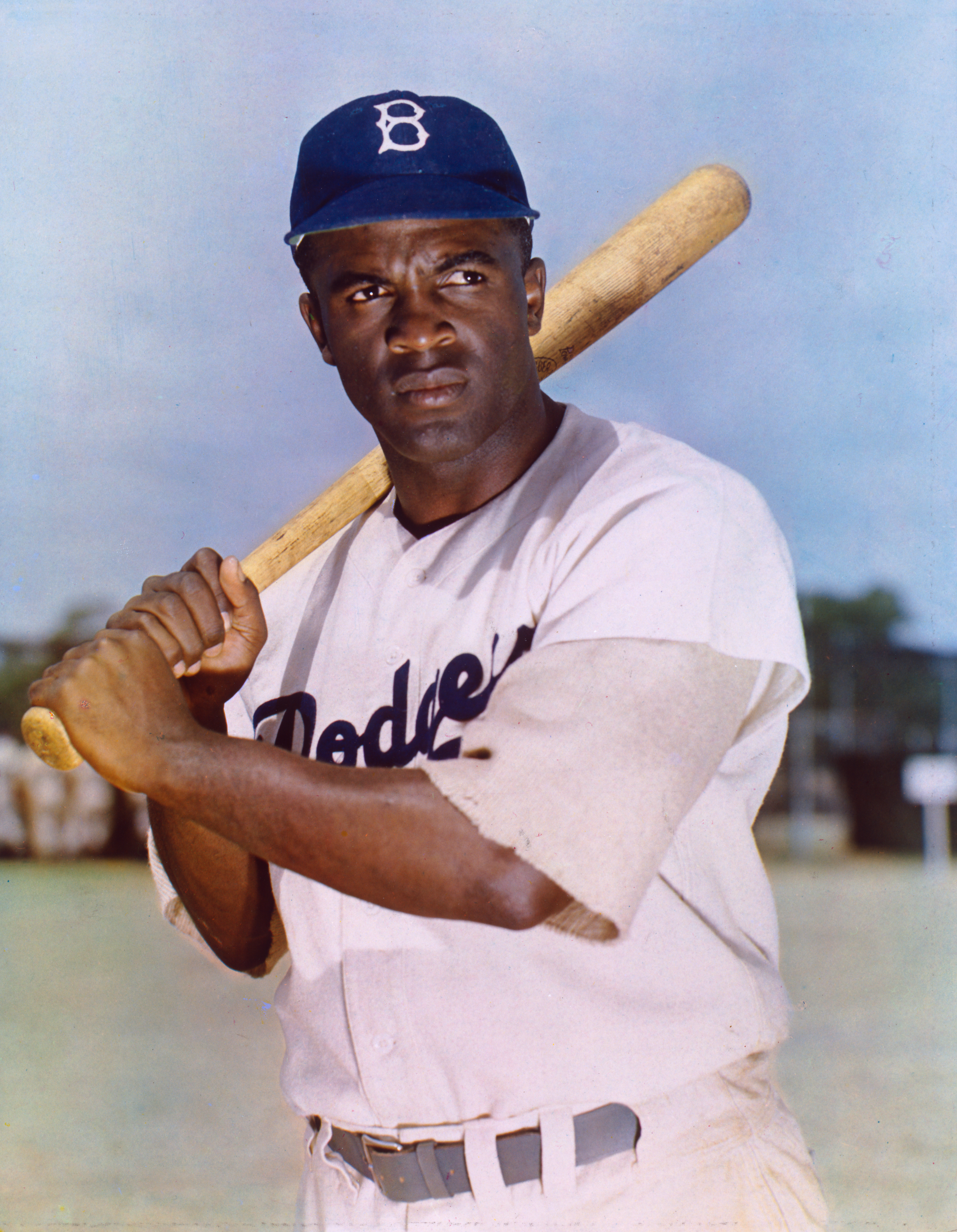
Anticipating the backlash that Robinson would face as the first player to integrate in baseball, Rickey said he was “looking for a ballplayer with guts enough not to fight back.”
He found such a player in Robinson, who stepped onto Ebbets Field in Brooklyn on April 15, 1947 for his first game with the Brooklyn Dodgers, beginning a 10-year career that would lead to enshrinement in the Baseball Hall of Fame.
On November 18, 1949, Robinson was named the National League’s Most Valuable Player, after leading the league in hitting with a sterling .342 average and a season-high 37 stolen bases. He also hit 16 home runs and knocked in 124 runs while sparking the Dodgers to a World Series appearance.
As a sports trailblazer, Robinson used his celebrity status to become a leader in the Civil Rights Movement, helping to change the landscape of race relations in the United States by stating, “The right of every American to first-class citizenship is the most important issue of our time.”
Adding, “There’s not an American in this country free until every one of us is free.”
In 1972, some 25 years after he transformed the world of sports, Robinson died following a decade-long battle with diabetes, forever hailed as “freedom rider before freedom rides.”
*Harry Warnecke, CC0, via Wikimedia Commons