


Founding partner of Colombian firm displays entrepreneurial spirit, urban law expertise, and love of family
By Brian Cox
With the spirit of an entrepreneur, the vision of a trailblazer, and the mind of a law practitioner, Juan Manuel González Garavito has always dreamed big and worked hard to realize those dreams.
The combination of entrepreneurial instinct, long-range vision, and rigorous legal thinking has defined González’s life since adolescence and has shaped one of Colombia’s most respected law firms. As a founding partner of Pinilla, González & Prieto Abogados (PGP Abogados), González has played a central role in the legal framework behind the development of cities across Colombia, helping to professionalize urban planning law at a time when the discipline barely existed. Along the way, he has built not only a firm, but a reputation as a lawyer who understands cities as living systems, law as an enabling tool, and business as a force that – when properly guided – can serve the public good.
González’s entrepreneurial nature was ignited early by the example set by his parents, each of whom embodied independence and adaptability in different ways. His father worked in a variety of public-sector roles before deciding to strike out on his own, opening a gas station in the city of Madrid, a city about 20 kilometers west of Bogotá, which he ran until he retired. His mother, by contrast, was entrepreneurial throughout her career, moving fluidly from job to job – librarian, shoe-store salesperson, real estate professional – before finding her true calling in corporate real estate, where she excelled, becoming one of the top real estate sales directors for some of Colombia’s most important construction companies. She was eventually recruited by Banco de Guayaquil in Ecuador to strengthen its real estate sales division. She would live and work in Ecuador for nearly two decades.
González’s parents separated when he was a teenager. The disruption could have been destabilizing. Instead, it became a catalyst.
“From that time on,” he says, “I began to have my own entrepreneurial ventures.”
By the age of 15, González was already running multiple businesses, including operating a disco, as well as selling imported liquor and women’s lingerie. It was an unusual résumé for a teenager, but it reflected his talent for recognizing opportunity and his willingness to learn by doing.

That same pragmatism and drive guided González to law school. He enrolled at the Nueva Granada Military University, attending evening classes because he needed to work during the day.
During his law school years, González continued launching and operating businesses. One of his first ventures was a fast-food stand at a gas station called “Swiss Stand Number 2.” It was the first such stand to operate 24 hours a day, and it proved highly successful. Another opportunity arose almost by chance: a man approached him needing a device called a sulfur sublimator repaired. González and a friend discovered how easy it was to fix, offered the service, and soon found themselves selling sublimators, then manufacturing them, and eventually running a factory that also produced leather gloves.
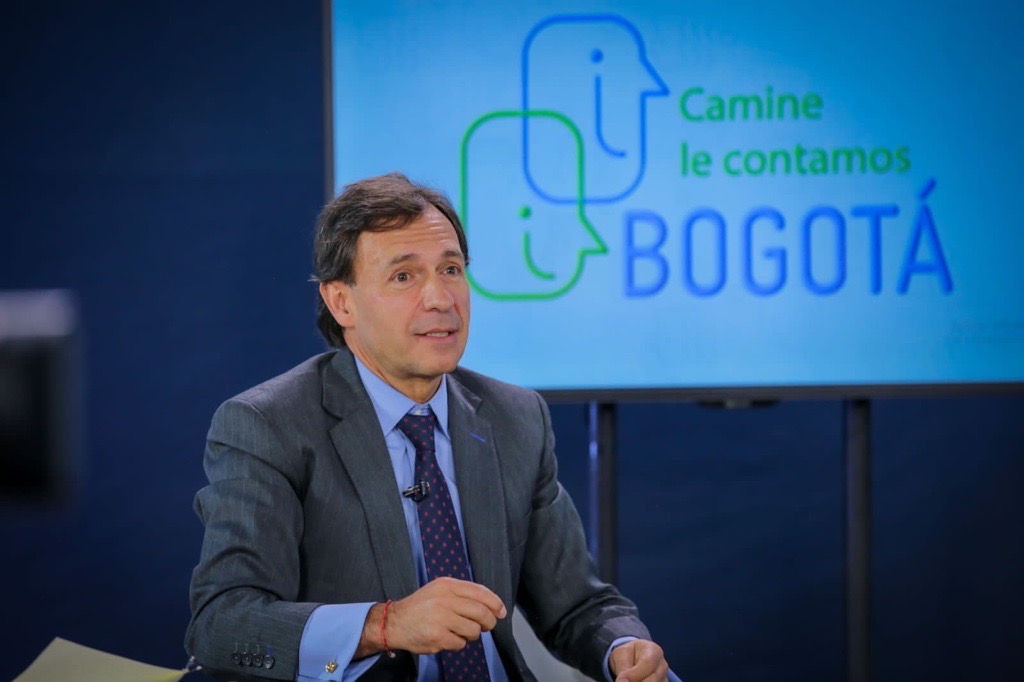
With more than 30 years of experience in urban and real estate law, González takes part in Bogotá Cómo Vamos, a citizen-led initiative to monitor and track changes in the quality of life in the city and the Bogotá DC City Council.
The business thrived. The income was good. But as graduation approached, González faced a defining choice.
“I told myself that what I wanted in life was to be a lawyer,” he recalls.
He sold his share of the business and committed fully to the practice of law.
González’s early legal career took him first to a notary’s office in downtown Bogotá, the sprawling capital city where he handled litigation. He then pursued a specialization in administrative law, which led to a position at the Bogotá Ombudsman’s Office. It was there that he encountered the field that would define his career: urban planning law.
At the time, urban planning law in Colombia was largely undeveloped. There were few specialists, little formal training, and limited understanding – both in the private sector and within public institutions – of how legal frameworks could shape the growth of cities. For González, this absence represented opportunity.
Knowledge, however, was the first major challenge he faced.
“When I started, urban planning wasn’t developed in Colombia,” he says. “The first challenge was how I would manage to learn [about the subject]. And you always find a solution.”
There were no local specializations to pursue, and studying abroad was financially impossible. So, González taught himself. He immersed himself in the urban planning laws of other countries, studied doctrine and jurisprudence, and read extensively about urban planning – not just legal texts, but books by urban planners and architects. He learned how cities are designed, how they function, and how law could either facilitate or hinder their development.
Despite his success in the public sector, González knew he did not want to spend his career there. He wanted to build something of his own. That opportunity came unexpectedly, when a friend told him that someone was renting out a tiny office. González went to see it and liked it immediately. The person renting it was Felipe Pinilla, another young attorney who was on his way to building a stellar reputation throughout Colombia.
“We immediately clicked, both personally and professionally,” González says.
Pinilla rented González an office in the same house where he worked, and the two began collaborating on specific cases. Before long, their collaboration became a partnership, which was formalized around 1993.
The partnership worked because it was complementary. Pinilla handled real estate contracts, drawing on his experience in the construction sector. González focused on building permits and urban planning issues. Together, they offered a combination that was rare at the time – and the market responded. Clients began to see the value of integrated legal services for construction and development projects.
The firm’s entrepreneurial spirit extended beyond traditional legal services. At one point, González and Pinilla launched an “immediate legal hotline” with Comcel, allowing callers to receive legal advice and pay for it through their phone bills. The technology was rudimentary by today’s standards, but the idea was forward-thinking. Though the service ultimately did not succeed, it reflected the firm’s willingness to experiment.

González receives the Colombian Quality Management Award for his work in designing urban development instruments to ensure the legal and financial feasibility of infrastructure projects.
That affinity for experimentation led to a third partner. To bring order to what had become a growing but administratively disorganized practice, Rodrigo Prieto joined the firm. When the hotline failed to generate returns on his investment, the partners compensated him with equity in the firm. The result was the three-partner structure that still defines PGP Abogados today.
“I think it was a wonderful decision,” González says, explaining that Prieto brought a business vision that transformed the firm from a successful two-lawyer practice into a company with ambitions to become a major legal services provider. That vision proved decisive.
PGP’s growth was steady and deliberate. As the firm outgrew its original space, it moved into larger offices, eventually purchasing space in the Fernando Mazuera building, in one of Bogotá’s financial centers. What began as half a floor expanded to a full floor, and eventually to the two floors the firm occupies today.
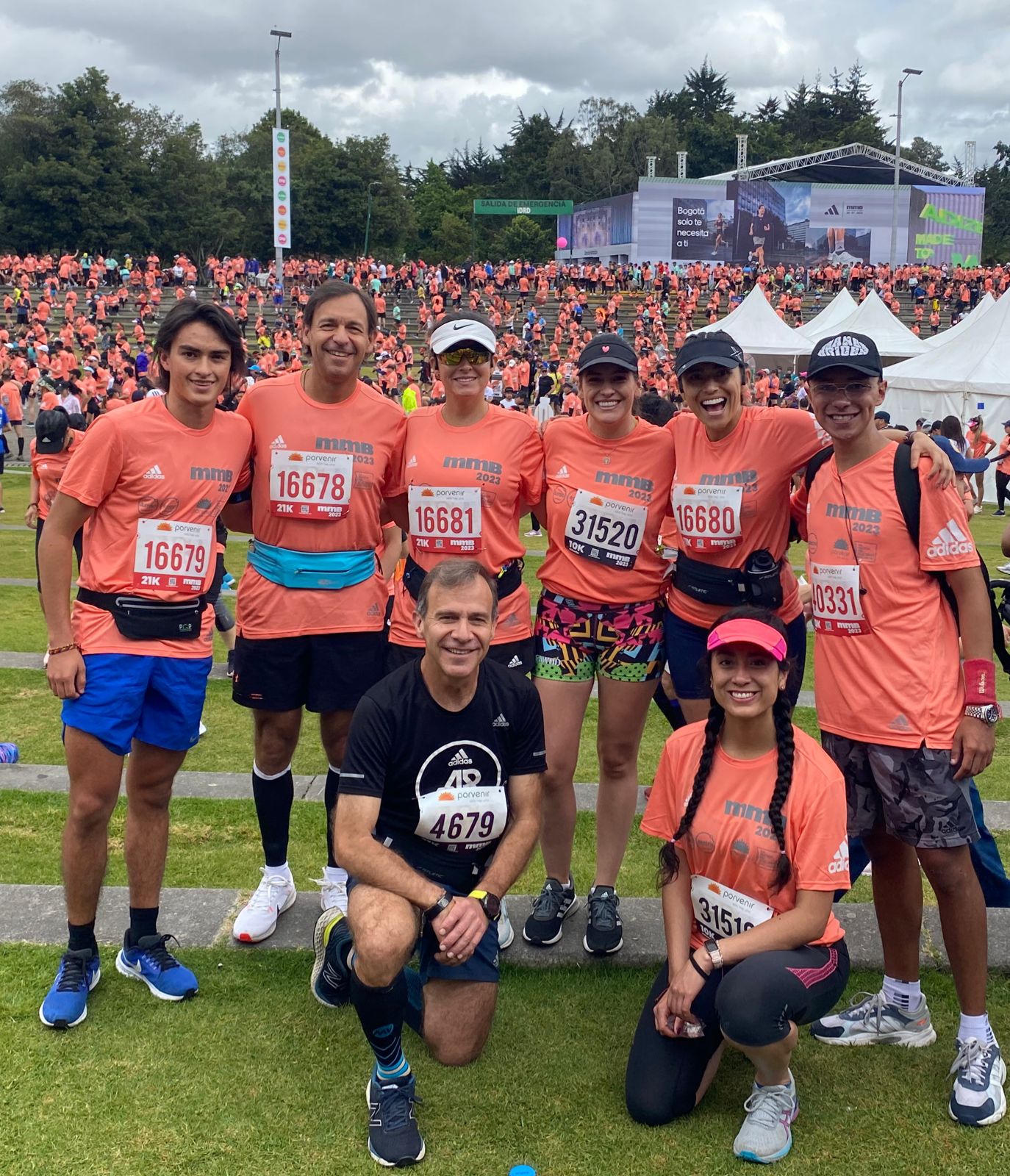
An avid athlete who enjoys cycling, tennis and golf, González ran in the Media Maratona de Bogotá 2023, an annual road running competition over a half marathon distance that takes place in late July or early August.
The firm’s practice areas expanded in response to client needs. While urban planning and construction law remained the foundation, PGP first added administrative, corporate, civil, and litigation departments. Over time, environmental, tax, arbitration, criminal, disciplinary, compliance, and energy and non-renewable resources law followed. Labor law is the firm’s newest area of expansion.
“Little by little, we have become a full-service firm,” González says. “We study and handle each case from the various necessary legal perspectives.”
That breadth has strengthened PGP’s reputation as a firm capable of managing complex, large-scale matters without losing depth or rigor.
One of the firm’s greatest challenges – and paradoxically, one of its greatest achievements – has been talent development. In the early years, there were few lawyers in Colombia trained in urban planning law. PGP had to train its own. In doing so, the firm became, in González’s words, “a kind of school” for urban planning law.
The downside is predictable: lawyers trained at PGP are highly sought after. The firm has become a seal of approval in the market, making retention a constant challenge. But González views this as part of the firm’s contribution to the profession.
González’s professional legacy is visible not just in court decisions or contracts, but in the development of cities, innovation in urban planning, and neighborhoods across Colombia. He and his firm have advised on major urban developments throughout the country, helping to shape cities in ways that balance growth, legality, and social need.
Among the most significant projects are large-scale developments that have expanded access to affordable housing, such as Ciudad Verde in Bogotá. González has advised construction companies on partial plans, macro-projects, implementation plans, regularization and management plans, and urban renewal plans – legal instruments that determine how land is used and how cities evolve.
Specific projects include the Casablanca Partial Plan in Madrid, Cundinamarca; the Terranova urban project in Bello, Antioquia; and major developments such as La Felicidad, Ciudad Sanitaria Sanitas, El Tomillar, and the Unicentro shopping mall. González has also provided advice on urban law initiatives debated in the Colombian Congress and before local authorities.
As the field has matured, González has contributed not only through practice but through teaching. He has taught in most of Colombia’s urban law specialization programs and currently teaches at the Universidad del Rosario in Bogotá, helping train the next generation of lawyers in a discipline he helped pioneer.
Family is a driving force for González.
“When you have a family, when you have children to raise, when you have a spouse to care for, to protect, to cherish... well, that makes you go out every day looking for a network for work,” says González. “You have the desire to work.”
That perspective is grounded in his own family life. González married Mónica Martínez in 1999, beginning what he describes as a truly wonderful marriage.
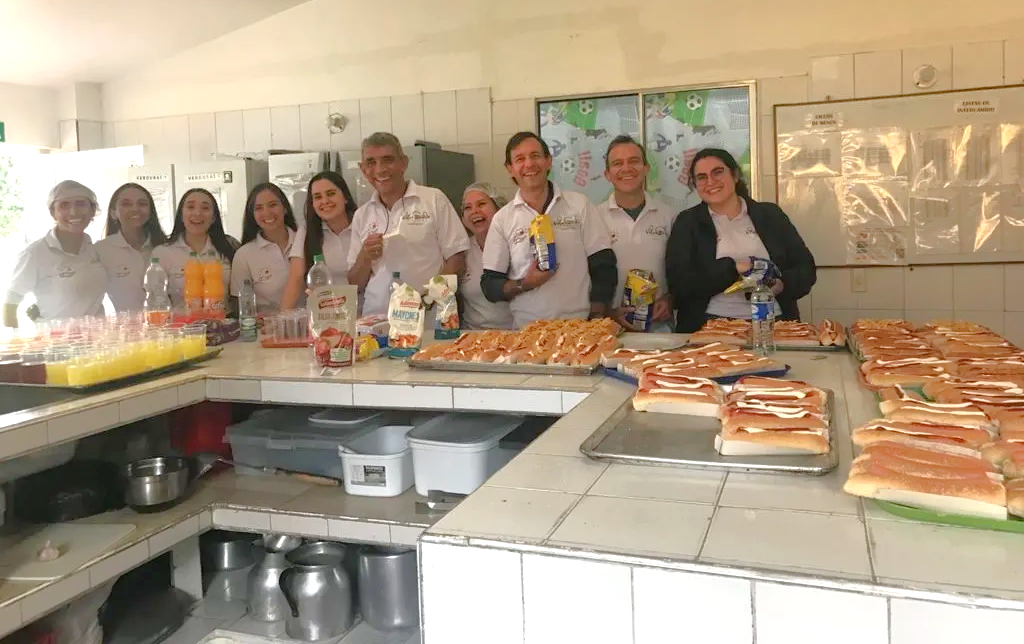
González and other members of Pinilla, González & Prieto Abogados volunteer at a Bogotá food kitchen.
“Mónica helped transform my life,” he says. “She is a very special, very calm person, and I am not. I needed someone to ground me.”
Together, they have raised three children: Santiago, Juan Pablo, and Federico. Each reflects different strengths and interests – law, business, real estate, sports – but all, González says, are shaped by a strong family foundation.
For him, family is not separate from professional success; it enables it.
“When people have well-structured families, with a strong foundation, and with the understanding that family is the core of society,” he says, “it brings them peace of mind and greatly contributes to their professional development.”
Building a family, like building a firm or a city, requires constant attention, learning, and care. For Juan Manuel González Garavito, it is the most important undertaking of all – and the one that gives meaning to everything else.