


Experience as an entrepreneur, corporate executive has served New Jersey attorney very well
By Brian Cox
Attorney Peter Levy has stood in his clients’ shoes. He’s sat behind their desks. He’s lived many of their experiences.
Not unlike a doctor who has experienced being a patient, Levy’s years as an entrepreneur and corporate executive, which are bookended by his legal career, have provided him with a perspective from the other side. As a result, he sees an attorney’s role as a critical resource for a business owner but only one factor in the executive’s decision-making process.
“I think ultimately it made me a better attorney because there's a big difference between practicing law and relying on other attorneys to help you succeed as a businessperson,” says Levy, who chairs the life science and emerging technology practices at Mandelbaum Barrett PC in New Jersey. “Once I was in a position where I had to hire attorneys and rely on their expertise to give me sound objective advice, I saw the law very differently.”
After years as a corporate executive, he now understands that every touchpoint an attorney has with a client is an opportunity to build the relationship.

“I think once an attorney can start seeing the bill as a chance to highlight what it means to really be in the client's corner, your billing practices take on a whole different meaning,” says Levy. “Focus the tone of your invoice on the client's goals and what you are aiming to accomplish. Clients will see you as being both cost-effective and firmly unified with their needs."
Levy says he also learned that it’s important for an attorney to make themselves vulnerable to clients.
“Attorneys are very intelligent, and so they often fear showing any signs of vulnerability or weakness,” explains Levy. “You're never going to understand your client's business as well as your client does. So, if you are willing to ask questions and show a little vulnerability in that you don't have all the answers, they see you more as a partner and it builds an inherent trust.”
Levy points to several third- and fourth-generation businesses that he represents, and he is forthright that the executives of those companies know their businesses far better than he ever will.
A graduate of Cornell Law School, Levy practiced law for nearly 14 years before answering the siren call of entrepreneurship. He then spent more than a decade as a business executive, entrepreneur, and chief executive officer. He helped launch new ventures, worked with companies facing allegations of fraud, managed public companies, and navigated the regulatory challenges of the pharmaceutical industry.
The experience gave him an appreciation for the decisions business owners must make, often with competing legal, economic, strategic, and ethical considerations in play. It also reinforced his belief that an attorney’s job is to help clients make better decisions, not to simply make those decisions for them.
Levy’s interest in law began at home. Born in Manhattan and raised in Livingston, New Jersey, he grew up in a family where the legal profession was a regular subject of conversation. Both his grandfather and father were attorneys, and he admired their work and the commitment they brought to it.
“My father was a very brilliant and successful attorney, and he had a huge influence on my life,” says Levy, “but my mother taught me how to write and how to think analytically. I give her a lot of the credit.”
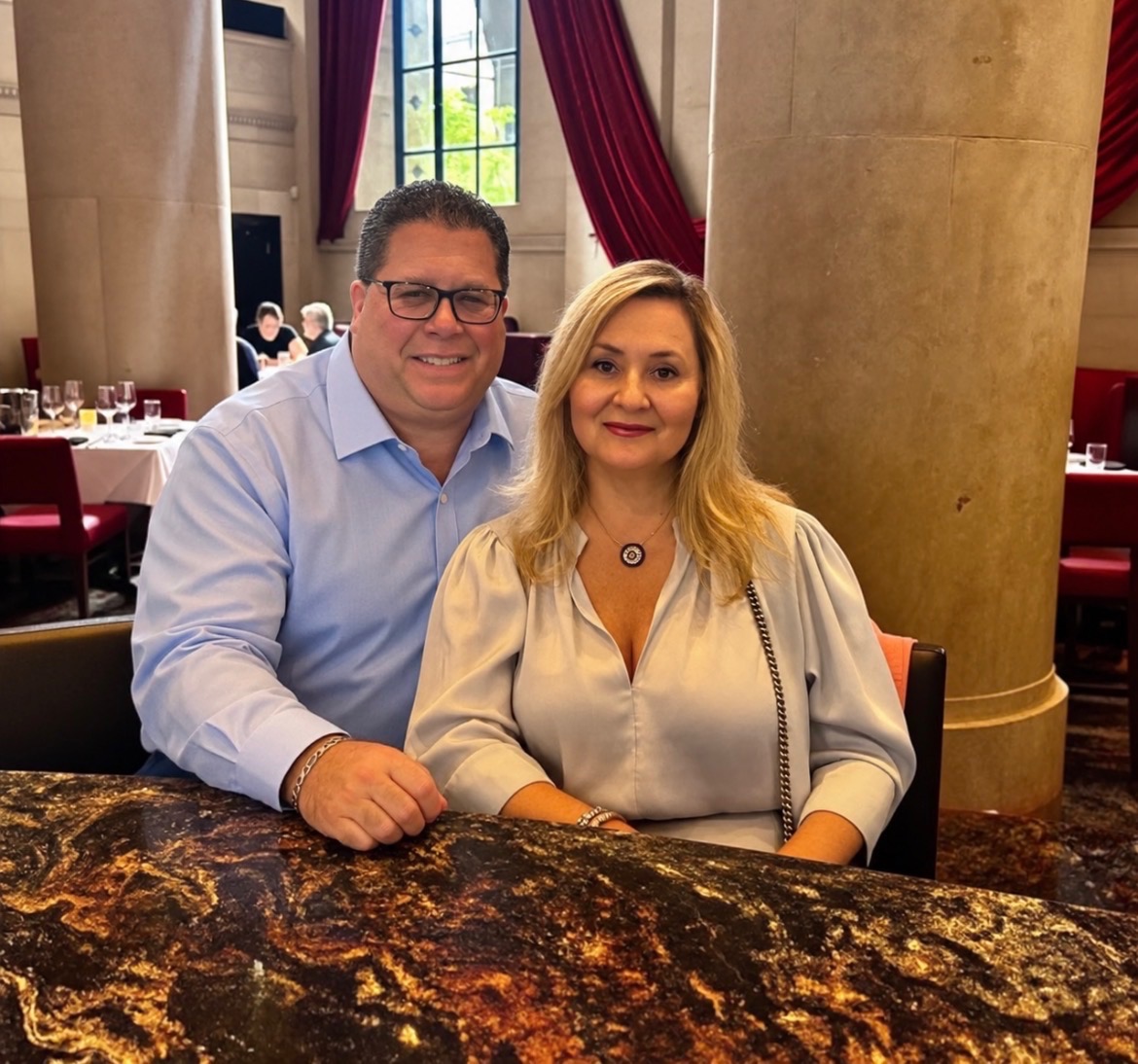
Peter and his wife, Larisa, met in 2015, the same year he joined Mandelbaum Barrett. Larisa is vice president of operations and client relations for Jersey Staffing Solutions, a staffing and recruiting firm.
Levy went on to attend Harvard University, graduating with honors as a John Harvard Scholar. Sadly, his father died Levy’s senior year, and the loss had a lasting effect on him, but he stayed the course and began studying law at Cornell. He later earned an MBA from Thunderbird, The American Graduate School of International Management at Arizona State University.
For a time, the path seemed straightforward. Levy started his legal career as a real estate attorney at a large New York City firm. He enjoyed the intellectual demands of the profession but found real estate practice less engaging than he had hoped. He subsequently moved in-house at AT&T, where he spent his first six years as a regulatory attorney.
The move brought him into contact with a different side of the business world. One of his early assignments involved the development of the AT&T Universal Card, an affinity credit card that offered customers discounts on their long-distance bills based on card usage.
“There was a time when spending money on your long-distance bill was a significant factor in your budget,” explains Levy in a wry tone. “My kids aren't going to understand that, but back in the day, your long-distance bill mattered.”
The project exposed Levy to the process of building a business from the ground up. It also gave him a glimpse of a professional life that extended beyond advising a company on legal questions.
Eventually, he left the legal department to lead AT&T Advanced Consumer Enterprises, an internal startup incubator operating during the dot-com era. The work appealed to his entrepreneurial instincts. Rather than just analyzing the legal dimensions of a business, he could participate in shaping its direction and helping bring new ideas to market.
After 14 years of practicing law, Levy decided it was time to pursue his interest in startups further. At 38, he left AT&T and established the Levy Group, which helped technology startups develop business plans, secure financing, and identify resources needed to grow.
Among his projects was a business plan for an initiative involving actress Stacey Dash and her family. The effort aimed to help subsidize computers and internet access in minority communities and ultimately raised millions of dollars.
“I built a whole team of individuals who could help me develop and write these business plans and help finance these companies,” recalls Levy. “It was an exciting time.”
The dot-com bust, however, changed the landscape for many of the companies Levy and his colleagues served. Around 2001, the team merged into a regional accounting firm, where its work evolved in response to a new set of challenges.
Following the collapse of Enron and the passage of the Sarbanes-Oxley Act, companies faced heightened scrutiny over financial reporting and internal controls. Levy’s team developed expertise in compliance and corporate governance, work that eventually led to an unusual role for him: he became the first integrity monitor appointed by the Securities and Exchange Commission for the U.S. District Court for the Southern District of New York.
In that capacity, Levy worked with companies facing allegations of fraud, helping to restructure organizations and restore confidence in their operations. The work could involve replacing management, appointing new boards, and/or establishing stronger internal controls.
“That was the best gig I ever had because I was independent,” recalls Levy. “I didn't have to rely on the company to tell me what was right and wrong. And I got to go in there and restructure their internal controls, their management team, their board of directors.”
Restructuring a troubled company wasn’t just to satisfy regulators. Done successfully, Levy explains, it could preserve a business, protect employees’ livelihoods, and help safeguard investors.
Levy later became chief operating officer and then president of a publicly traded entertainment company whose business included Ultimate Fighting Championship events and country music festivals, which Levy admits he knew little about at the outset. But what he did know was how to build a company’s infrastructure. The experience further broadened his executive background and reinforced his confidence in moving between industries.
“I have always been what I call industry agnostic,” says Levy. “I'm very, very comfortable with startups. I'm very, very comfortable with companies that are just beginning their journey.”
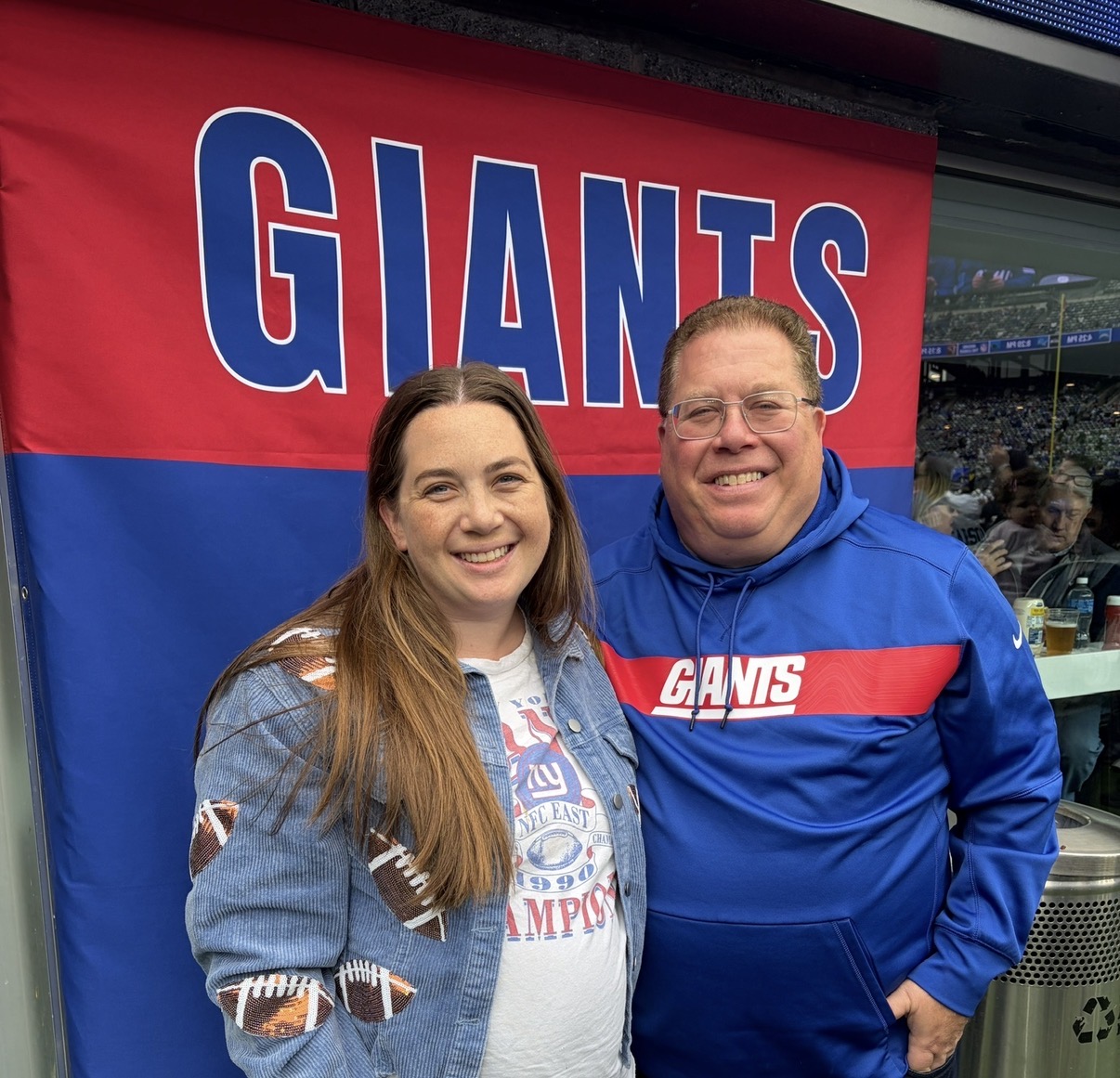
Peter and his daughter, Dara, attend a Giants game. Dara now serves on the Camp ASCCA board in her father’s place.
The fundamentals of running a business, he believes, travel across sectors even when the products, customers, and regulatory environments differ.
His next major chapter brought him into the pharmaceutical industry. Levy joined a drug company launched with backing from Celgene, where he became involved in the development and commercialization of a product intended to support muscle health. The product found a following in the bodybuilding community and, in a different form, became a leading seller at GNC and The Vitamin Shoppe.
“I knew nothing about drug launch, about FDA approvals, or anything like that,” says Levy of when he took on the leadership position. “But I went into the new company, and we didn't know if we were going to be able to keep the lights on for a month. We had no idea. But we got very, very lucky.”
The company eventually grew from a penny stock into a business listed on the Nasdaq stock exchange.
The role introduced Levy to the complexities of life sciences and FDA regulation, knowledge that would become central to his then future (now current) legal practice. It also gave him direct experience with the commercial realities facing companies trying to bring products to market.
Mandelbaum Barrett had served as legal counsel to that pharmaceutical company. When a takeover changed his company’s direction, Levy found himself considering his next move. In 2015, he returned to practicing law and joined the firm.
The transition was not without challenges. After years of working as an executive and making decisions from the business side of the table, Levy was returning to a profession he had left more than a decade earlier.
“I returned to the law, and I did not have one client to my name,” says Levy, who acknowledges that rebuilding his legal career was challenging and took him out of his comfort zone. “I understood the importance of law, and I understood the importance of relying on professionals, but I hadn’t necessarily been the one who was rolling up my sleeves on those things.”
But his time in business had given him an understanding of what clients need from their attorneys beyond technical legal knowledge. His experience as a corporate executive also proved useful within the firm itself.

Peter and Larisa have two granddaughters, Madison and Nora, and are expecting two more soon.
“The law firm relied on my business acumen,” he says. “There were really only a handful of attorneys at the firm at the time who had been on the business side of the fence. It was an opportunity for me to take a lot of what I had learned on the business side and apply it.”
Levy served for eight years on Mandelbaum Barrett’s executive committee, where he helped lead business development and address the operational demands of running a law firm, including accounts receivable.
He brought the same practical perspective to his client work. His experience includes major transactions involving Johnson & Johnson, Celgene, Pfizer, R.R. Donnelley, AT&T, and Hewlett Packard, as well as sales of closely held businesses approaching $500 million. He has worked with prominent entrepreneurs, Fortune 500 companies, and family businesses whose operations have been passed from one generation to the next.
He has taken the advice of Barry Mandelbaum, the patriarch of the firm, who told him that he should never be a transactional lawyer. He should instead be a relational lawyer.
“If you do everything based on relationships rather than transactions,” explains Levy, “you have a life cycle with your clients where your friends become your clients, your clients become your friends, and you can define success a little bit differently.”
Today, he chairs Mandelbaum Barrett’s Life Science and Emerging Technology Practices. His work encompasses FDA regulatory matters, clinical trials, software as a medical device, and wholesale drug pricing, among other issues at the intersection of law, science, and commerce. His background allows him to approach those matters with an appreciation for both the regulatory requirements and the business objectives that shape a client’s decisions.
That balance is increasingly important as technology changes the industries the firm serves – and the practice of law itself. Levy has watched technological advances repeatedly outpace the laws and regulations designed to govern them. The automobile’s development brought the need for speed limits; the growth of the internet preceded much of the legal framework surrounding privacy and commercialization.
“In every generation, the technology advances and it always advances ahead of the regulation of that technology,” he summarizes.
Artificial intelligence (AI), he believes, is following a similar pattern.
Although AI has generated considerable anxiety, Levy sees its potential as an opportunity to free people from routine work and allow them to focus on more strategic and creative tasks. Doing so will require professionals to move beyond familiar methods and reconsider how they deliver value.
“I think it's a wonderful time to be in this world and in business,” he says.
For law firms, he expects AI to make many administrative tasks and first-draft work more efficient. He also believes those efficiencies will put pressure on the traditional billable-hour model. As clients recognize that technology can reduce the time required to complete certain tasks, they will expect law firms to reflect those savings in their fees. Capped services and fixed-fee arrangements, in his view, will become increasingly important.
While technology may change how lawyers perform parts of their work, Levy believes the profession will continue to depend on a lawyer’s actual ability to understand people and businesses.
That understanding also informs his approach to leadership and business development. Levy does not believe there is one formula for building a practice. Some attorneys are better writers; others are more effective speakers or excel at one-on-one conversations. The goal is to help colleagues identify and use their strengths rather than force everyone into the same mold.
“You can't teach business development per se,” he says, “but what you can do is help every single one of your colleagues leverage their best skills to bring in new opportunities for the law firm.”
Levy says he learned an important lesson about business development from Mandelbaum Barrett’s senior leadership, Barry Mandelbaum and Bill Barrett. Instead of approaching every conversation as an opportunity to solicit business, they ask themselves how they can help the person in front of them. The work follows, Levy says, when people recognize that an attorney is genuinely interested in helping them succeed.
“I think that works very well for a firm like ours,” he says. “I work very hard at trying to acquire clients that are looking at how we can serve them over the long run as opposed to coming to us for a specific deal or a one-off.”
He has applied that principle beyond the firm through the New Jersey Leadership Think Tank, an organization he founded six years ago. Levy wanted to bring together business owners and senior executives without creating another conventional networking group built around exchanging referrals.
He began by inviting a few business owners to recommend others for the group, ultimately assembling 16 CEOs, presidents, and other business leaders. Membership requires unanimous approval. The group meets approximately once a month, with discussions focused on leadership and the challenges facing people responsible for running organizations.
The gatherings are confidential and carry no expectation of reciprocal business. Members may discuss leadership issues, hear from executives involved in charitable organizations, make presentations, or spend time together volunteering at a non-profit organization. The group also brings together leaders at different stages of their careers, allowing a 40-year-old CEO and a 65-year-old CEO to compare perspectives shaped by different experiences.
Levy is proud of what the group has become. It offers a setting in which business leaders can exchange ideas openly, learn from one another, and contribute to their communities without turning every interaction into a transaction.
Community service has long been another important part of his life. For over a decade, Levy served on the board of Hamp’s Camp, a charity founded by former N.Y. Giants running back Rodney Hampton, which is dedicated to providing leadership tools to underprivileged children in Atlanta, Newark, and Houston.

For more than 30 years, Peter served on the board of Camp ASCCA (Alabama’s Special Camp for Children and Adults), which provides camp experiences for children and adults with disabilities. It has been a nationally recognized leader in therapeutic recreation since it opened in 1976.

For more than 30 years, he also served on the board of Camp ASCCA, a 270-acre recreational facility in rural Alabama dedicated to children and adults with disabilities. His connection began through Dr. Glenn Roswal, a mentor who had been Levy’s camp counselor in the Berkshires when he was 12 years old. Roswal later became a college professor specializing in teaching educators to work with children with special needs and invited Levy to visit the Alabama camp.
“The first time I went there, I thought it was a one and done trip,” says Levy.
He was mistaken.
Instead, he became deeply involved, serving on the board and acting as the camp’s corporate liaison for many years.
“If you believe in miracles or if you don't believe in miracles and you go to Camp ASCCA, that's a place where miracles happen,” he says.
The facility is designed to give people with disabilities access to experiences that others may take for granted. Children who are blind can ride horses; individuals who have no legs can learn to water-ski; and wheelchair users can fish from docks built to safely accommodate them. Levy helped co-build the Roswal-Levy Tower, described as the world’s largest wheelchair-accessible interactive climbing tower, as well as an accessible zip line that travels over the lake.
The work has also become a family legacy. Levy’s daughter, Dara Bernstein, was a camp counselor as a teenager and now serves on the camp’s board in his place. A social media and marketing professional as well as a former journalist, she has brought her skills to the organization's fundraising and outreach efforts. Levy visits the camp three or four times a year and takes particular pride in seeing his daughter continue the work.
Family is central to Levy’s life outside the office, too. He met his wife, Larisa, in 2015, the same year he joined Mandelbaum Barrett. Larisa is vice president of business development and operations for a staffing firm. Their blended family includes his daughter, Dara, and son, Adam, a licensed Toyota technician, as well as Larisa’s daughter, Angie Mitola, a defense contract specialist, and son, Dr. Zachary Gokhman, a dentist. At the time of the interview, the couple had two granddaughters and expected two more.
“She is the backbone and the strength of everything I do,” says Levy of his wife. “She's wonderful.”