


Connectivity with clients helps Atlanta trademark attorney
find his path to success at Aspire Law
By Brian Cox
Zach Eyster connects with people easily, and he believes that skill helps set him apart in the practice of law.
“I think my real skill is understanding people and having a really good horse sense for what people need and how I can help them,” says the Atlanta-based intellectual property (IP) attorney for Aspire Law.
Eyster credits his salesman father for his ability to form relationships and his mother, who was a teacher and occupational therapist, for his sense of empathy. The pairing of traits allows Eyster to communicate with clients clearly, concisely, and in plain English. His instinct to keep things simple and get to the heart of a problem has served him well.
“When you get too florid about what you’re doing, you talk past clients and you talk past opposing counsels, and you make things more expensive and difficult,” he explains.
Eyster grew up in central Pennsylvania and initially had little interest in becoming a lawyer. After earning his undergraduate degree from Messiah College, he imagined a career in banking or finance. The plan was to work for five years, attend Wharton, and eventually become a consultant.

It was a solid plan, until the financial crisis of 2007-08 intervened.
With his income dramatically cut, Eyster began moonlighting as an SAT prep teacher. His test scores caught the attention of people at the educational services company, and they encouraged him to consider teaching graduate-level test preparation. He was up for the idea, so he took the GMAT and GRE, which in turn led him to take the LSAT.
“That was the first time I ever thought of becoming a lawyer,” he says. “Before you knew it, I was imagining myself as the next Bobby Kennedy.”
While he considered other law schools, Emory University offered him their prestigious Woodruff Fellowship, and his young wife, Brit, encouraged him to head south. They rented an apartment in Atlanta, sight unseen, and made the move. They’ve been there ever since.
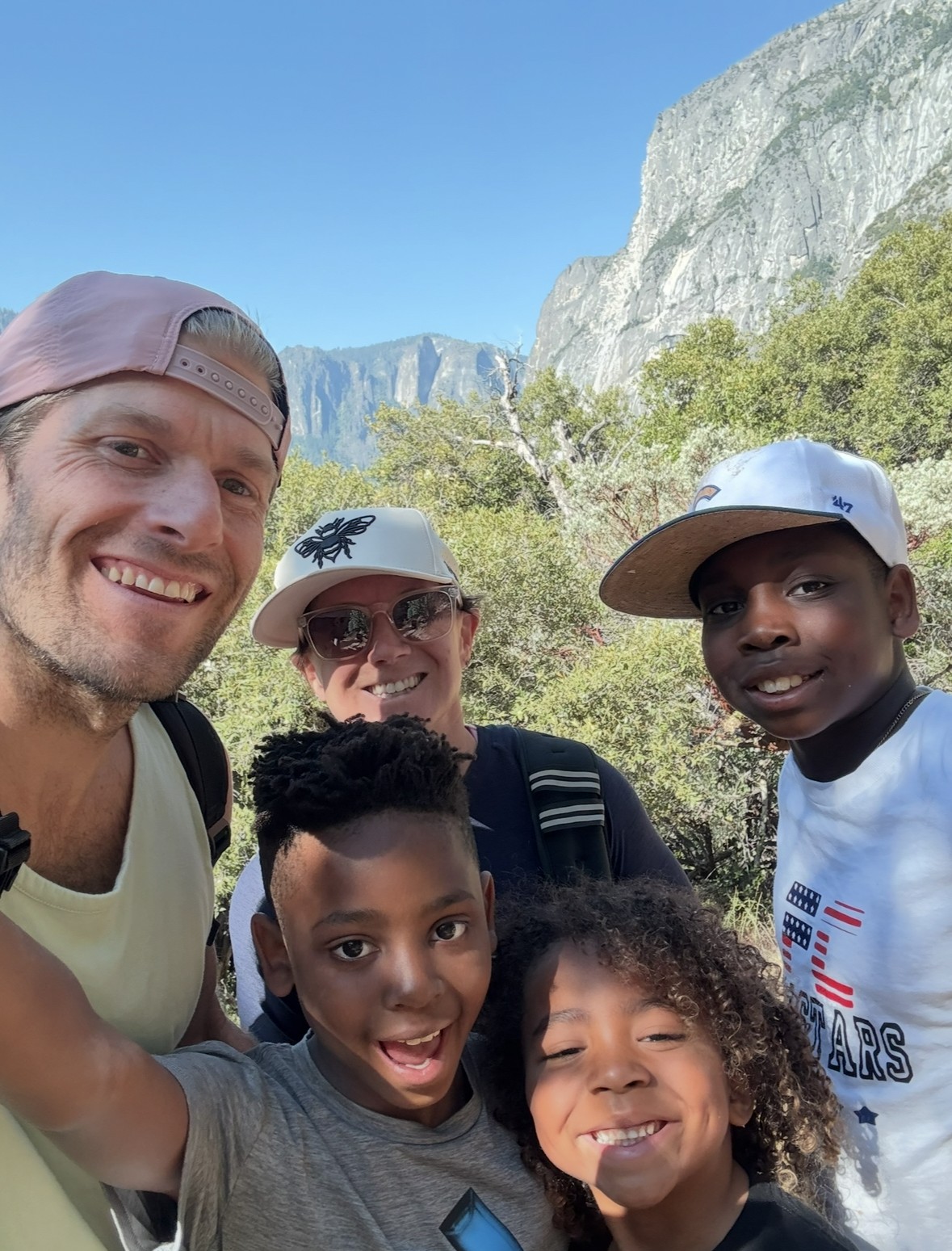
Zach and his wife, Brit, have three adopted sons he says are “the coolest kids on earth”: Clark, Malcolm, and Cyrus.
“Atlanta has a funny way of digging its hooks into you,” says Eyster.
Law school introduced Eyster to the professional culture that initially shaped his career. Like many young lawyers, he understood that the traditional route to success ran through a major law firm. So, after earning his juris doctor degree from Emory (and concurrently pursuing, but ultimately not completing, a doctorate degree as a backup plan), Eyster joined Kilpatrick Townsend & Stockton LLP, where he says “it was off to the races.”
He expected to explore corporate or restructuring work; instead, he discovered trademarks.
Kilpatrick's nationally recognized trademark practice offered Eyster an unexpected career path, and he found himself doing trademark prosecution, enforcement, and litigation. From there, he moved through several different environments, including the law firm Greenberg Traurig, LLP and an in-house position with a software company, gradually learning what worked for him – and what didn't.
At Greenberg, Eyster found important mentors in Sabina Vayner and, in particular, Joel Feldman, whose approach to trademark law left a lasting impression. Feldman had built a thriving trademark practice essentially from the ground up, and Eyster admired not only his legal knowledge but his ability to explain complicated issues in plain English, build trust with clients, and teach younger lawyers.
“To this day, if I have to be adverse to Joel Feldman, I would rather not be,” says Eyster. “I just owe him the world. He taught me a ton. I just wouldn't be where I am without him.”
One lesson stuck with Eyster in particular: If he was going to build a practice of his own, he needed to understand the work “soup to nuts” well enough to teach someone else how to do it.
It was during his years at large law firms that it became clear to Eyster that he had what he calls “partner energy” rather than “associate energy.” He wanted to develop relationships, bring in clients, and take responsibility for solving their problems. He remembers once, while an associate, he won a small trademark client to the firm and was reminded in no uncertain terms that the firm's focus was on its biggest clients.
“I realized that was not the future for me,” recalls Eyster. “That’s why I went to a small firm ultimately. That was kind of the real starting point for my current career.”
The experience helped clarify that what Eyster wanted from his career was closer relationships with clients and greater ownership of the work.
“I enjoy being the person who is called when someone has a problem,” says Eyster. “I relish being depended on. I want that call when there’s an issue. When I solve it, I get a lot of internal validation from having done a good job.”
The opportunity Eyster was looking for arrived unexpectedly during the early days of the COVID-19 pandemic. After leaving the software company where he had a stint as inside counsel, Eyster decided to take a chance on himself. He began working independently, taking on “white label” work for law firms while building his own practice. Within two months, he was earning enough to convince himself that the experiment could work.
He eventually joined Founders Legal, an IP law firm with whom he had formed an independent contractor professional relationship that then invited him aboard. Eyster liked the fit and spent roughly five years at the firm, making partner and chairing its trademark and litigation practice groups. But Eyster still wanted to build something in which he could have an ownership stake and greater control over his practice.
That was when he connected with Alina Lee, founder of Aspire Law, a boutique firm that focuses on serving as outside counsel to companies in the marketing, tech, retail, utilities, and consulting space. The firm characterizes its approach to supporting clients and employees as modern, compassionate, and forward-thinking.
“I think I'm better suited to working at a firm with a smaller-firm model,” Eyster says. “It’s been a real joy.”
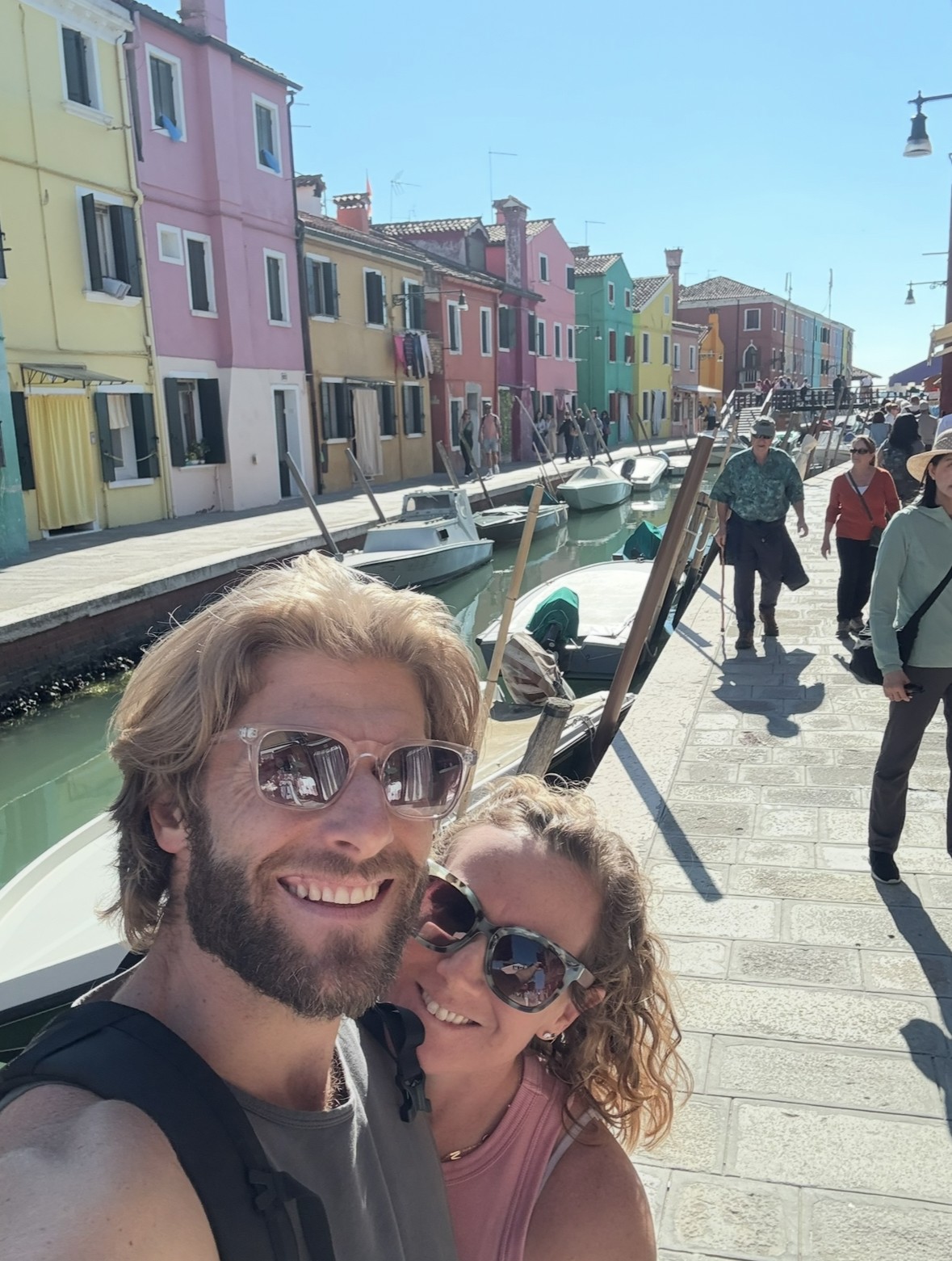
Zach met his wife Brit at Messiah University and the couple married in 2008.
Today, Eyster describes his practice as “an inch wide and a mile deep.” His focus is trademarks, encompassing brand counseling, trademark selection and clearance, prosecution, enforcement, and litigation. He also handles related copyright, right-of-publicity, and licensing matters.
What distinguishes him is his willingness to stay with a client when a problem escalates. Some trademark attorneys focus on prosecution and refer litigation elsewhere. Eyster prefers to handle the problem himself.
“If you have a problem, I do not want to refer your matter. I'll handle it for you,” he says.
Much of his litigation work involves proceedings before the Trademark Trial and Appeal Board (TTAB), where he has practiced for roughly 12 years. He estimates that 60 to 65 percent of his litigation docket involves TTAB matters.
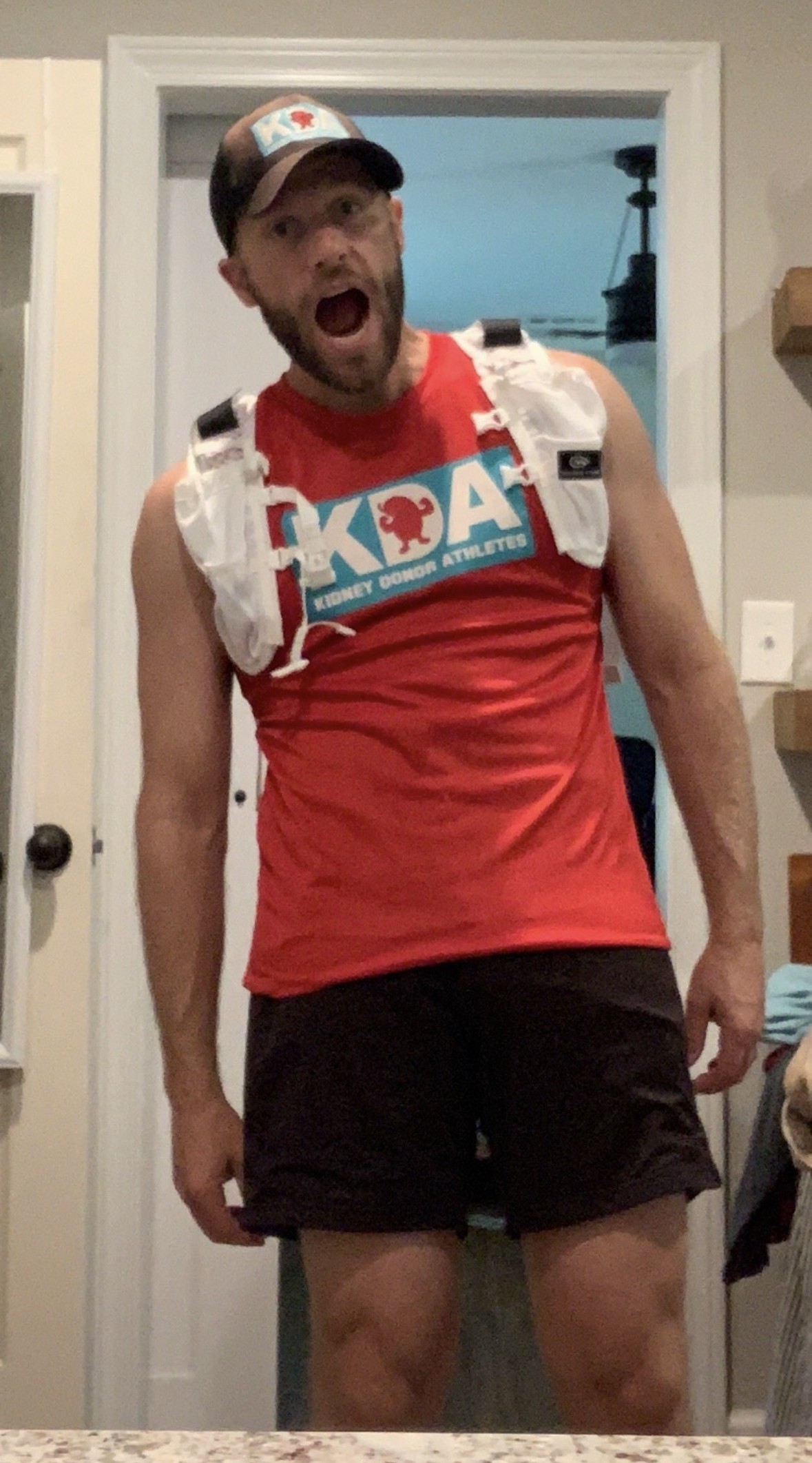
In 2021, attorney Zach Eyster became an altruistic or non-directed kidney donor, volunteering to donate a healthy kidney to someone with advanced kidney disease that he didn’t know.
His approach to the practice is closely tied to the kind of person he is outside it. He and his wife have three sons, all adopted: Clark, Malcolm, and Cyrus. Two of the adoptions were in Atlanta, and the family has maintained relationships with their sons' birth families. Eyster speaks about his children with the same enthusiasm he brings to nearly everything else.
He runs regularly, remains involved in a family that loves baseball, and tries to turn his children's interests into his own.
He also has a history of doing things simply because he decides they are worth doing.
In 2021, after learning about altruistic kidney donation, Eyster decided to pursuing donating one of his kidneys to a stranger. Once he learned it was possible and determined that it was safe for him, he says, the decision was almost automatic.
His donation began a chain of five donations across the country.
“I was like, well, I'm doing that,” he recalls. “Once I knew that that was a thing, I felt I was already a donor in spirit. All I had to do next was donate.”
Eyster recognizes a connection between that decision and the way he approaches his work. He wants to put his clients' interests ahead of his own.
That same philosophy informs the way he works with younger lawyers. Eyster looks for intelligence, but he places equal value on communication, listening, passion, and an internal desire to do good work. He wants associates who care deeply about something – not simply people motivated by fear of failure.
He hopes that the lawyers he mentors eventually look back on their time working with him the way he looks back on his time with Feldman.
“I would love it if some people that I’ve worked with would ultimately think of me the same way that I think of Joel,” he says. “That’s kind of my goal in life.”
That may be the clearest indication of what drives Eyster. He is ambitious, but not particularly interested in the traditional trophies of ambition. He likes people. He likes solving problems. He likes learning. He likes teaching. And he likes saying yes to things that seem worthwhile.
His willingness to follow that instinct has taken him from Pennsylvania to Atlanta, from banking to law, from large firms to his own practice, and from an unexpected kidney donation to raising three adopted sons.
And through it all, he has had Brit beside him.
The two met in college and married in 2008. Eyster describes himself as the more outgoing half of the pair, while Brit is the quieter, more deliberate presence – a professional who works with families of children diagnosed with cancer and someone Eyster describes as exceptionally tough, wise, and organized. Their differences, he says, complement each other.
For all of Eyster's energy and willingness to improvise, he knows that much of what he has built would not exist without her steadiness.
“Brit so thoroughly sets a goal and achieves it,” says Eyster of his wife. “She has a plan and executes on it. She’s the main reason why I've found any kind of success at all.”