Atlanta attorney guided by a ‘right thing to do’ philosophy
Articles
Spotlight
View more from News & Articles or Primerus Weekly

By Brian Cox
Mark Twain is purported to have said, “Travel is fatal to prejudice, bigotry, and narrow-mindedness.”
Attorney Kendall Carter would likely agree.
The Atlanta lawyer credits traveling widely when he was younger for helping him develop a sensitivity to understanding people in their context rather than simply through his own. He believes that ability has made him a more effective lawyer for his clients.
It may have also helped make him a better person.
Kendall grew up in Tallahassee, Fla., the son of a physician and a Spanish teacher and interpreter. His parents encouraged him to get outside of his familiar surroundings. At 15, he spent three months in Paris as part of an exchange program, an experience that expanded on his mother's own enthusiasm for travel and studying abroad. At the University of Tennessee, he encountered people and perspectives different from those he had known growing up. He had a gig waiting tables which gave him another education in the ways people live and see the world.
“I became comfortable around people who are not like me,” he says. “That is a gift.”
Later, as an assistant district attorney in Fulton County (Ga.), he encountered people whose lives and circumstances were far removed from his own relatively sheltered upbringing.
“Not every kid grows up the way I did,” he says.
Even today, that awareness influences his practice. He goes to juvenile court weekly to help clients in dependency or delinquency legal matters. He likes to quote John Candy in the movie “Uncle Buck,” who said “I know what a good kid looks like because they're all good kids.” A desire to help people was what initially drew Kendall toward law. He liked the idea of having a profession that could be useful to people when they needed it.
“Let me see how I can help,” he says of his basic approach to clients. “Let me get back to you in a timely fashion. Let me serve you and help you through this situation.”
His education as a litigator began in earnest at Tulane University Law School. He had initially imagined himself in transactional practice and was, by his own account, mortified by the prospect of public speaking. A third-year trial advocacy class changed that.
“I fell in love with it,” he says.
After graduating in 2001, Kendall spent a challenging period trying to establish himself in the aftermath of the dot-com bust and 9/11. He eventually returned to Atlanta and joined the Fulton County District Attorney’s Office, where he spent several years prosecuting felony cases. The courtroom became a place where he learned both the demands of the profession and the value of standards that could seem impossibly high.
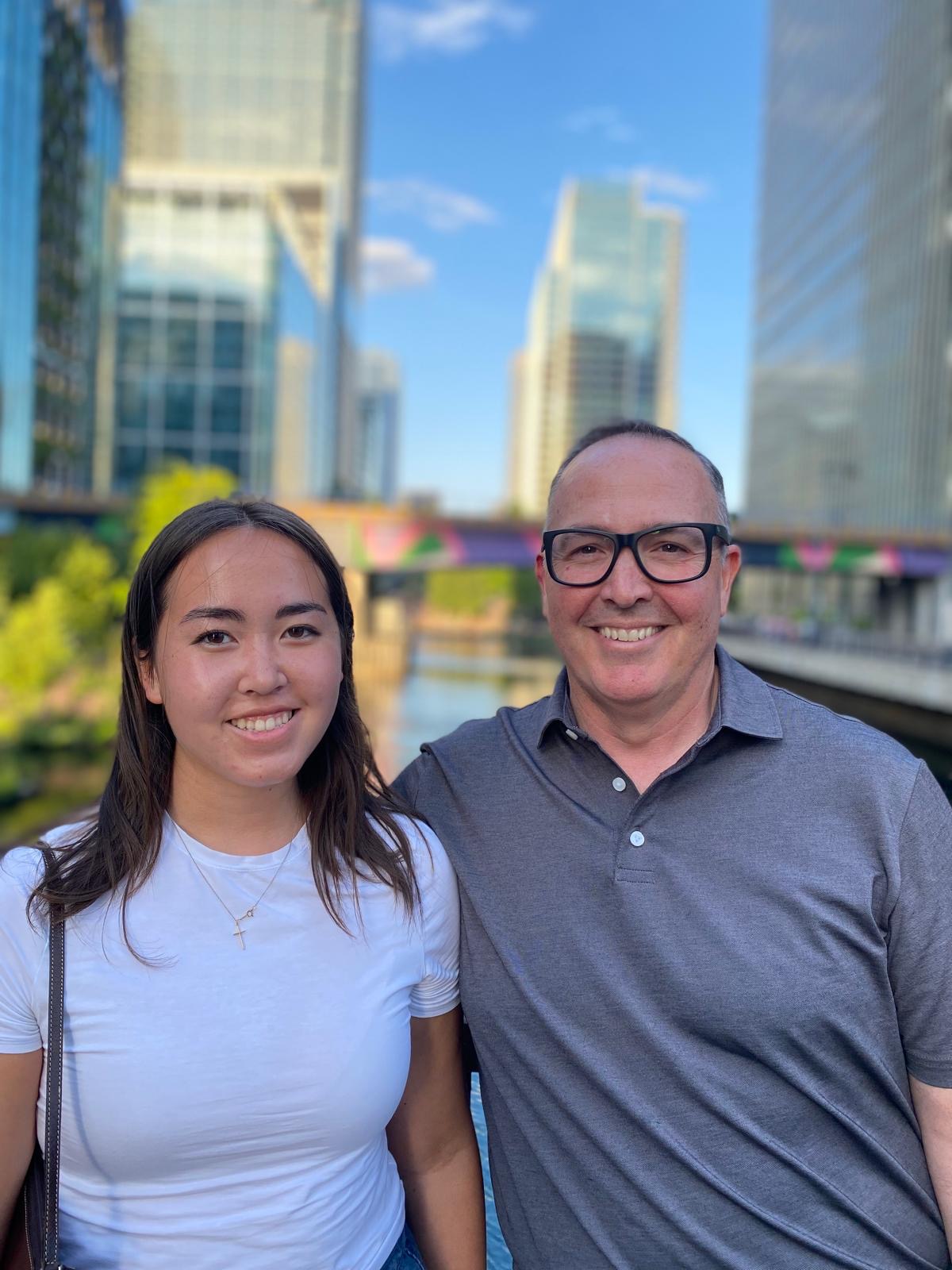
One of the judges before whom he appeared was Constance Russell of the Superior Court of Fulton County, whom Kendall remembers simply as “the best.” He characterizes her as a brilliant jurist who demanded excellence.
Kendall’s career has not followed a straight line toward some predetermined definition of professional success. He has repeatedly moved into unfamiliar territory, discovered something about himself, and adjusted course.
After leaving the DA's office, he spent several years in solo practice. He describes those years as “harrowing,” in part because of the basic economics of being on his own. There was no large organization behind him, no steady paycheck detached from his individual efforts. It was “eating what you kill.”
Solo practice taught him plenty, including how to judge which work was worth taking and when a matter was consuming more resources than it justified. It also taught him something less tangible.
“I found solo practice super isolating,” he says. “I’m much happier practicing with a group of people.”
That realization eventually led him to King & Spalding LLP, where he joined the firm's discovery practice and later became part of its litigation team handling nationwide Fair Credit Reporting Act defense work. He spent roughly nine years there, working with sophisticated clients and large teams on complex litigation.
Toward the end of his time at the firm, the pressure and volume of work had taken a toll. He came to a realization about himself and a clearer understanding of what he wanted in life. The lesson wasn’t so much that he needed to work less. It was that he needed to recognize the boundaries of a life that could not be stretched indefinitely.
“Your life has temporal and physical limits that you have to respect,” he says.
Kendall also began to see cooperation differently. Smart people, he says, can convince themselves they are capable of handling everything themselves. His experience taught him otherwise.
His eventual answer came, unexpectedly, through his wife, Eunice.
Kendall and Eunice met in New Orleans through a mutual friend while she was working at Saatchi & Saatchi, a multinational communications and advertising agency network. She later moved to Atlanta, where their paths crossed again. In 2018, she started her own marketing agency, Accrescent Marketing. As the business grew, Kendall began helping with the company's legal and operational needs and eventually found himself as its chief operating officer.
The change was more profound than a simple job transition. After years as a lawyer at a major firm, Kendall found himself handling business licenses, contracts, payroll, taxes, and the countless practical details involved in keeping a small company operating.
It also gave him a different perspective on his own professional identity.
There were moments, he acknowledges, when his “big firm lawyer” ego followed him into the business. But he learned to recognize it.
“I think this might be a ‘me’ problem,” he recalls thinking. “So let me just put a cap on that ego and let all this mutual benefit sort of pump up.”
The experience reinforced something he had already begun to understand: value is not measured solely by prestige, compensation, or the size of the institution on the door.
“Currency is not the only measure of value,” he says, a pet phrase that he jokes he would make into a needlepoint if he knew how to needlepoint.
That realization now informs the way Kendall approaches both his legal practice and the rest of his life.
At Aspire Law, he has found a professional arrangement that allows him to retain substantial independence while benefiting from the resources and collaboration of a larger group. His work includes advertising and marketing matters, contracts, privacy and website compliance, and data privacy litigation involving technologies such as tracking pixels. It is a practice that draws together the transactional and litigation experience he has accumulated over the years.
Just as importantly, it allows him to practice with other people without returning to the treadmill he had once found unsustainable.

That balance matters to Kendall. His own experience has convinced him that being a good lawyer is not simply a matter of knowing the law or winning cases. It involves knowing when to listen, when to ask for help, when to draw a boundary, and when to recognize that something can be legally permissible without being the right thing to do.
That last distinction is central to his professional philosophy.
“It doesn’t matter if it’s legal and you can get away with it,” he says. “It has to be the right thing to do. And that has to govern everything you do.”
The same philosophy extends beyond his practice. Kendall’s Christian faith has become increasingly important to him, particularly its emphasis on service and charity. He is involved in small groups at church and works with younger men, but he has also found a particularly direct way to serve children whose circumstances are far different from those of his own family.
Through pro bono work in Forsyth County Juvenile Court, he represents foster children in dependency and delinquency proceedings, sometimes appearing in court twice a week.
The work connects with an idea he heard from his pastor: “What breaks your heart?”
For Kendall, the answer has something to do with children who need someone willing to show up for them.
He also believes that work can have value even when there is little or no financial reward.
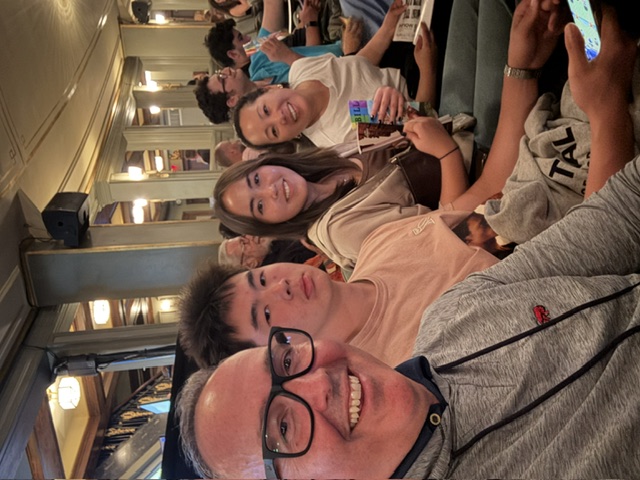
He has become increasingly interested in the things that exist outside the conventional measurements of professional achievement: faith, family, friendship, service, time, and the people with whom he shares these things.
Golf, for instance, has become an important source of fellowship. Kendall has recorded two holes-in-one, both in 2022, but what he enjoys most about the game is not necessarily the score or personal achievements. He talks about the nine-hole Sweeten’s Cove Golf Club in terms of the experience of spending an entire day with someone, playing until you are exhausted.
“It doesn't matter what you shot,” he says. “It just matters that you take somebody with you who would enjoy the experience.”
His children have given him another perspective. His daughter, Campbell, is studying history at the University of Georgia and has an interest in film and possibly museum curation. His son, Knox, is a baseball player who, Kendall says, would rather be on the field than sit through an entire nine-inning game.
And then there is Eunice, whose drive and ambition helped push him toward a different chapter of his own life.
“I would not be the person that I am if it were not for my wife and my kids,” says Kendall with conviction. “They make me have to be better. I think everybody should find somebody for whom they want to be better.”