Mind your business: Florida IP attorney serves as a guardian of innovation
Articles
Spotlight
View more from News & Articles or Primerus Weekly

By Brian Cox
As a law student, Mark Warzecha once traveled to Tijuana with rapper Ice-T.
It’s only one of the many colorful anecdotes that the Florida attorney can share about his unconventional career path, which began when he decided at a concert to become a lawyer.
The New Jersey native was attending a show in Brooklyn while studying at Rutgers University when the band brought its attorney onstage and presented him with a gold record. Warzecha, who had not yet settled on a career, turned to a friend for an explanation.
“Wait a minute,” he remembers thinking. “Bands need lawyers?”
That was it. Warzecha had found his calling. He decided to become an entertainment attorney, representing musicians and others in the music business. The ambition eventually took him to California for law school, into the clubs and concert halls of Manhattan, and on a journey that would lead him away from the entertainment industry altogether and toward intellectual property law.
It also led him to Florida, where he could build his practice while pursuing his lifelong passion for fishing. In fact, his love of fishing was a major reason he moved from Indiana to the Sunshine State.
Warzecha grew up in a blue-collar, middle-class family. His father worked for General Motors, and his older brother was a carpenter in Manhattan. Warzecha spent much of his time working with his hands, too, taking jobs in construction, heating and air conditioning, and other trades during high school and college.
Deemed the “smart” one in the family, he was the first person in his immediate family to attend college, and he did not have a ready-made roadmap for navigating the professional world. When an uncle suggested he consider becoming an actuary, Warzecha listened to the explanation and quickly concluded that the profession was not for him.
“I said, 'that sounds like the worst job in the world,’” he recalls.
Then came the concert and the gold record presentation.
Warzecha enrolled at California Western School of Law in San Diego, drawn partly by the school's advertised entertainment law program and, he admits, partly by the prospect of trading New Jersey for sunny Southern California. He arrived with long hair and enthusiasm for the music business, only to discover that the entertainment curriculum was considerably less extensive than he had anticipated.
Rather than wait for the school to provide the experience he wanted, Warzecha and several classmates established an Entertainment and Sports Law Society. They invited managers, agents, and other industry professionals to speak, giving students an opportunity to learn about the business beyond the classroom.
In the early 1990s, the controversy surrounding censorship and Ice-T's song “Cop Killer” offered a timely subject for discussion. Warzecha contacted Ice-T's management and invited the rapper to speak at the law school about free speech and the First Amendment.
Ice-T agreed. He arrived in San Diego with his girlfriend, pulled up in his car and delivered a presentation that Warzecha remembers as both engaging and eyebrow raising.
The rapper used a deliberately crass example to illustrate the distinction between artistic expression and literal truth. Sitting beside the law school's dean, Warzecha wondered whether the event he had organized might also be the event that ended his legal career before it began.
It did not. The presentation was a success, and afterward Warzecha and some of Ice-T's companions traveled to Tijuana.
For a young law student trying to establish himself in the entertainment business, it was a memorable beginning.

Graduating in 1994, however, Warzecha encountered a less glamorous side of the profession. He returned east and began applying to entertainment law firms in Manhattan.
He eventually completed an externship with a small Manhattan firm, then decided to strike out on his own. He joined forces with other professionals, including an attorney who practiced toy law and a public relations specialist, and found affordable office space in Manhattan.
By the mid-1990s, he was running his own practice, representing unsigned musicians, managers, engineers, producers, and others working in the music business.
The hours were punishing. Warzecha might spend his days working on legal matters, his evenings attending shows, and his nights trying to persuade bands to hire him. He went to industry parties, including Grammy events, and worked to build relationships with artists who might someday land recording contracts.
The challenge was that he was competing for clients against firms with considerably greater resources and established relationships with major artists.
“I’m sitting there competing with the powerhouses,” he says. “And I’m going to these shows and I’m trying to get these artists to sign up with me because I’m a great guy and I love music.”
Then a large firm would arrive with a more impressive client list. Warzecha could offer enthusiasm, commitment, and personal attention, but he could not match the name recognition of lawyers representing artists like Bruce Springsteen, Madonna, and Billy Joel.
Still, he has no regrets about those years. The experience gave him an education in the music business, exposed him to talented people, and taught him how to build a practice without the advantages of an established firm.
It also reinforced a work ethic he had developed long before law school.
“Growing up, whatever I wanted, I had to go and get it,” he says. “Not to say that I was deprived of anything, but I got the basics. If it was something extra, if I wanted a new baseball bat, for example, I had to go get a paper route and make money.”
He had been working since he was 13 or 14, and the hustle required to establish himself in Manhattan was simply an extension of that upbringing.
After the September 11 attacks, however, Warzecha began reconsidering the life he had built. His partner at the time was from Indiana and suggested they move there. Warzecha was ready for a change.
In 2002, he left Manhattan for Evansville, in southwestern Indiana, trading the pace of New York for a considerably quieter suburban environment. The transition was cultural as well as professional.
In New York, he was accustomed to keeping his head down and moving with the crowd. In Indiana, strangers smiled, waved, and said hello.
“I realized some of these people just didn’t have anywhere to go,” he says. “And I was like, wow, that’s an interesting concept.”
He found other reminders of home, too, including the opportunity to indulge his lifelong interest in baseball. Evansville was the hometown of former New York Yankees star Don Mattingly, and Warzecha soon found himself at an autograph signing with a Yankees jersey and a New York license plate.
He had removed the plate from the front of his car, since Indiana required only a rear plate, and brought it along with the jersey. Mattingly signed both.
Warzecha still has the jersey and license plate displayed together in a plaque.
Professionally, Indiana required another adjustment. Warzecha had spent years working with musicians, for whom intellectual property was central to their livelihoods. Now his clients were businesses that might not recognize the value of what they had created.
He shifted his practice toward trademarks, copyrights, and patents, drawing on the experience he had gained in entertainment law. The underlying legal concepts were familiar, but the audience had changed.
Musicians understood that their recordings, names, and creative work needed protection. Business owners, by contrast, were often focused on getting a product to market, generating sales, and keeping operations running. Intellectual property could seem secondary until someone copied a product, challenged a trademark, or began profiting from another company's work.
Warzecha had to change his approach. Rather than simply explain the law, he needed to help clients understand what intellectual property they possessed, why it mattered, and how protecting it could contribute to the value of their businesses.
Over time, the work also became increasingly international. The internet and modern distribution networks have made it possible for even relatively small businesses to sell products and services across borders. A company that once operated primarily in its home market may now find itself competing globally, with corresponding questions about trademark rights, licensing and enforcement in multiple jurisdictions.
Warzecha advises clients on domestic and foreign intellectual property matters and works with law firms around the world to help businesses enter the U.S. market. His practice includes trademark prosecution and litigation, patent litigation, copyright matters, unfair competition, and domain name disputes.
He also handles disputes involving infringement and counterfeiting, representing clients seeking to enforce their rights as well as those defending against claims.
The work requires understanding not only the law but also the commercial realities behind a dispute. A legal victory may not necessarily be the best business outcome, and litigation can consume time and money that a company would rather devote to its operations.
Warzecha is a Florida Supreme Court Certified Civil Mediator, an experience that informs his approach to resolving disputes. He encourages clients to consider alternatives before rushing into litigation, whether that means contacting an opposing party, negotiating a resolution, or examining the problem from a different perspective.
“I think lawyers need to be more creative with how we problem solve, with how we avoid conflict,” he says.
That philosophy extends to his advice for businesses. Intellectual property protection, he argues, should begin early, when a company is developing a product, choosing a name, or building a brand. Waiting until a problem arises can leave a business with fewer options and substantially higher costs.
“I think businesses don’t appreciate IP until it’s too late,” he says. “And I think business owners and individuals need to be more proactive.”
The principle is particularly relevant in a region shaped by aerospace, defense, and technology. The Melbourne area has a substantial population of engineers and inventors, many of whom are developing ideas with commercial potential. Helping those clients recognize and protect their intellectual property is an important part of Warzecha's work.
He has also had to consider how artificial intelligence may affect the profession. While acknowledging that AI can make it easier to produce knockoffs and infringe intellectual property, he sees the technology as a tool rather than a replacement for lawyers.
He compares the current debate to the introduction of electronic legal research. When he began law school, students consulted books and Shepardized cases by hand. Westlaw and Lexis changed the process, but they did not eliminate the need for lawyers who could recognize relevant issues and evaluate the results.
AI, he believes, can make attorneys more efficient and help younger lawyers learn more quickly. But it still requires experienced judgment, careful verification, and an understanding of the client's actual problem, which is one reason why Warzecha takes a hands-on approach with associates. He wants them involved from the initial client intake through the conclusion of a matter, rather than assigning them isolated pieces of a brief without explaining the larger case.
Young lawyers need to understand not only the legal questions but also the business considerations, client expectations and financial realities that shape a matter, he argues. A client who asks to file a lawsuit may be better served by a phone call or a negotiated solution.
Warzecha encourages associates to take on challenging assignments, with support available when they encounter difficulties. He also emphasizes the importance of communication, explaining that clients may not understand the procedures lawyers take for granted.
A brief update – even when nothing significant has happened – can reassure a client that the matter is being handled and that the attorney understands what is at stake.

It is a practical approach to mentoring, grounded in the belief that becoming a good lawyer requires more than mastering legal doctrine.
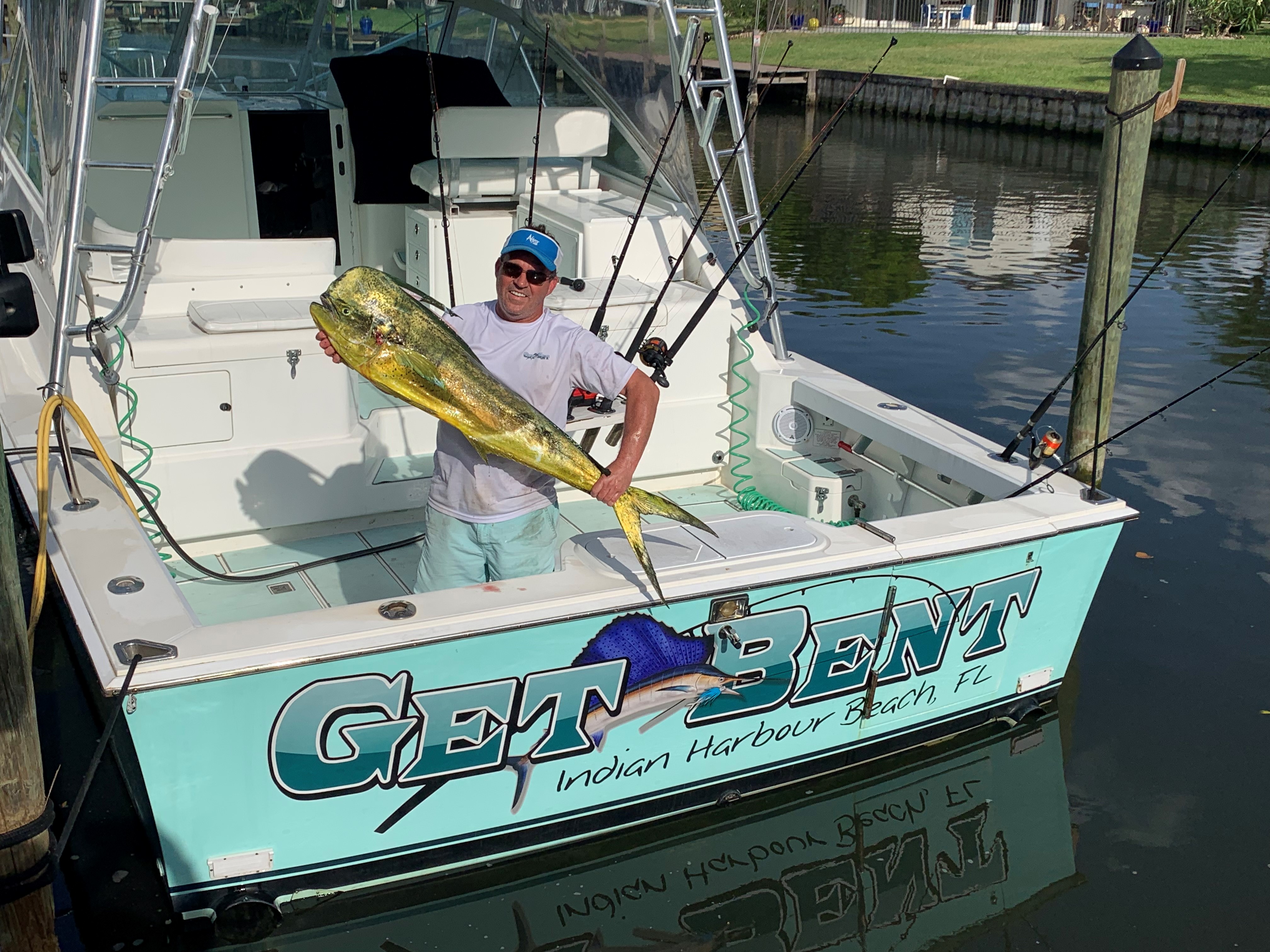
Of course, the demands of a growing practice leave less time for the pursuits that originally drew Warzecha to Florida. But fishing remains a major part of his life. He has fished waters from the Bahamas and the Florida Keys to more distant destinations, and he has achieved what anglers call a lifetime grand slam: catching a black marlin, a blue marlin, and a sailfish.
His interest began in childhood, fishing with his father and brother in New Jersey's Raritan Bay. The move to Indiana introduced him to freshwater fishing, but it also made him appreciate how much he missed the ocean. A fishing trip to Panama eventually connected him with a fellow angler who invited him to join outings launching from South Florida.
Before long, Warzecha found himself flying from Indiana to Florida to fish whenever he could. The arrangement became difficult to ignore. As he tells it, a friend pointed out that he was either in Florida, planning a trip to Florida, or wishing he was in Florida.
In 2011, an opportunity to join Widerman Malek, P.L. made the move possible. Warzecha had kept in touch with an attorney he knew from his Manhattan days, who had returned to Florida and was now part of the Melbourne firm. When Warzecha called to inquire about the job market, the response was straightforward: the firm could hire him.
He visited Melbourne, liked its relaxed atmosphere and beaches, and decided to make the move. After passing the Florida bar, he joined the firm around the turn of 2011-12. He has since built a nationwide and international practice while serving as director of its intellectual property litigation department.
Outside the office and on the water, Warzecha spends as much time as possible with his children and at their sports activities. He coached his son from T-ball through the early years of the sport, but recently watched him join a travel baseball team and develop under a new coach. His daughter has discovered a passion for volleyball.
“I just enjoy watching them develop,” says Warzecha. “I’m a lucky dude.”
Looking back on his career, Warzecha can identify a unifying thread. Whether representing a musician trying to protect a recording or a company seeking to safeguard its brand, the appeal of the work is the same.
“I have always loved the creative part of practicing law and protecting a creator's work,” he says. “That's one of the reasons that I got into it in the beginning.”