

Nathan Hale
Articles
Famous Quotes
View more from News & Articles or Primerus Weekly

By Tom Kirvan
Widely regarded as America’s most famous Revolutionary War spy, Nathan Hale is remembered most for his apocryphal last words: “I only regret that I have but one life to lose for my country.”
Hale was born to a prominent Connecticut family in 1755 and graduated with honors from Yale University in 1773, promptly beginning a career in teaching. When the Revolutionary War began two years later, Hale joined the Connecticut militia and was quickly appointed as first lieutenant, displaying an eagerness to go to combat against the Redcoats.
He soon answered the call from General George Washington for a dangerous intelligence-gathering mission on Long Island to scope out British troop movements. He left for the assignment outfitted as a schoolmaster and carrying his Yale diploma, using the cover story that he was a teacher looking for work.
Within days of beginning his assignment, Hale was captured by the British and was executed by hanging on the morning of September 22, 1776 at the age of 21.
When news of his final words spread, Hale became one of America’s foremost patriots, whose legend continued to grow as the fledgling nation fought for its independence.
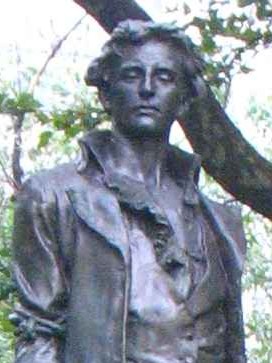
A statue of Hale was unveiled at CIA Headquarters in Langley, Va. on June 6, 1973, the bicentennial anniversary of his graduation from Yale. On the occasion, Hale was praised by CIA officials as “the country’s first intelligence officer.” He was remembered for his sacrifice and for the words he uttered before embarking on his fateful mission:
“I wish to be useful, and every kind of service necessary to the public good becomes honorable by being necessary,” said Hale.
As a footnote to his place in American history, the CIA holds to the legend that placing a quarter – which bears the likeness of George Washington – around Hale’s statue will ensure the safety of officers preparing to leave for an assignment in defense of American freedom.
*Sculpture by Frederick MacMonnies (1863-1937); photo by poster (User:Americasroof)., Public domain, via Wikimedia Commons