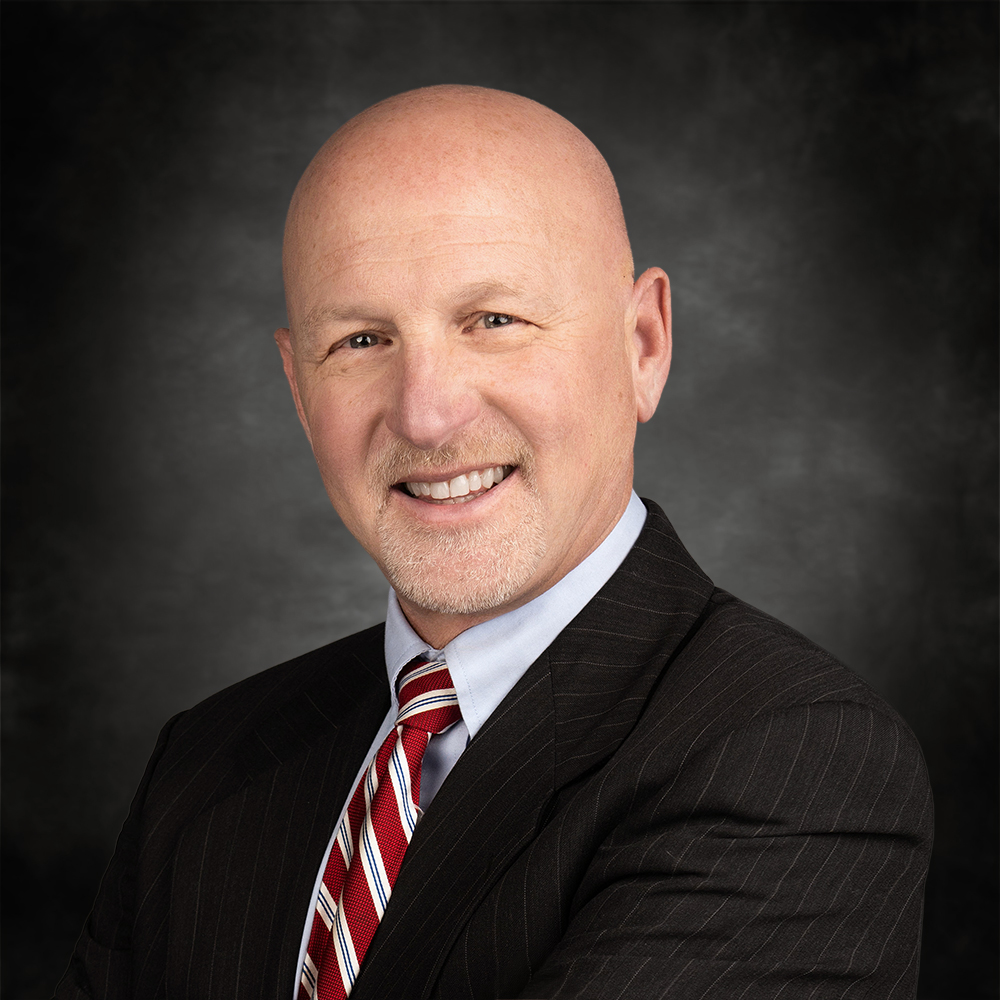
People first, future forward: Meet the new leadership team
at Kohner, Mann & Kailas
By Jo Mathis
Four managing partners with one unified vision rooted in relationships
For nearly nine decades, Kohner, Mann & Kailas, S.C. (KMK) has been a cornerstone of the Milwaukee legal community. As the firm approaches its 90th anniversary in 2027, it enters a new chapter with a team of four managing partners whose complementary strengths, shared values, and deep respect for the firm’s legacy are shaping its future.
President Samuel Wisotzkey, vice presidents and directors Melinda Bialzik and Ryan Billings, and treasurer and director Darrell Zall officially stepped into their expanded roles following the retirement of long-time president Matt Gerdisch at the end of 2025.
But this was no sudden handoff; it was actually years in the making.
A succession built on trust
The seeds of this leadership evolution were planted long before any formal announcement was made. As Wisotzkey explains, the four partners had been talking amongst themselves about the firm’s future for years before they ever made it official.
“We had a senior partner who officially retired at the end of 2019. But even before that, the four of us were talking about the future of the firm and the future of our roles in the firm,” Wisotzkey recalls. “We approached Matt and expressed our interest in participating. It’s been a process, and a longer one than any of us envisioned, but that’s how these things have to work. They don’t happen overnight.”
For Billings, one meeting in the summer of 2019 proved to be a defining moment.
“The watershed moment for me was when the four of us approached Matt and expressed our interest in rising to leadership positions, and he expressed that he was thinking about his long-term plan and wanted to bring us into the fold,” he recalls. “After that day, something changed for me. I now felt that we were in a position where we could really build something together, and that we were going to do it as a team.”
He said knowing that his opinions were considered and that they were working together towards a common goal changed his approach to everything.
Matt Gerdisch deserves considerable credit for the smoothness of the transition, says Wisotzkey, noting: “He had great foresight to look at who was coming below him and realize that perhaps having a single person in a management role was not going to be the most conducive and productive for the firm, and to look to all four of us to come together as a team behind him.”
Four different strengths. One cohesive team.
Ask any of the four partners what makes their management model work, and the answer is consistent: It’s the differences between them that make them strong.
“We’re a good team because we all have slightly different styles and strengths, which are complementary,” says Bialzik. “I’m a big-picture person who’s learning to be more detail oriented, whereas others in our group are naturally very detail oriented. I’ve worked with a lot of people, in a lot of different kinds of organizations, and one of my strengths is being able to work with different personalities and different styles. Although our styles are all different and our strengths are all different, we have been working very well as a team to utilize all of those strengths together for the good of the group.”
Zall echoes that sentiment, noting that the model only works because the team is genuinely open to one another. “The key to making a model like ours work is that the team has to work together,” he says. “We have a group of four who are all different. Different styles, different strengths. But we have made a concerted effort to be upfront in our discussions – even of difficult issues – and work together so that we can still be efficient and still be functional. There have been many discussions I’ve walked into really thinking I was going to go one way, listened to the arguments, and understood that maybe another way was better. It really has enabled us to look at problems in a much different way, and I think it really benefits our clients.”
Billings, who chose a boutique firm after beginning his career at a 500-attorney practice, sees the four-partner model as a structural advantage. “The greatest danger in running a law firm is becoming stale in your thinking; not taking advantage of opportunities and not recognizing a changing environment,” he says. “The four of us serve to challenge each other, constantly bringing new ideas and revisiting old ways of thinking. It’s a stronger model than the traditional one where one leader makes all the decisions. With a more democratic and broad-based model, we have a lot of different perspectives and ideas.”
Embracing technology without losing the human touch
If there’s one theme that runs through every conversation about the firm’s future, it’s the challenge and opportunity of technology. All four partners are watching the rapid evolution of generative AI and legal tech.
“Both the greatest challenge and opportunity is change,” says Billings. “We are operating in a changing legal landscape. The needs of our clients are changing, and technology is changing on a day-to-day basis, including the explosion of generative AI products and the promise and concerns that come with them. That’s a challenge because we need to adapt to changes that are happening very quickly. But the opportunity is – if we are agile and flexible – we can provide better services to our clients at better value than they can get from potential competitors. If we rise to that challenge, we can distinguish ourselves in the legal market.”
Wisotzkey and Bialzik, both members of the firm’s IT committee, have developed a heightened appreciation for the critical importance of the firm’s technology infrastructure.
“Before I was on that committee, I didn’t even think about how the technology we rely on every day impacts how we deliver services to our clients and how important it is,” says Wisotzkey. “Now I’m much more aware of what’s needed to keep that whole side of the firm running and what happens when it doesn’t work. Any loss of any one component can impact everybody in the firm.”
But Zall is careful to keep technology in its proper place.
“I would like to continue to make sure that we’re on the forefront of technology,” he says. “But I also think it’s important that we are still a people-based business. Sometimes it’s amazing when you get on the phone and just talk to someone – call a judge, call a clerk. It makes all the difference in the world.”
A nationwide and international footprint strengthened by Primerus
Founded as a commercial collection firm, KMK has steadily expanded over the past three decades into creditors’ rights, commercial foreclosure, bankruptcy representation, and a growing complex litigation practice. Today, the firm operates with a nationwide and even international reach, a reality that shapes how the new leadership team thinks about client service.
“You no longer practice just in the state of Wisconsin,” says Zall. “With the clients we have, they have tentacles all over the country. An action may start in Milwaukee or Manitowoc, Wisconsin, but it certainly filters out. The ability to call on a Primerus attorney has really been essential to us, because we know they are competent. That takes a big vetting step right out of the way. When I pass a client on, that’s my reputation. That’s me. I feel very comfortable every time I work with a Primerus attorney or pass a client on. Our clients are getting excellent representation.”
For Billings, the Primerus network has become a key part of how KMK serves as a de facto outside general counsel for its institutional clients.
“Part of our service philosophy is: If a client has a need, we want to be able to meet it,” he says. A lot of our clients are starting to ask us: ‘I need this. Can you find me someone who does this? Can you manage that relationship, make sure the cost structure is appropriate, and that the work is of the highest caliber?’ We are becoming the go-to counsel for our business clients whenever they have a need of any kind. And when that need is outside of our practice area or geography, we go to Primerus.”
Wisotzkey notes the network has been particularly valuable in his Chapter 11 practice, which is national by nature. “One of my first go-tos – if I have a case outside of Wisconsin – is to look for a Primerus firm who could assist us. Primerus has been a tremendous asset for finding co-counsel to collaborate with and for assisting other Primerus counsel who have matters in Wisconsin.”
As always: People first
Despite the firm’s increasing national and international reach, all four partners insist the practice of law is, at its core, a people business. And that will never change.
A firm is only as good as its people, says Zall.
“I want to make sure that we continue to develop individuals who are good advocates, good communicators, and strong people,” he says. “As much as I want to say technology is important, I still think when it comes down to the end of the day, an argument is formulated by a person, and relationships are created by individuals. That’s what the practice of law is. People come to you when they have a problem, and we want to be able to solve it.”
Wisotzkey emphasizes that developing the next generation of firm leadership is more than an aspiration. It’s an active strategy. “We would hope that whether you’re an associate just starting out, or a senior associate, we’re trying to empower those people to think more as management, because when you start thinking like that, you can ascend into those positions,” he says, adding that in any organization, you want talented staff forming a deep bench to be able to step up when the time comes.
Zall says the real reward will come in 10 years when the next group of management says the same thing about the current team.
“That’s what management is,” he says. “If you want to keep an organization going for 80, 90, 100 years, you need to have the next group of people ready.”
The team also credits their exceptional staff for making the transition as seamless as it has been.
Their office and operations manager recently celebrated her 40th anniversary with the firm.
“She knows more about how this firm has operated than anyone,” says Wisotzkey, referring to Patricia Kinateder. “That institutional knowledge has been invaluable to me personally, and I think to all of us. This transition would have been a lot harder without the excellent support staff we have.”
The next chapter
As KMK approaches its ninth decade, its new leadership team looks to both the weight of what has been built and the work that is still ahead. What started as a commercial collection firm in Wisconsin has expanded into an international full-service civil law firm. The leaders intend to maintain the firm’s core competency, however, which always comes back to the creditors’ rights base.
As Bialzik put it: “A judgment is only worth what you can collect on it. KMK’s exceptional strength in the commercial collections space makes us better in everything we do. We help clients structure their contracts to maximize the ability to obtain swift relief in the event of non-performance, we litigate disputes efficiently to judgment, and we rapidly turn judgments into dollars for our clients. Each step in the process reinforces the others, and it ends up being a virtuous circle, because our peers know we will quickly turn disputes into recoveries, which gives us unparalleled credibility in negotiations.”
And for all the talk of technology, strategy, and growth, Zall brings it back to something basic.
“Thirty years ago, if you’d asked me what the firm would look like 30 years ahead, I would never have guessed what the practice is now,” he says. “But I want to make sure we’re at the edge of technology and still a people-based business. When we’re dealing with clients and people, it’s communication. And that’s what the practice of law is. People come to you when they have a problem, and we want to be able to solve it. We are constantly working to build relationships and to help our clients find solutions for going on 90 years.”
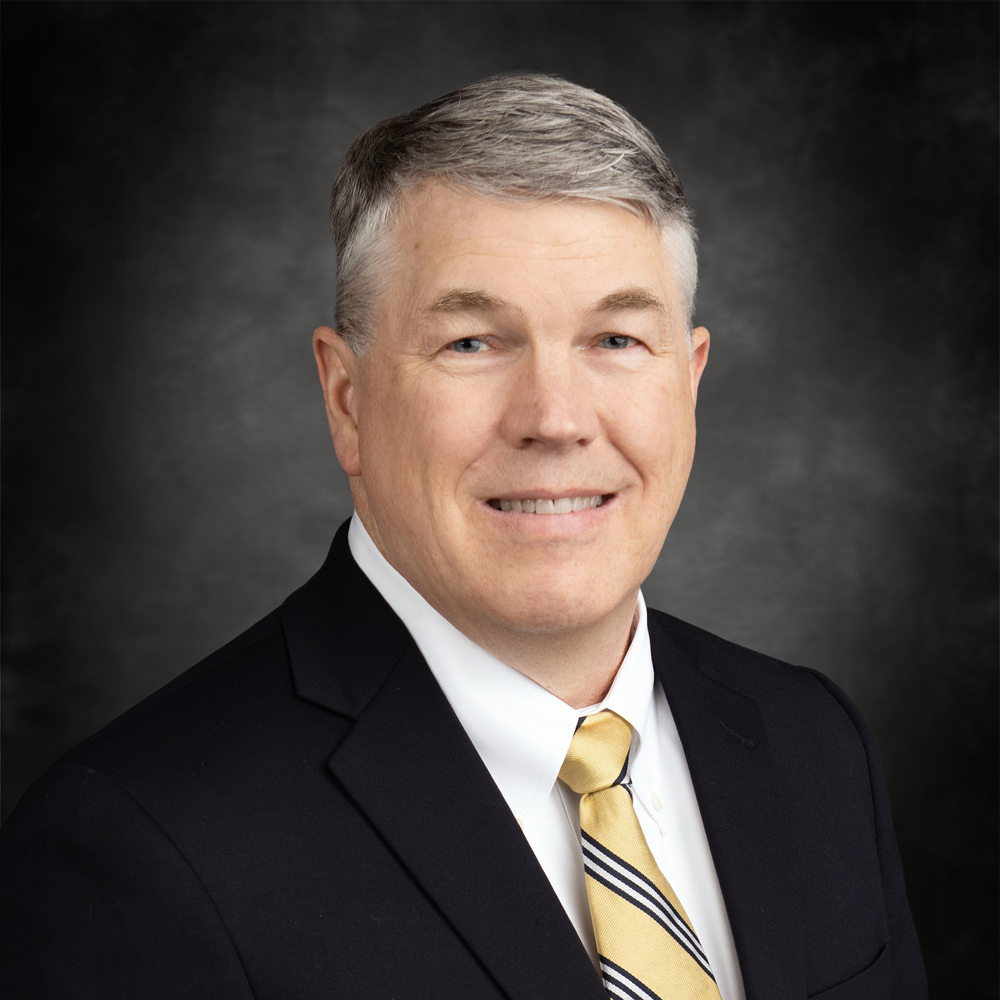
Samuel Wisotzkey
President
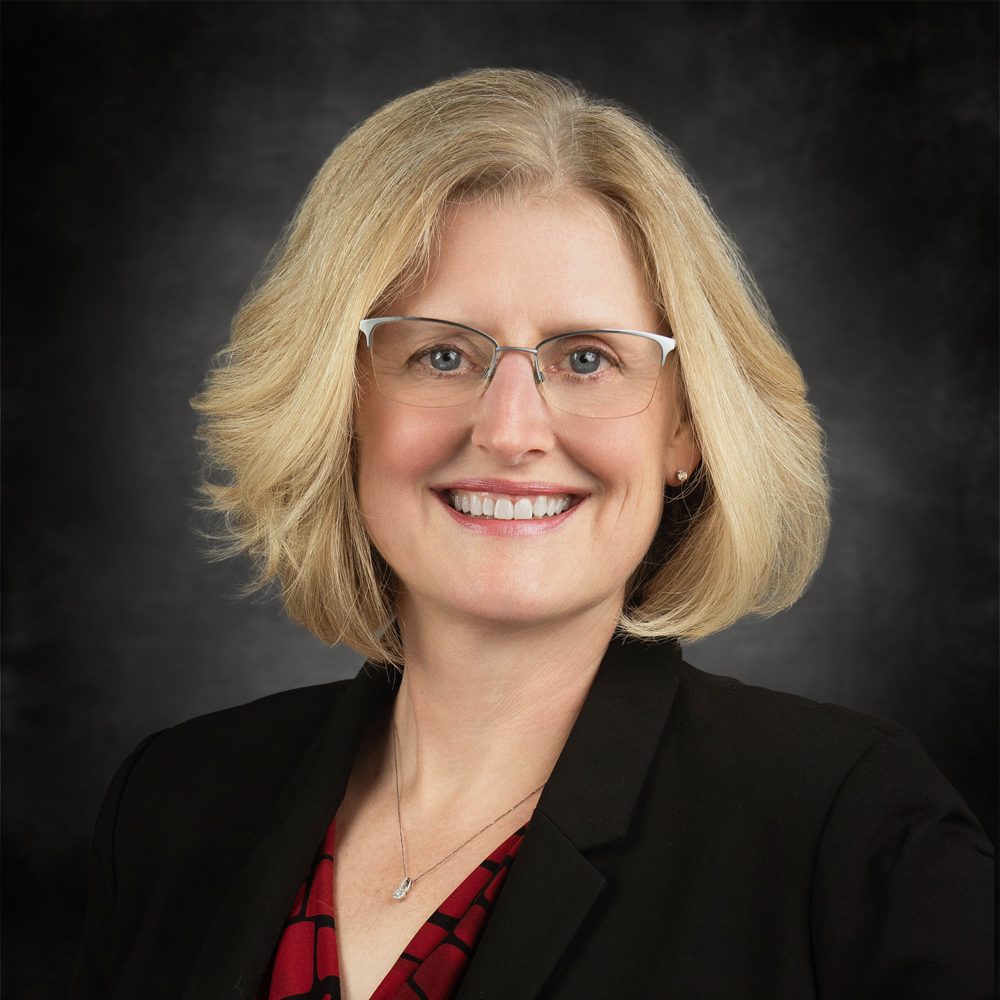
Melinda Bialzik
Vice President and Director
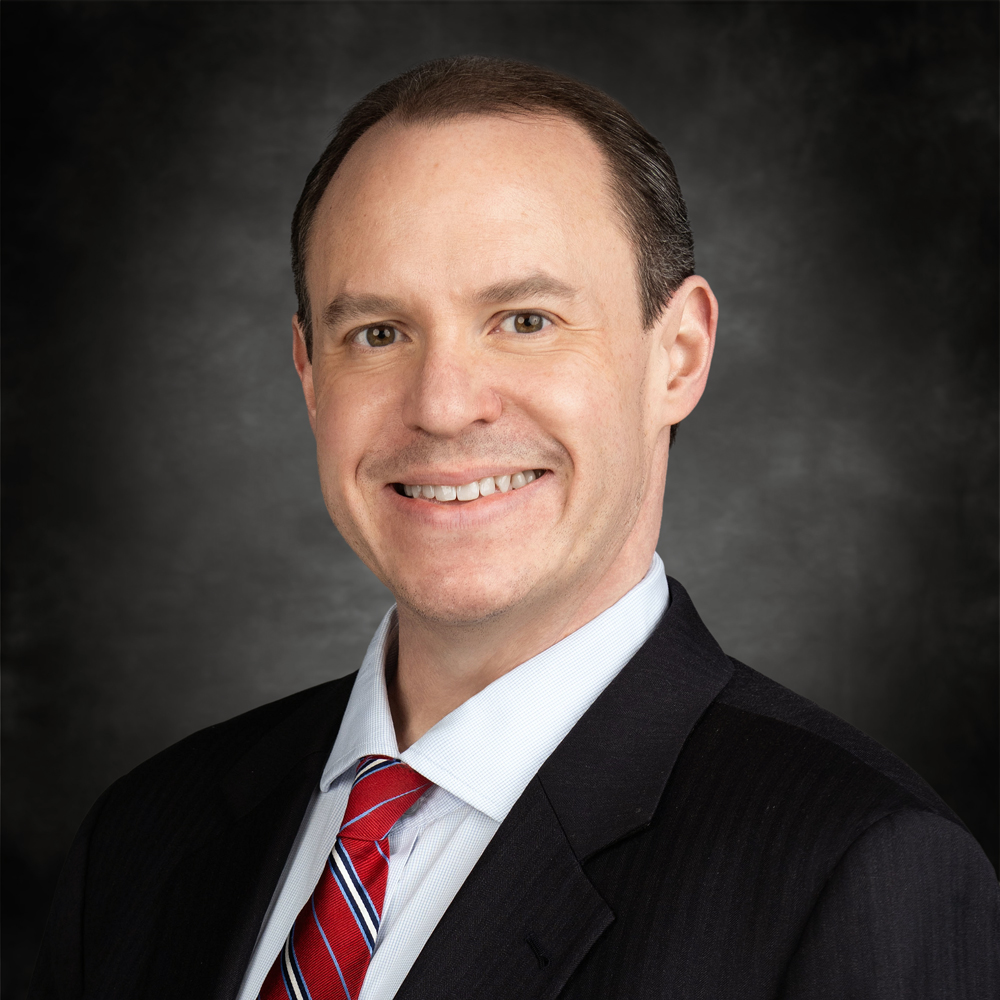
Ryan Billings
Vice President and Director