

Mahatma Gandhi
Articles
Famous Quotes
View more from News & Articles or Primerus Weekly

By Tom Kirvan
The primary leader of India’s independence movement, Mahatma Gandhi was the architect of a form of non-violent civil disobedience that had a global impact, particularly in the United States during the Civil Rights Movement of the 1960s.
As a young man, Gandhi had intentions of becoming a doctor, but his father steered him into the legal profession instead, encouraging him to study in London. Upon his return to India in 1891, Gandhi quickly became disenchanted with life as a lawyer, moving to South Africa where he began studying Hindu spiritual texts, adopting a life of simplicity, austerity, fasting, and celibacy.
It was in the apartheid nation that Gandhi began developing his non-violent resistance tactics after he was forcibly removed from a train after refusing to give up his seat in the first-class railway compartment.
Returning to India in 1915, he transformed the Indian National Congress into a mass movement for independence through campaigns like the 1930 Salt March and the 1942 Quit India movement.
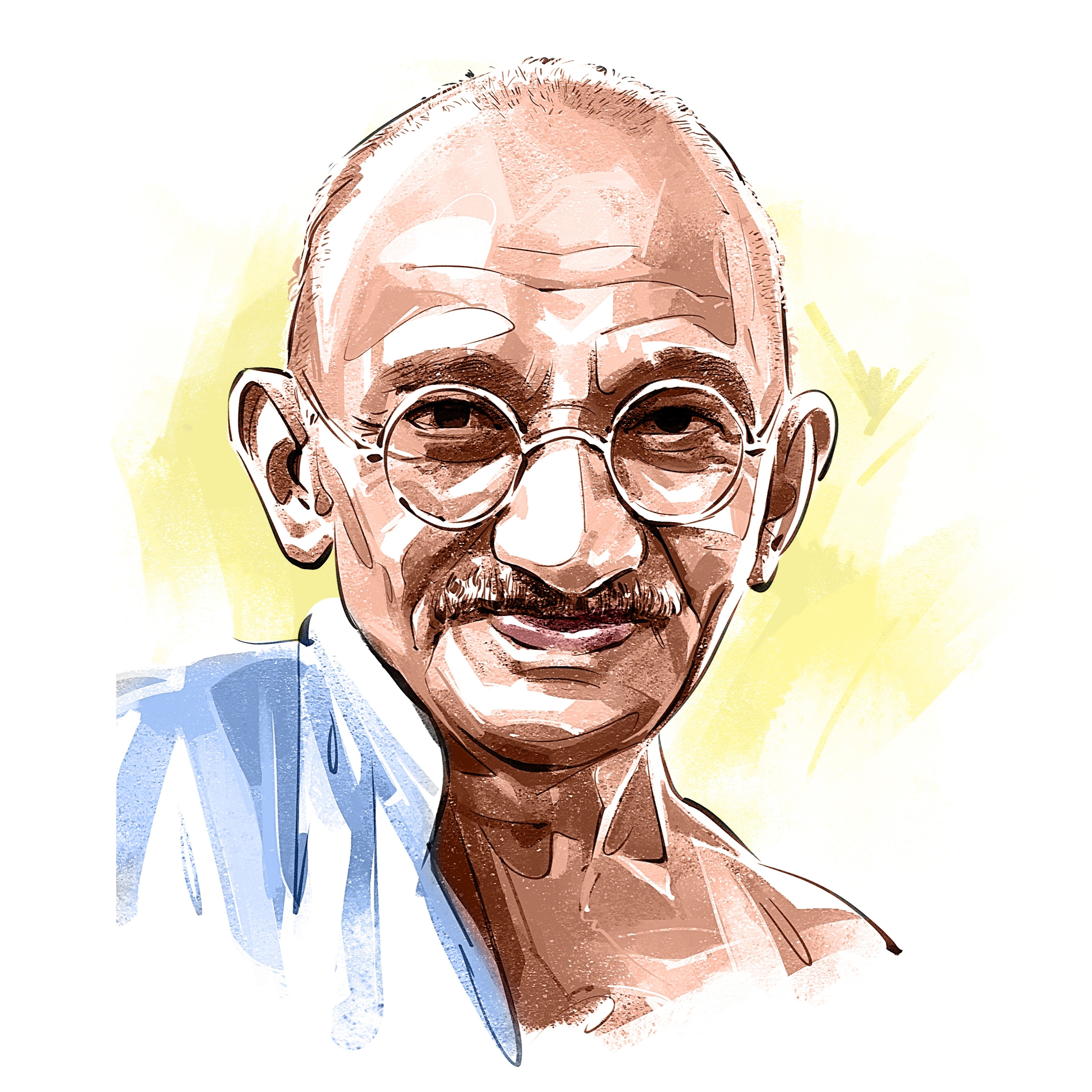
His international fame grew in 1922 when he was arrested by British authorities on March 10 for sedition and was sentenced to six years in prison for protesting the rule of the colonial government.
“You must be the change you wish to see in the world,” Gandhi said in imploring those who longed to see Indian home rule.
“An eye for an eye ends up making the whole world blind,” he maintained. “Nobody can hurt me without my permission.”
In the 1940s, Gandhi’s vision of a religiously pluralistic India was increasingly challenged by Muslim nationalism, which sought a separate homeland for Muslims. When India was granted independence in 1947, the country was partitioned into India and Pakistan, leading to mass displacement and deadly religious violence that Gandhi aimed to prevent.
Gandhi’s efforts to promote unity were seen by some Hindus as too resolute, prompting various threats against his life. On January 30, 1948, Gandhi was assassinated by a right-wing Hindu extremist, cutting short a life dedicated to the goal of peaceful social and political change.
“In a gentle way, you can shake the world,” is one of Gandhi’s most memorable quotes, and inspiring the likes of Martin Luther King Jr. and Nelson Mandela as they took up the cause of equality and justice for all.