

Samuel Morse
Articles
Famous Quotes
View more from News & Articles or Primerus Weekly

By Tom Kirvan
On January 6, 1838, Samuel Morse unveiled an invention that would revolutionize long-distance communication: the telegraph.
The device, which reached the height of its popularity in the 1920s and 1930s, used electric impulses to transmit encoded messages over a wire. In 1838, Morse demonstrated his invention in New Jersey by using “Morse code,” in which dots and dashes represented letters and numbers.
It would take five years before Congress agreed to fund the construction of the first telegraph line in the U.S. – from Washington, D.C. to Baltimore. In 1844, Morse sent the first official telegram over the line, with the message: “What hath God wrought!”
The quote was taken from the Book of Numbers in the Bible. As Morse noted later, it “baptized the American Telegraphy with the name of its author – God.”
Educated at Yale University and the Royal Academy of Arts in London, Morse was an accomplished painter prior to undertaking any of his communications efforts, painting portraits of such famous people as President James Monroe and the Marquis de Lafayette, the French nobleman who served as a major general in the Continental Army during the American Revolutionary War.
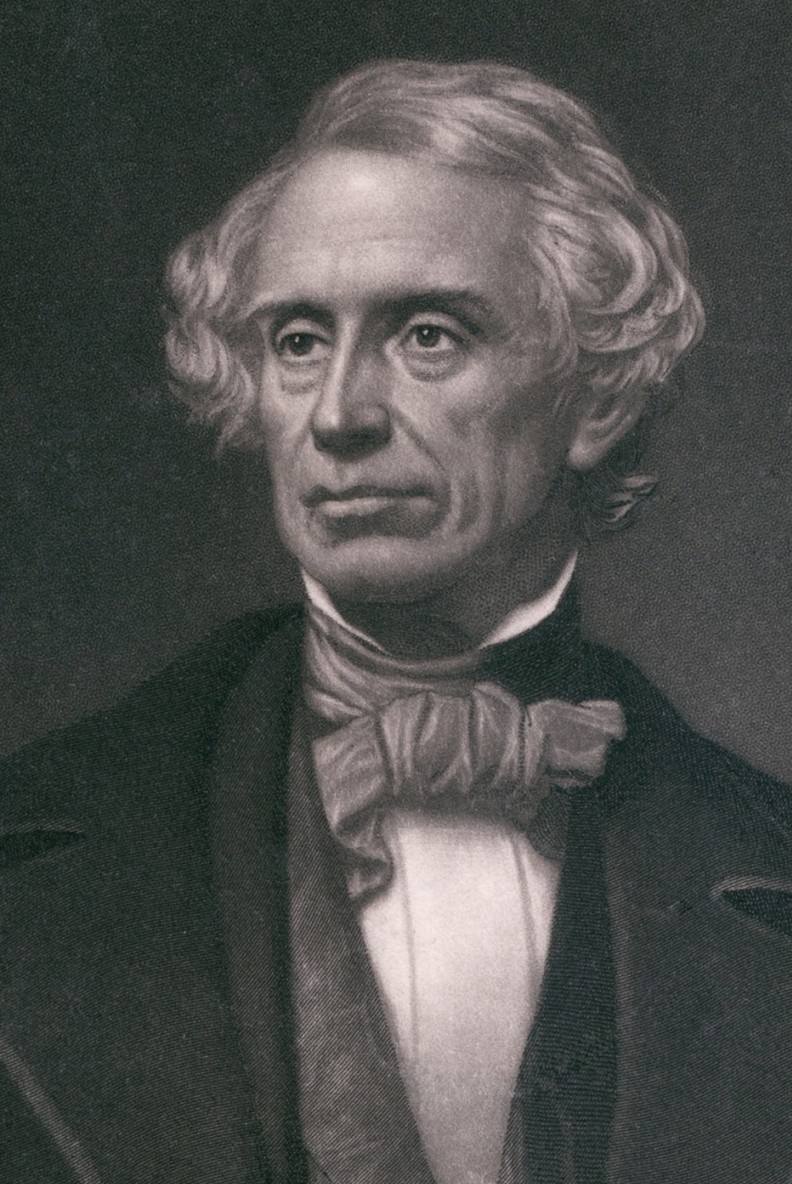
It was while working on the painting of Lafayette in Washington that Morse received a letter that his wife was gravely ill at their home in Connecticut. By the time he arrived back home, Morse’s wife was not only dead, but she had already been buried. The tragedy, historians believe, served as motivation for Morse to turn his attention to improving the state of long-distance communication.
“Every child has a dream, to pursue the dream is in every child’s hand to make it a reality,” said Morse. “One’s invention is another’s tool.”
Using Morse’s patent, several private companies began setting up telegraph lines around the Northeast section of the U.S. In 1861, Western Union finished the first transcontinental line across the U.S. Five years later, the first successful permanent line across the Atlantic Ocean was constructed. Those projects made Morse a very wealthy man, who was celebrated for his scientific brilliance although he was widely criticized for his pro-slavery and anti-immigration sentiments.
By the time he died in 1872 at age 80, Morse had made known his wish to be remembered for his accomplishments and not his shortcomings, maintaining that “education without religion is in danger of substituting wild theories for the simple commonsense rules of Christianity.”