

Cameroon Travelogue
Articles
Travelogues
View more from News & Articles or Primerus Weekly

By Tom Kirvan
Located at the junction of western and central Africa, Cameroon sports an ethnically diverse population of more than 28 million people. Triangular in shape, the country is often referred to as “Africa in miniature,” based upon its geological, linguistic, and cultural diversity.
French and English are the official languages of the country, because Cameroon was colonized at various points in its history by both France and Great Britain. In total, however, more than 232 other languages are spoken in the country that is bordered on the southwest by the Gulf of Guinea that leads into the Atlantic Ocean. It also shares borders with the Central African Republic, Chad, Equatorial Guinea, Gabon, the Republic of Congo, and Nigeria.
One of 54 countries on the continent of Africa, Cameroon boasts of some of the world’s most fertile lands, particularly in the southern region of the country where pineapple, papaya, cotton, and cocoa beans are grown as cash crops. The northern region of Cameroon is mostly desert plain, while mountainous terrain dominates the middle section. Every climate and ecological system are represented in the country that is among the wettest places on Earth. The country is home to more than 400 species of mammals, 165 species of birds, and some 1,000 species of butterflies.
The capital city of Yaoundé has a population of 4.8 million, and is the second largest in the country to the port city of Douala, which serves as the economic hub with its shipping, tourism, and financial ties. A hilly city in the country’s central region, Yaoundé boasts a pleasant climate, tree-lined streets, and institutions like the National Museum and the Mvog-Betsi Zoo, giving insight into the nation’s cultural and natural heritage.
The nation’s highest peak is Mount Cameroon, an active volcano that stands at 13,250 feet. The volcano last erupted in 2000 and is located near the Gulf of Guinea on the southwest coast. Waza National Park, located in the northernmost region of Cameroon, is a must-see destination for wildlife lovers, who can gaze upon lions, giraffes, hippos, elephants, cheetahs, antelope, and gazelles.
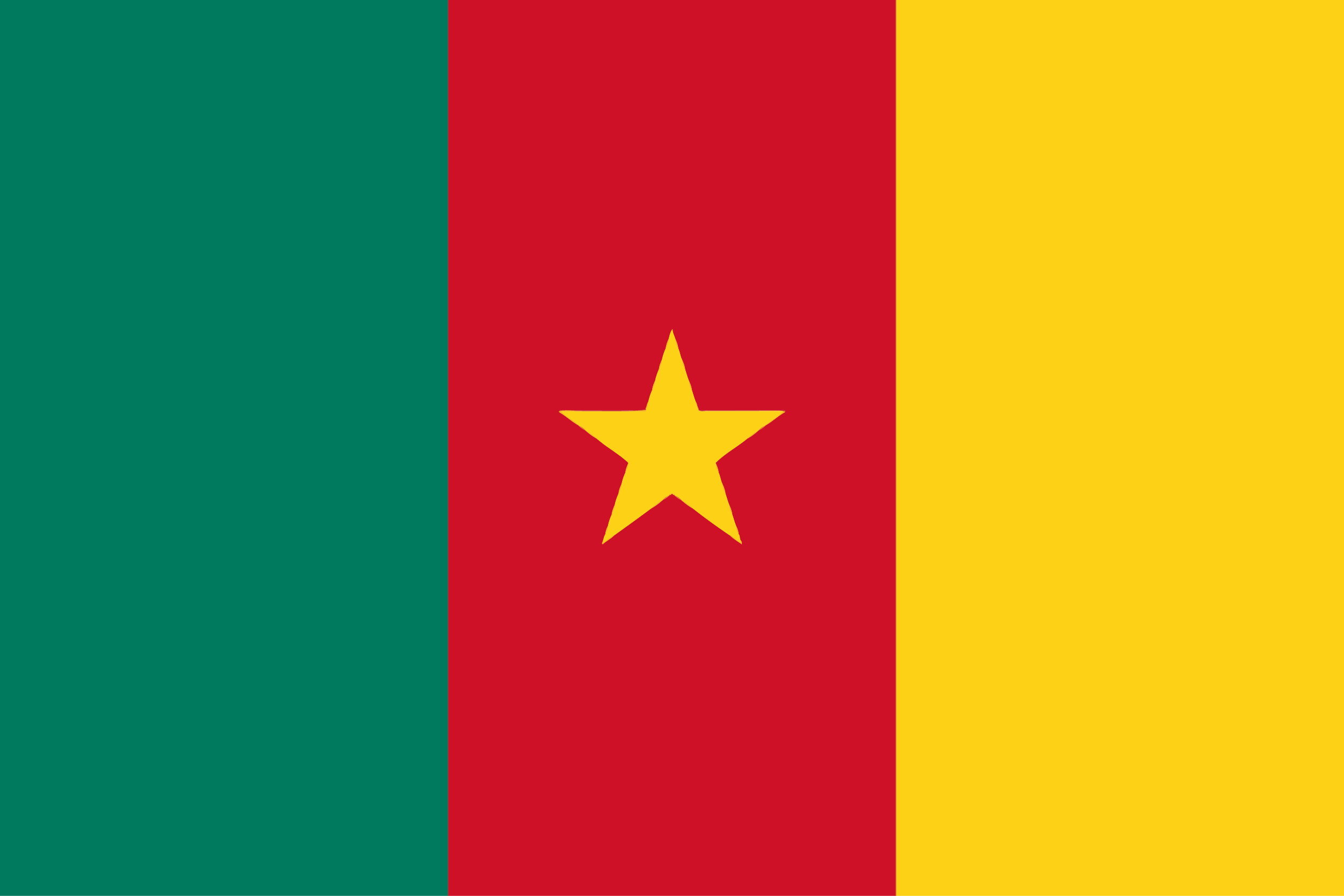
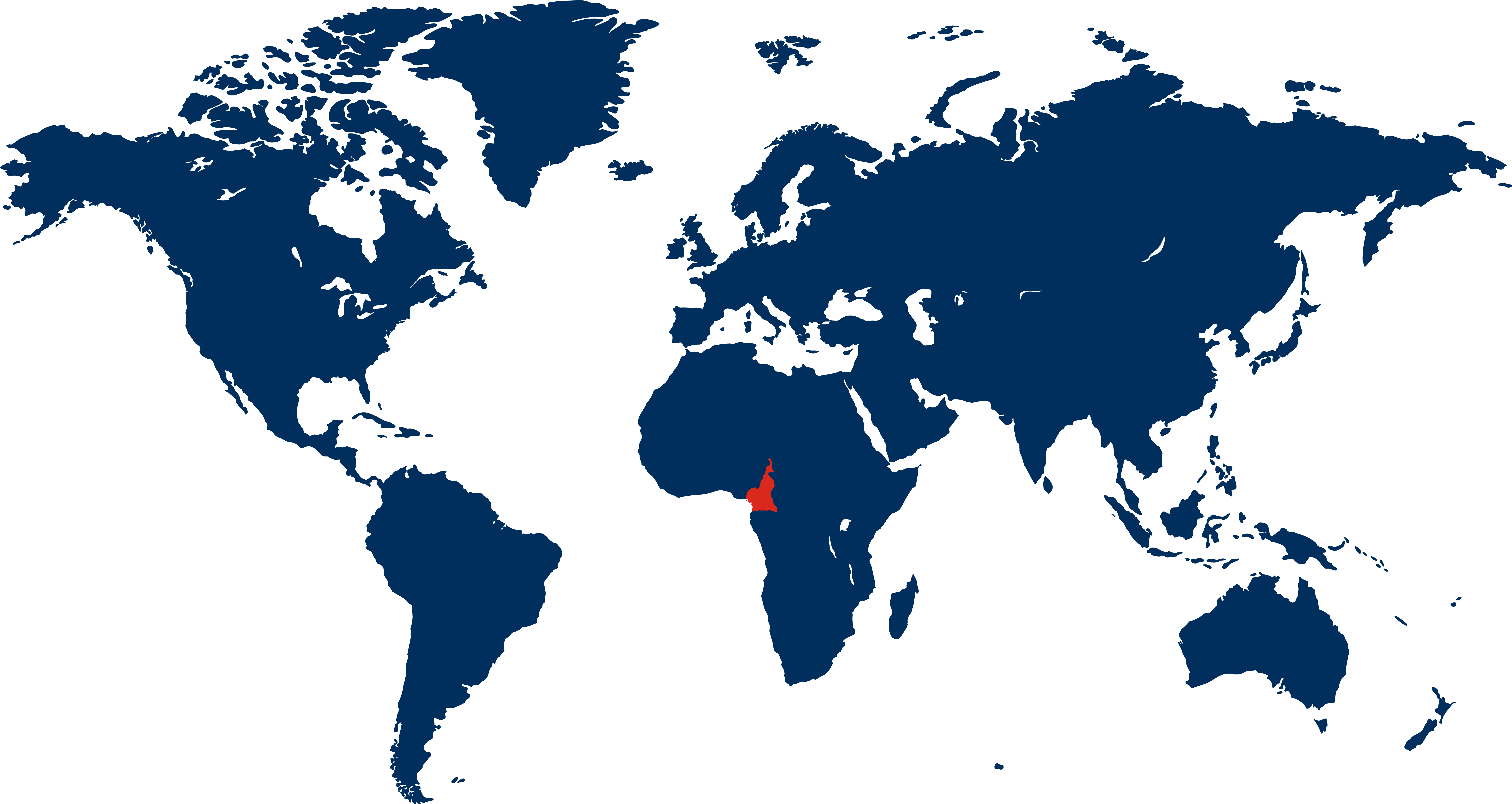
Capital: Yaoundé
Population: 28 million
Highest Point: Mount Cameroon (13,250 feet)
Languages: French and English
Primerus Member: Neneng Law Office
Neneng Law Office, a full-service business law firm located in Douala.
The country also is well known for its native styles of music, particularly makossa and bikutsi, and for its highly competitive soccer team with stars like Samuel Eto’o, who have regularly led the national team into World Cup action. Accordingly, soccer is the country’s most popular sport, while basketball also has developed a passionate following. Joel Embiid, the star center of the Philadelphia 76ers who was named Most Valuable Player in the NBA for the 2022-23 season, grew up in Cameroon, playing both volleyball and soccer before turning his immense talents to the basketball court.
Cameroon has been inhabited for thousands of years by various ethnic groups and kingdoms, such as the Sao civilization and the Bamoun Kingdom. European contact began in the 15th century with Portuguese explorers, followed by German colonization in the late 19th century.
After World War I, Cameroon was divided between the French and British under League of Nations mandates. French Cameroon gained independence in 1960, and a year later, the southern part of British Cameroon voted to join the newly formed Republic of Cameroon. In the present day, tensions still remain between the two linguistic regions.
Five Must-See Destinations