

Walter Cronkite
Articles
Famous Quotes
View more from News & Articles or Primerus Weekly

By Tom Kirvan
His nightly sendoff was “And that’s the way it is,” a succinct way of summarizing what amounted to some of the most riveting stories of his time as “the most trusted man in America.”
Many observers believed that legendary CBS News anchor Walter Cronkite set the “gold standard for broadcast journalism” during his 19-year reign on nightly television, an era marked by his work covering the assassination of President John F. Kennedy, the Vietnam War, man’s walk on the Moon, and the Watergate scandal.
Born on November 4, 1916 in St. Joseph, Mo., Cronkite was the only child of Helen and Walter Cronkite Sr., a dentist. He spent much of his early life in Kansas City before the family moved to Houston where he worked as a copy boy, delivery boy, and cub reporter for The Houston Post before enrolling at the University of Texas in Austin. Cronkite eventually dropped out of college to pursue a career in journalism, becoming bureau chief for the United Press (UP) in Kansas City.
When the U.S. entered World War II, he was reassigned as a war reporter by the UP, covering such stories as the Allied invasion of North Africa, the D-Day invasion, and the Battle of the Bulge after being dropped by a glider behind enemy lines with the 101st U.S. Airborne Division. Upon the war’s end, Cronkite reported on the Nuremberg trials of Nazi war criminals.
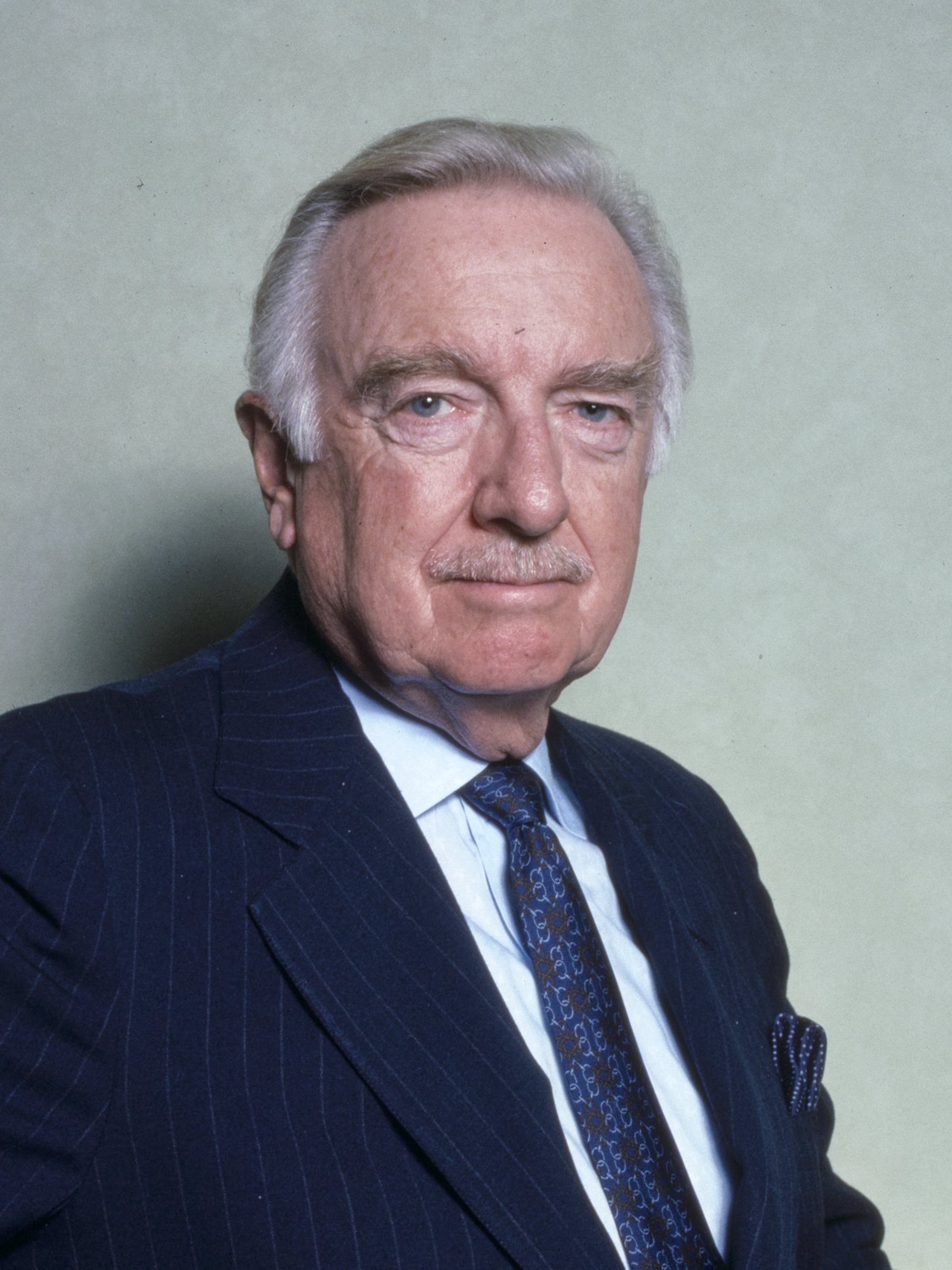
His first big break came when he covered the 1950 congressional elections for CBS television, quickly earning a reputation as a skilled and impartial interviewer, a talent that was on full display as he interviewed every U.S. president from Harry Truman to Ronald Reagan. Cronkite’s report on the assassination of President Kennedy in 1963 was one of the most famous in the history of television, as was his in-depth coverage of the Apollo Space Program, particularly the first Moon mission in the summer of 1969.
After retiring in March of 1981, Cronkite kept a decidedly low profile except for when Arizona State University named its School of Journalism in his honor in 1984. When he died in 2009 at the age of 92, Cronkite was remembered by the then-President of ASU, Dr. Michael Crow, as a broadcasting legend.
“Students who learn the craft of journalism at the University are held to the same basic tenets that Walter Cronkite exemplified throughout his career – accuracy, timeliness, and fairness,” said Crow, noting that Cronkite was a recipient of the Presidential Medal of Freedom Award in 1981.
Cronkite, in turn, had his own take on his lifelong profession.
“The profession of journalism ought to be telling people what they need to know – not what they want to know,” Cronkite said.
“The ethic of the journalist is to recognize one’s prejudices, biases, and avoid getting them into print,” he added.
*Bernard Gotfryd, Public domain, via Wikimedia Commons