Why It's Becoming a Problem and
What We Can Do About It
a new legal issue that threatens the
enforceability of mortgages there. When
foreclosure cases were filed over five
years ago and were later dismissed,
property owners began claiming that
the statute of limitations prevents their
mortgage holders ("lenders") from
enforcing the note and mortgage. They
are fighting foreclosures and seeking to
cancel mortgages with this argument.
This article lays out the legal issues,
explains where legal uncertainty
exists, and suggests ways that mortgage
documents and mortgage servicing
procedures can be adapted to protect
lenders, investors and servicers.
foreclosures is five years. For a variety of
reasons, thousands of foreclosures were
filed more than five years ago and were
then dismissed either voluntarily by
the lenders or by the courts. Borrowers
and investors are now arguing that when
balance was accelerated, and the statute
of limitations began to run against all
future payments. Therefore, five years
after the case was filed, the statute of
limitations bars a second foreclosure
action, they argue.
Borrowers and real estate investors
have used this argument as both a
shield and a sword. They have used
it as a shield to defend against repeat
foreclosures, and they have used it as a
sword in quiet title lawsuits seeking to
cancel mortgage liens.
inconsistently at first. Some canceled
mortgages outright; some declined
to cancel mortgages but dismissed
foreclosures as time barred; and others
allowed the foreclosures to continue.
More recently, lenders have won
important battles. Two intermediate
appellate courts and several federal
trial courts in Florida have ruled that
mortgages cannot be canceled.
The first appellate court case, U.S.
Bank v. Bartram
in the case and five amici curiae
("friends of the court") intend to file
briefs. Of these nine, two support the
bank and seven oppose the bank. A
$650,000 mortgage hangs in the balance.
Moreover, the result could impact
thousands of similar Florida mortgages
worth hundreds of millions.
or not to hear Bartram. If it does, the
Court could uphold, modify or reverse
the lower appellate court's ruling that the
mortgage is valid.
Another appellate court followed
Bartram and explicitly ruled that
mortgages cannot be canceled until five
years after maturity.
on the side of lenders. The other three
districts have not published opinions on
the issue.
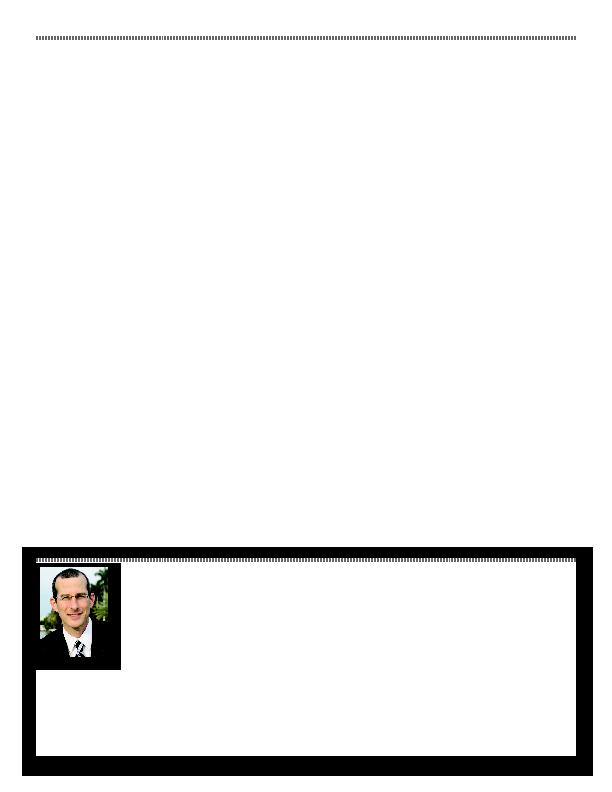
both trial and appellate courts. He chairs two subcommittees
in the Florida Bar's Real Property, Probate and Trust Law
Section one on Legislation and Government Regulation of
Lending and the second on so-called "Stale" Mortgages. He
has represented dozens of national and regional mortgage
lenders, investors and loan servicers as well as other
businesses and high net worth individuals.
101 Plaza Real South, Suite 207
Boca Raton, Florida 33432
561.544.8999 Fax
padulahodkin.com