

Sandra Day O’Connor
Articles
Famous Quotes
View more from News & Articles or Primerus Weekly

By Tom Kirvan
July 7, 1981 was a day the legal glass ceiling was officially broken when President Ronald Reagan announced his intention to nominate Sandra Day O’Connor to the United States Supreme Court.
The decision by Reagan to nominate the first woman to the nation’s highest court was hailed across party lines as a monumental moment in the gender rights movement, as the Texas native’s appointment was unanimously approved by the U.S. Senate on September 21.
O’Connor grew up on her family’s cattle ranch in Arizona before attending Stanford University in California, where she earned a degree in economics. Her interest in attending law school was sparked by a legal dispute over her family’s ranch. She took just two years to obtain her law degree from the elite school, graduating near the top of her class in 1952. Upon graduation, she married John Jay O’Connor III, a Stanford classmate.
As a newly-minted lawyer, O’Connor quickly discovered that there were few, if any, job opportunities for women in the private sector, so she found work as a deputy county attorney in San Mateo, Calif. Later, while raising three children, she formed a private law firm with a partner before returning to the public sector in 1965 as an assistant attorney general for Arizona.
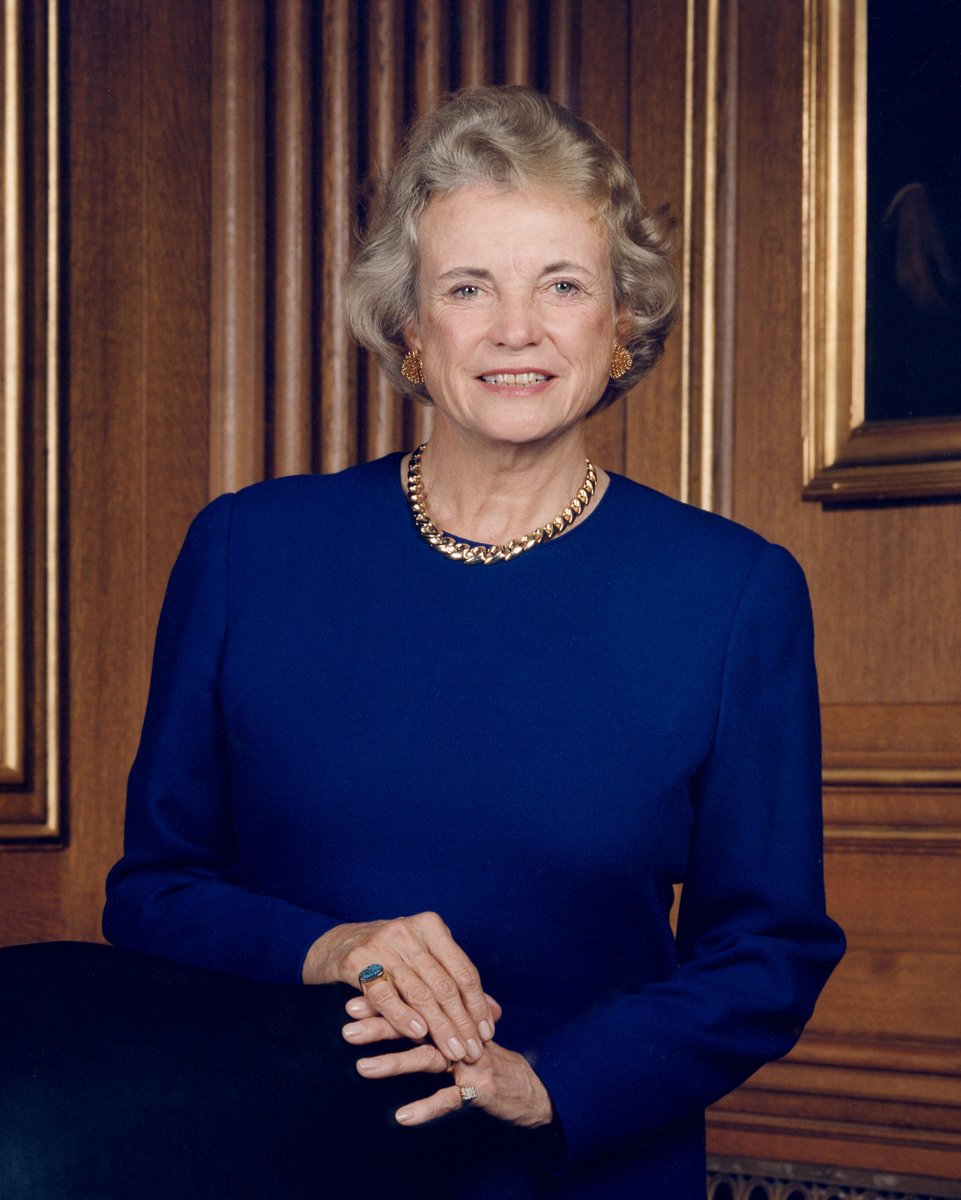
In 1969, she was appointed to the Arizona State Senate, eventually becoming the first woman to serve as majority leader. In 1974, she was elected as a superior court judge in Maricopa County and in 1979 was appointed to the Arizona Court of Appeals by Democratic Governor Bruce Babbitt. Two years later, O’Connor was sworn in as the first woman justice in Supreme Court history.
“Society, as a whole, benefits immeasurably from a climate in which all persons, regardless of race or gender, may have the opportunity to earn respect, responsibility, advancement, and remuneration based on ability,” O’Connor declared.
“Despite the encouraging and wonderful gains and the changes for women which have occurred in my lifetime, there is still room to advance and to promote correction of the remaining deficiencies and imbalances,” she said.
Known as a moderate conservative, O’Connor was widely praised during her time on the court for her dispassionate and carefully researched opinions, and for her willingness to help bridge divides on the nine-justice panel. She retired in 2005 and was replaced by Samuel Alito, who would author the court’s majority opinion overturning Roe v. Wade and a woman’s right to an abortion.
O’Connor, who announced in 2018 that she had been diagnosed with dementia, died on December 1, 2023, at the age of 93, at which time she was fondly remembered for this profound thought: “Slaying the dragon of delay is no sport for the short-winded.”
*Library of Congress (Transferred by Sven Manguard,, Public domain, via Wikimedia Commons