

Golda Meir
Articles
Famous Quotes
View more from News & Articles or Primerus Weekly

By Tom Kirvan
Known as Israel’s “Iron Lady” for her fierce determination, Golda Meir made history on March 17, 1969 when she was elected as the first female prime minister of the country.
Born in Kiev, Ukraine and raised in Wisconsin as her family sought refuge from antisemitism, Meir began her career as a labor organizer, and later held several posts in the Israeli government, including Minister of Labor and Minister of Foreign Affairs. She was chosen as prime minister following the sudden death of Prime Minister Levi Eshkol in 1969.
Her career as a diplomat, fund-raiser, and political activist helped Israel gain independence, as she traveled to the U.S. in 1948 to raise $50 million for arms to defend the newly established nation against invading Arab states.
During her five years as prime minister, Meir was tested by a pair of crises, the slaughter of Israeli athletes at the 1972 Summer Olympics in Munich and the 1973 Yom Kippur War launched by Egypt and Syria.
“Peace will come when the Arabs love their children more than they hate us,” wrote Meir in her autobiography, “A Land of Our Own.”
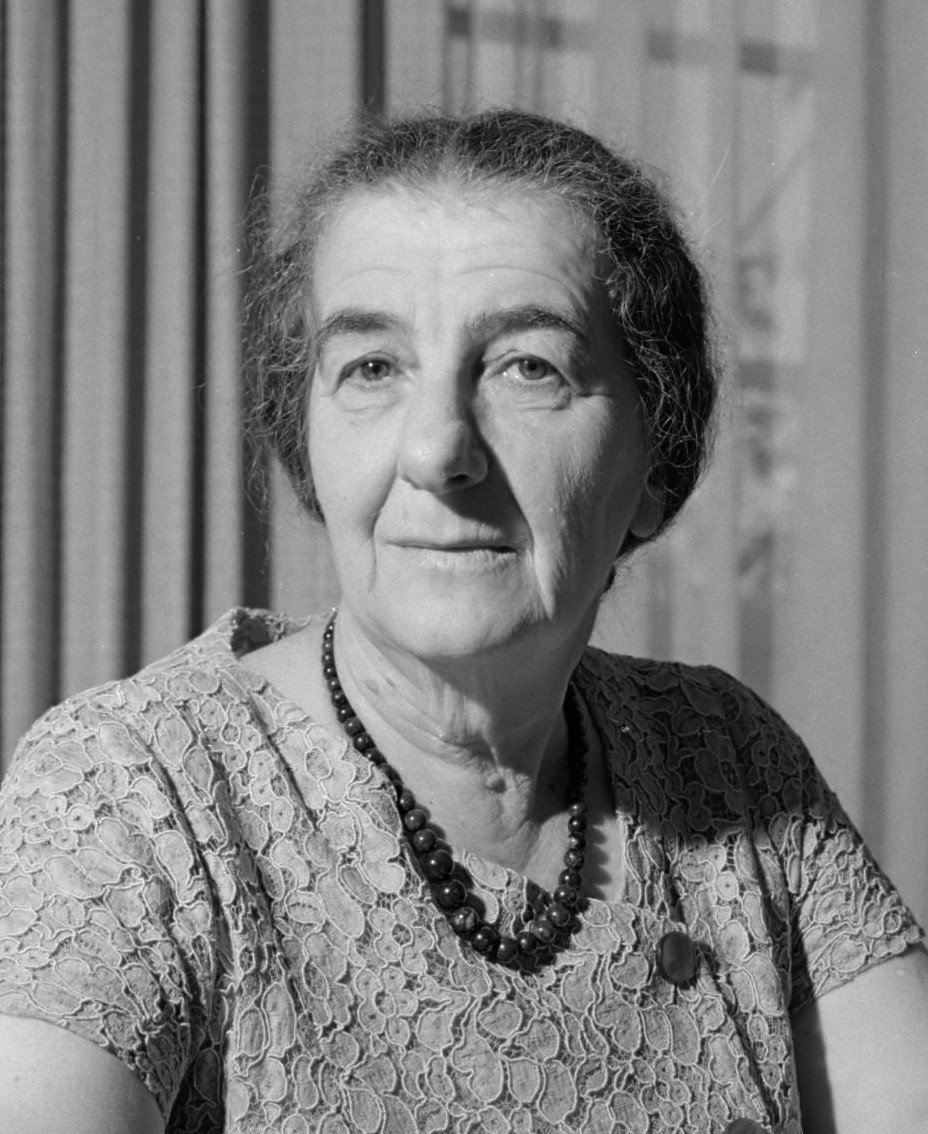
As one of the first women to serve as a head of state, Meir broke significant barriers in a male-dominated political landscape, noting, “Whether women are better than men, I can say they are certainly no worse.”
Israel’s fourth prime minister and still the only woman to have held the post, Meir – upon her death in 1978 – was remembered as a tough, fearless, and unwavering leader. Historians also note that she bore the brunt of public criticism for her hardline stance on Palestinians and the country’s lack of preparedness that led to heavy casualties during the Yom Kippur War.
“Above all, this country is our own,” Meir said of Israel. “Nobody has to get up in the morning and worry what his neighbors think of him. Being a Jew is no problem here.”
*Willem van de Poll, CC BY-SA 4.0 <https://creativecommons.org/licenses/by-sa/4.0>, via Wikimedia Commons