

General George S. Patton Jr.
Articles
Famous Quotes
View more from News & Articles or Primerus Weekly

By Tom Kirvan
In retrospect, it seems only fitting that famed U.S. General George S. Patton Jr. was born on November 11, 1885, an autumn date that decades later would come to be known as “Veterans Day.”
Patton, who led a series of successful military operations in Europe during World War II including the decisive campaign at the Battle of the Bulge, was widely regarded as one of America’s greatest generals, a brilliant and bold leader whose hot temper and sometimes risky battlefield strategies also earned him the nickname “Old Blood and Guts.”
A 1909 graduate of the U.S. Military Academy at West Point, Patton was an athlete of note, competing in the modern pentathlon at the 1912 Summer Olympics in Stockholm, finishing fifth overall.
After he was denied a second Olympic appearance in 1916 because of the outbreak of World War I, Patton turned his attention to guiding an American tank brigade during the “War to End All Wars.” For his exceptional military service, Patton was awarded the Distinguished Service Cross and the Distinguished Service Medal, while also receiving the Purple Heart for being wounded in combat.
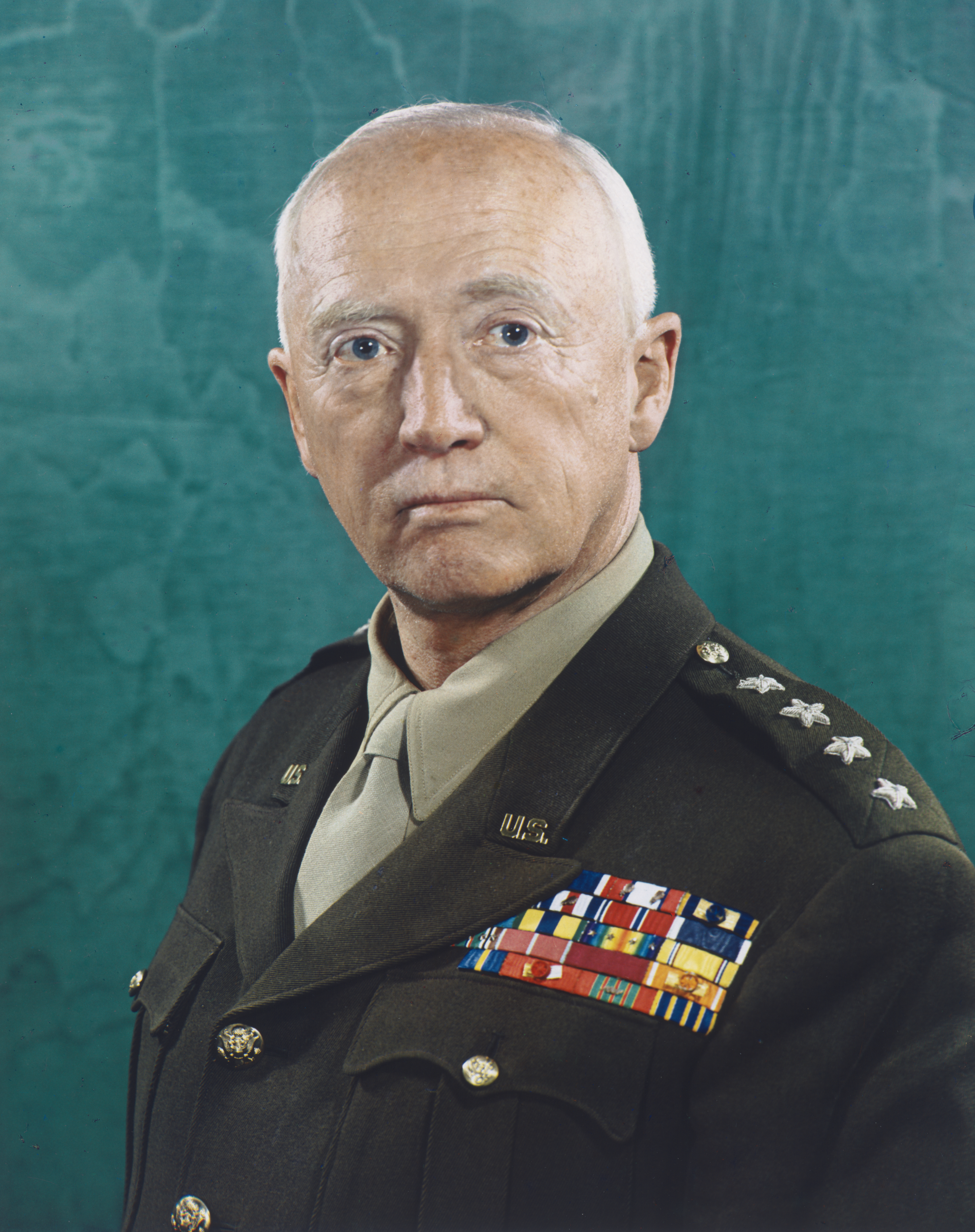
His profile continued to grow during World War II when he led successful battlefield campaigns in North Africa and Sicily, capped in early 1945 at the Battle of the Bulge in Belgium.
“A pint of sweat will save a gallon of blood,” Patton reportedly (and repeatedly) said as he prepared for battle.
“Moral courage is the most valuable and usually the most absent characteristic in men,” he added, noting that, “A good plan, violently executed now, is better than a perfect plan next week.”
Ironically, Patton died not on the battlefield, as he would have wished, but from injuries he suffered in an automobile accident that occurred in December 1945 in post-war Germany. The accident took place while Patton was en route to a day of pheasant hunting. He was buried at the Luxembourg American Cemetery and Memorial in Hamm along with other members of his beloved Third Army, per his request to “be buried with my men.”
Despite the premature and unexpected end to his life story, Patton will be long remembered for one of his most enduring comments: “The test of success is not what you do when you are on top. Success is how high you bounce when you hit bottom.”
*Robert F. Cranston, CC0, via Wikimedia Commons