Attorney traded Big Law burnout for a firm valuing work-life balance
Articles
Spotlight
View more from News & Articles or Primerus Weekly

By Brian Cox
After four years of working a lot of 80-hour weeks at one of the largest law firms in Atlanta, Allison Bazinet realized she wanted to spend more time outside.
The Big Law experience had been invaluable and the training indispensable, but she was ready for a change and wanted more flexibility to exercise and spend time in nature.
“It was a slog and it was hard,” she says, “but I really saw it as an extension of law school. There are so many lessons that I learned that I'm still using to this day.”
Though deciding that she wanted something other than Big Law, Bazinet had no intention of abandoning the corporate transactional practice she had worked hard to establish. Instead, she wanted to build a career that left room for the rest of her life. She found that opportunity at Aspire Law, an Atlanta-based business law firm that operates on a model that emphasizes attorney wellness and affords attorneys greater flexibility in how they work while remaining committed to delivering sophisticated legal services to their clients.
Four and a half years later, Bazinet is practicing the kind of law she enjoys, serving clients ranging from startups to larger corporations, and raising two young children with her longtime partner, Carson, a software engineer who designs video games. She and her family have also been able to spend more time in Vermont, where they purchased a vacation home near many outdoor amenities to escape the heat of Atlanta summers.
It is a lifestyle that would have been almost impossible to imagine during her early years in Big Law. Today, it is part of a professional arrangement that is ideal for her.
“I don't see how I would be able to do all of this at a more traditional firm,” she says.
Bazinet's route to a legal career that is balanced with her family life began with a somewhat different vision of her future.
She grew up in Vero Beach, Fla., where her mother was a registered nurse, and her father was a photographer. As a young girl, she was a history buff and developed an early fascination with history, particularly the American colonial era and English monarchy, which is why later, at Cornell University, it only seemed natural for her to study government while minoring in history, archaeology, and Spanish. Becoming an attorney was not part of her original plan.
“I had in my mind that I would be a historian,” she says.
But she also wanted a practical career, and she wasn't sure what a career in history would look like.
A semester in Washington, D.C., during college helped point her in another direction. An internship with the American Civil Liberties Union exposed her to the many ways attorneys could work outside the courtroom. She later interned at the Federal Communications Commission, exploring the regulatory side of the profession, before deciding to enroll at Georgetown University Law Center.
During law school, however, another interest began to take hold. Washington's startup community was full of young entrepreneurs developing new businesses and technology, and Bazinet found herself drawn to their innovative energy. She interned at a startup accelerator and began to see corporate law as a way to participate in that world.
“It just felt like everyone had a startup idea,” recalls Bazinet. “Everyone had a new app that they were trying to produce. It was exciting; it was new. I wanted to be involved and see how I could help from the legal side.”
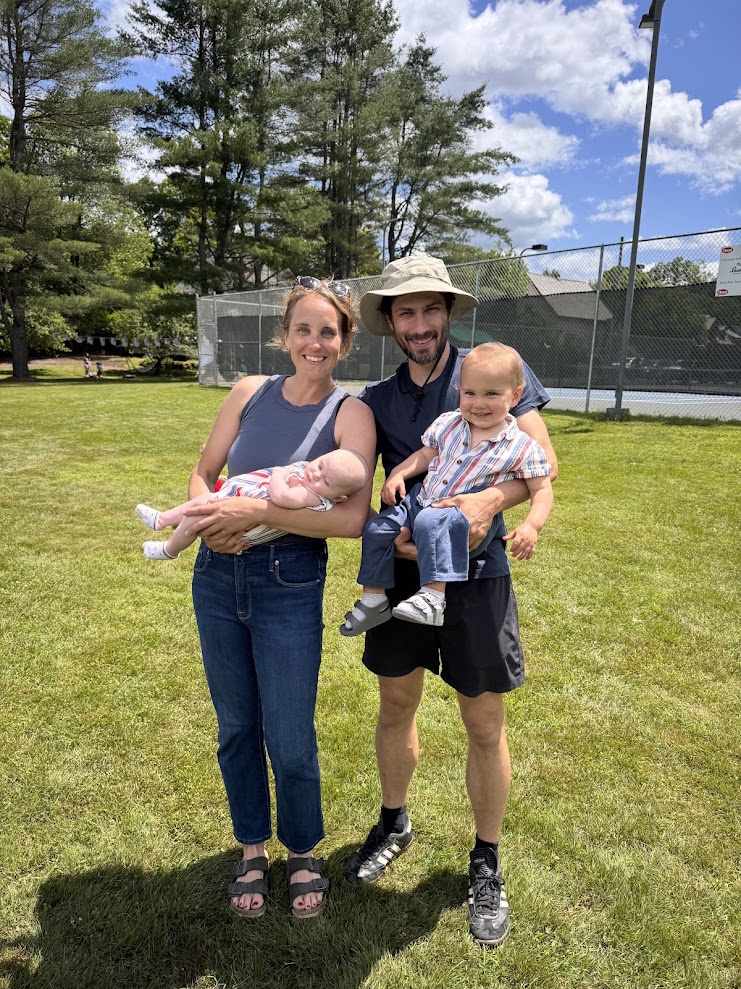
After graduating from law school in 2016, she wanted to be closer to family in Florida and moved to Atlanta with Carson, where she joined King & Spalding LLP. The firm, headquartered in Atlanta, offered the opportunity to work on complex corporate matters for major clients. Bazinet launched her career in its corporate practice, handling mergers and acquisitions, general corporate matters, and capital market transactions.
“King and Spalding is a premier firm in Atlanta,” says Bazinet. “So, it's very lucky to land a spot there.”
Coming from a relatively small town and as the first attorney in her family, she compares her introduction to Big Law to being thrown into the deep end of the pool.
Fresh out of law school, she immediately found herself working long hours on sophisticated deals involving enormous sums of money and multinational companies, sometimes alongside high-profile executives.
The workload was demanding, and the hierarchy was strict. But Bazinet recognized the value of that structure, particularly for a young attorney learning how to translate complicated legal issues into practical advice.
She learned how to draft and negotiate complex agreements, understand the business considerations behind legal decisions, and communicate with clients who needed clear answers rather than pages of legal terminology. She gained exposure to what makes a big corporation tick and to how high-profile transactions are executed, as well as the business leaders and various teams behind them.
Looking back, she sees those years as an essential part of her education.
Still, the experience helped her identify what she didn't want her career to become. She began looking for a firm where she could continue developing as a transactional attorney without making work the organizing principle of her life.
That search led her to Krevolin Horst, LLC, another Atlanta firm, where she found a collegial environment and colleagues who were respected leaders in their communities and maintained interests outside the office. The change was refreshing. Attorneys talked openly about their hobbies, pro bono activities, and family commitments, and the example set by colleagues who balanced demanding practices with active personal lives showed Bazinet that another approach was possible.
Her time there was valuable, too. She enjoyed working with smaller businesses and continued building her corporate practice. But as she and Carson began thinking about having children, she started considering how she could step back from a traditional in-office schedule.
The pandemic had demonstrated how much legal work could be done remotely. The couple purchased a camper van and began traveling around the country, exploring places where they might eventually want to live. Bazinet began looking for legal work that would allow her to continue practicing while accommodating that lifestyle.
When she came across a LinkedIn post from Alina Lee, founder of Aspire Law, which was then operating under the name Your Ad Attorney, the position seemed almost too good to be true: sophisticated transactional work with interesting clients, a flexible schedule, and a fully remote practice. Lee was building a firm around a modern approach to legal services, and Bazinet wanted to be part of it. She was drawn to Aspire Law’s vision to create a welcoming environment for former Big Law attorneys and in-house counsel emphasizing attorney wellness.
“I could see Alina was trying to achieve something unique here,” she recalls. “I wanted to get in on the ground floor of what she was working on.”
Bazinet is delighted to witness how the firm has grown over the last few years yet has remained steadfast in its mission. In 2026, Aspire Law was recognized by the Atlanta Business Chronicle for the third consecutive year as one of Atlanta’s Healthiest Employers.
Bazinet joined as the firm's second attorney after David Bennett. She has since watched Aspire develop a business model that offers flexibility to its attorneys while allowing the firm to meet a range of client needs. Many of its attorneys and operations team work part-time, reflecting Lee's belief that professional excellence and personal well-being can coexist.
For Bazinet, that philosophy has become especially important since the arrival of her two young children, Lewis and Florence.
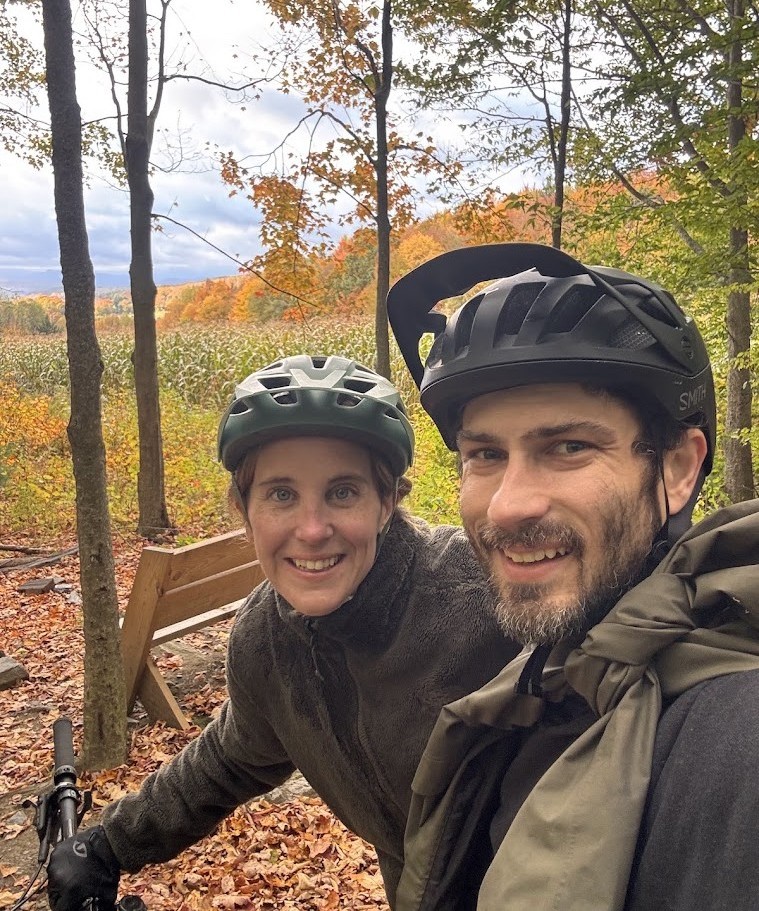
Bazinet and her family enjoy walking and biking along the Beltline, Atlanta’s developing rail-to-trail network near their home in Ormewood Park. In Vermont, the outdoors is even more accessible, with hiking, mountain biking, rivers, and swimming holes close to home. Their historic house, built in the 1880s, offers a steady supply of home improvement projects.
Her fascination with history has found a practical outlet through her board service with Easements Atlanta, a historic preservation nonprofit that helps protect historically significant buildings. The organization holds preservation easements on building facades, helping ensure that important structures remain protected even as surrounding neighborhoods change.
Bazinet says the work offers a way to help preserve the character of places that might otherwise disappear. Among the properties the organization helps protect are buildings near the birthplace of Martin Luther King Jr.
A self-described pop culture enthusiast, Bazinet was a state champion quiz bowl participant in high school, a pursuit she shared with Carson.
At Aspire, Bazinet has the opportunity to take ownership of her matters and build relationships with clients whose expectations align with the firm's approach. Many of her clients are startups and smaller businesses that need practical legal guidance as they grow.

Her work includes forming companies, preparing organizational documents, drafting and negotiating commercial contracts, and advising on intellectual property (IP) licensing and equity agreements. She also continues to handle mergers and acquisitions, albeit generally on a smaller scale than the transactions she worked on early in her career.
The firm's broader practice creates opportunities for collaboration, too. Clients who initially seek help with marketing, IP, or trademark matters can turn to Bazinet for assistance with the corporate side of their businesses. Together, Aspire's attorneys can provide a wider range of services without requiring clients to assemble their own collection of outside counsel.
The firm also handles secondments for larger companies that need additional legal support. In those arrangements, an Aspire attorney may work within a client's legal department, helping address a staffing shortage or a backlog of contracts. The arrangement can provide a steady stream of work while giving the attorney an opportunity to become familiar with the client's business and its operations.
That combination of flexibility and responsibility is central to what makes Aspire a good fit for Bazinet. She has a more flexible schedule, but the nature of the work still demands focus, judgment, and accountability. Her clients depend on her to understand their businesses and deliver advice they can use.
Aspire's model depends on attorneys who can manage their responsibilities while exercising judgment about how they deliver their work. It also depends on clients who recognize the value of that arrangement. Bazinet has found that many of the businesses Aspire serves – particularly startups and companies in the marketing and technology sectors – appreciate a firm that operates with the same adaptability they bring to their own businesses.
“In a more traditional law firm model, there's a very strict hierarchy and whatever comes in from the partner trickles down to the associates,” says Bazinet, “but here I find there's a lot more flexibility to shape my own practice and work with exciting clients because we are cutting edge.”