

Differing perspectives
Does the effort to ‘restore’ American history amount to a ‘whitewash’?
By Tom Kirvan
Shortly after returning to the Oval Office in January 2025, President Donald Trump issued an executive order that aims to promote a “patriotic education” by focusing on a unifying narrative of the nation’s founding ideals.
The executive initiative – titled “Restoring Truth and Sanity to American History” – directed federal entities to revise exhibits and public spaces to focus on American virtues, minimize themes of historical shame, and promote a renewed sense of national pride as the country celebrates the 250th anniversary of the Declaration of Independence.
Conservative activists heralded the executive order, declaring that it will redirect the focus of federally-funded institutions – such as the Smithsonian Institution and sites managed by the Department of the Interior – towards celebrating American greatness, insulating Confederate monuments from potential alteration or outright removal, and ensuring that exhibits align with what they perceive to be foundational values of the United States.
Proponents of the changes claim that teaching the country’s history through a critical lens creates national shame, deepens societal divides, and erases the aspirational ideas that built the United States.

This is not the first time Trump has sought to promote patriotism in education. During his first term, he founded the “1776 Commission” to advise on how to teach young people the “founding principles” of the nation. It included a broader proclamation about “ending racial indoctrination” in schools.
Critics of the administration’s plan to rewrite American history – a group that includes professional historians, museum curators, and academic organizations – have heavily criticized the conservative mandates. They have argued that the executive order was a form of political interference designed to sanitize the past and suppress vital discussions on painful topics such as slavery, discrimination, and segregation.
Professional historians and academic scholars contend that an honest understanding of the American past must include both its laudable triumphs and its systemic failures. As detailed in discussions by groups like the American Historical Association, scholars argue that “whitewashing” the past to avoid discomfort weakens critical thinking skills and deprives marginalized communities of their true place in the American story.
In recent weeks, the Trump administration has targeted the Smithsonian Institution for what the White House believes is an “unpatriotic approach” to American history, accusing Smithsonian officials of engaging in “extreme political activism.”
The charges were contained in a 162-page report from the White House Domestic Policy Council, which accuses the museum system of avoiding “a unified, national narrative,” while encouraging debate about questions the authors believe are settled.
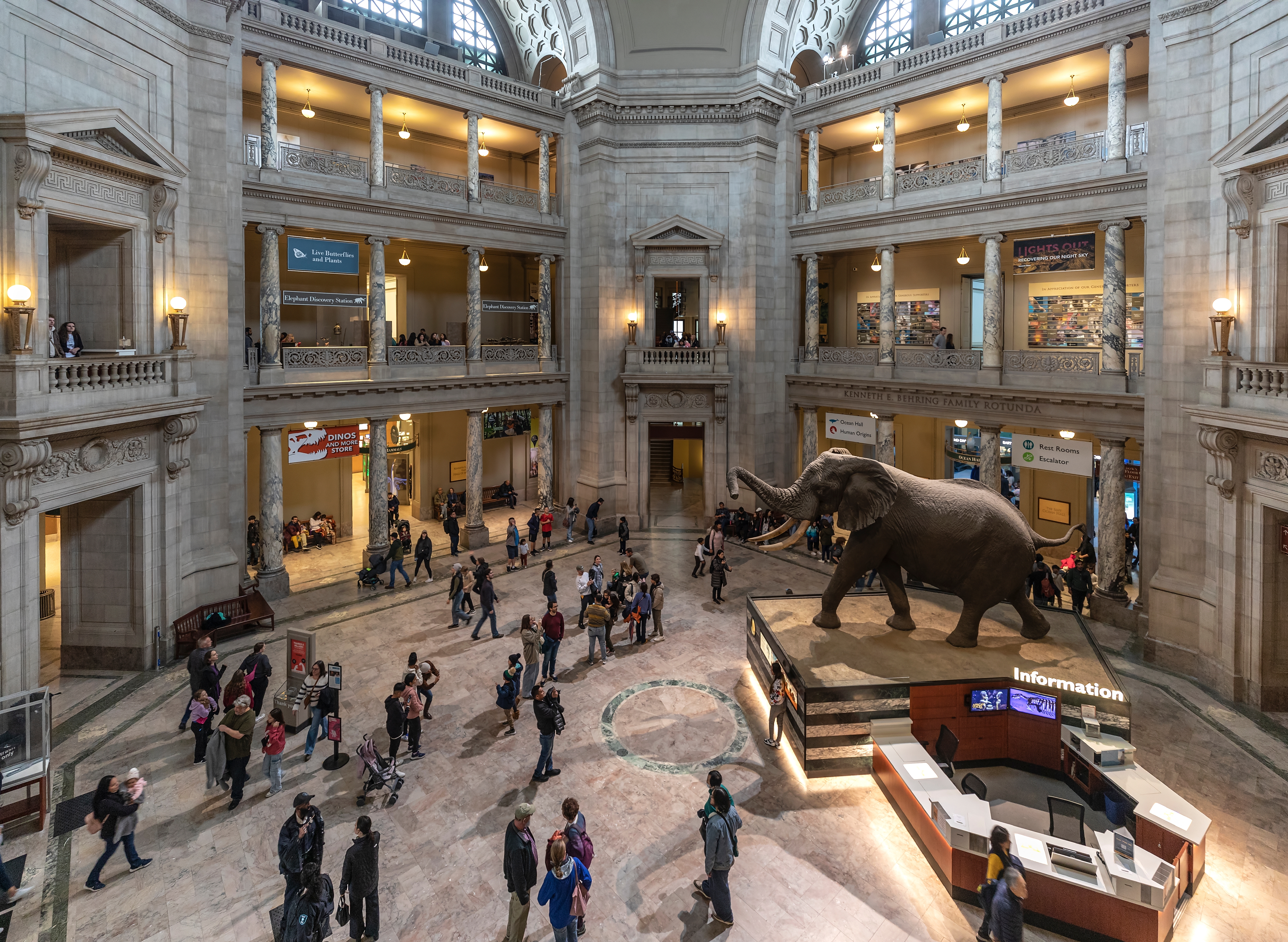
1 © Geofox / Shutterstock.com
In particular, the White House accused the Smithsonian of disparaging the nation’s heritage and seeking “to undermine the remarkable achievements of the United States by casting its founding principles and historical milestones in a negative light.”
The report also raised the possibility of a funding cut for the Smithsonian if it fails to make the changes the White House is seeking. Currently, approximately 62 percent of the Smithsonian’s annual $1 billion budget is derived from federal sources.
Administration officials have rejected accusations of historical erasure, claiming that the goal is not to eliminate difficult chapters of the American story but to restore greater emphasis on the nation’s founding ideals, including freedom of religion and speech.
Vince Haley, the director of the White House’s Domestic Policy Council, said that “the least we owe our founding fathers is an honest and inspiring account of who they were, what they did, and what they built.”
In response to the report, Smithsonian Secretary Lonnie G. Bunch III wrote a letter to his staff, insisting that “our work is driven by scholarship, accuracy, and an uncompromising commitment to tell the fullness of America’s story.”
In his letter, which was first obtained by The Washington Post, Bunch noted that “we remain focused on what grounds us: a steadfast commitment to scholarship, nonpartisanship, independence, accuracy, and integrity.”
On NBC’s “Meet the Press” on July 5, Bunch said the Smithsonian Institution helps bind the nation together.
“Red states, blue states – whatever your politics, you come to the Smithsonian,” Bunch said in outlining its mission.
And yet without fanfare, the White House recently made a series of changes in the historical narrative at Independence Hall in Philadelphia, quietly removing mentions of slavery in several of the exhibits depicting the founding fathers. The changes prompted a sharp response from Pennsylvania Governor Josh Shapiro.
“This is Donald Trump’s latest shameful attempt to distort American history,” Shapiro wrote in a social media post. “He can try to change signage, but he can’t change our shared history – and we will continue to learn from that history as we look forward to America’s next 250 years.”
The Organization of American Historians (OAH) echoed the governor’s comments. In an official statement responding to the administration’s executive order, the OAH warned that the directive “proposes to rewrite history to reflect a glorified narrative that downplays or disappears elements of America’s history – slavery, segregation, discrimination, division – while suppressing the voices of historically excluded groups.”
Historian and famed filmmaker Ken Burns also criticized the administration’s restrictions on historical interpretation during an appearance on PBS’s “Firing Line” with Margaret Hoover.
“Appreciating the complexities of American history is what actually reveals how extraordinary the country is,” said Burns. “Attempting to erase or hide complex, dark realities is not only wrong but dangerous. The sanitized ‘Madison Avenue’ versions of history are akin to claiming that Babe Ruth only hit home runs, omitting the fact that he also struck out.”
The views articulated by Burns come against a backdrop of work being promoted by the America 250 Civics Education Coalition, a program that began in early 2025. Overseen by the U.S. Department of Education and led by the America First Policy Institute, a nonprofit conservative group, the coalition includes Turning Point USA, the Heritage Foundation, Hillsdale College, and other conservative organizations.
This coalition “will take bold steps to educate, inspire, and mobilize youth toward active and informed citizenship,” U.S. Education Secretary Linda McMahon said in a press release, noting that the initiative “is dedicated to renewing patriotism, strengthening civic knowledge, and advancing a shared understanding of America’s founding principles in schools across that nation.”
Of course, history will be the judge as to whether the real shame lies in ignoring difficult chapters in our past by painting a purely positive and patriotic narrative.
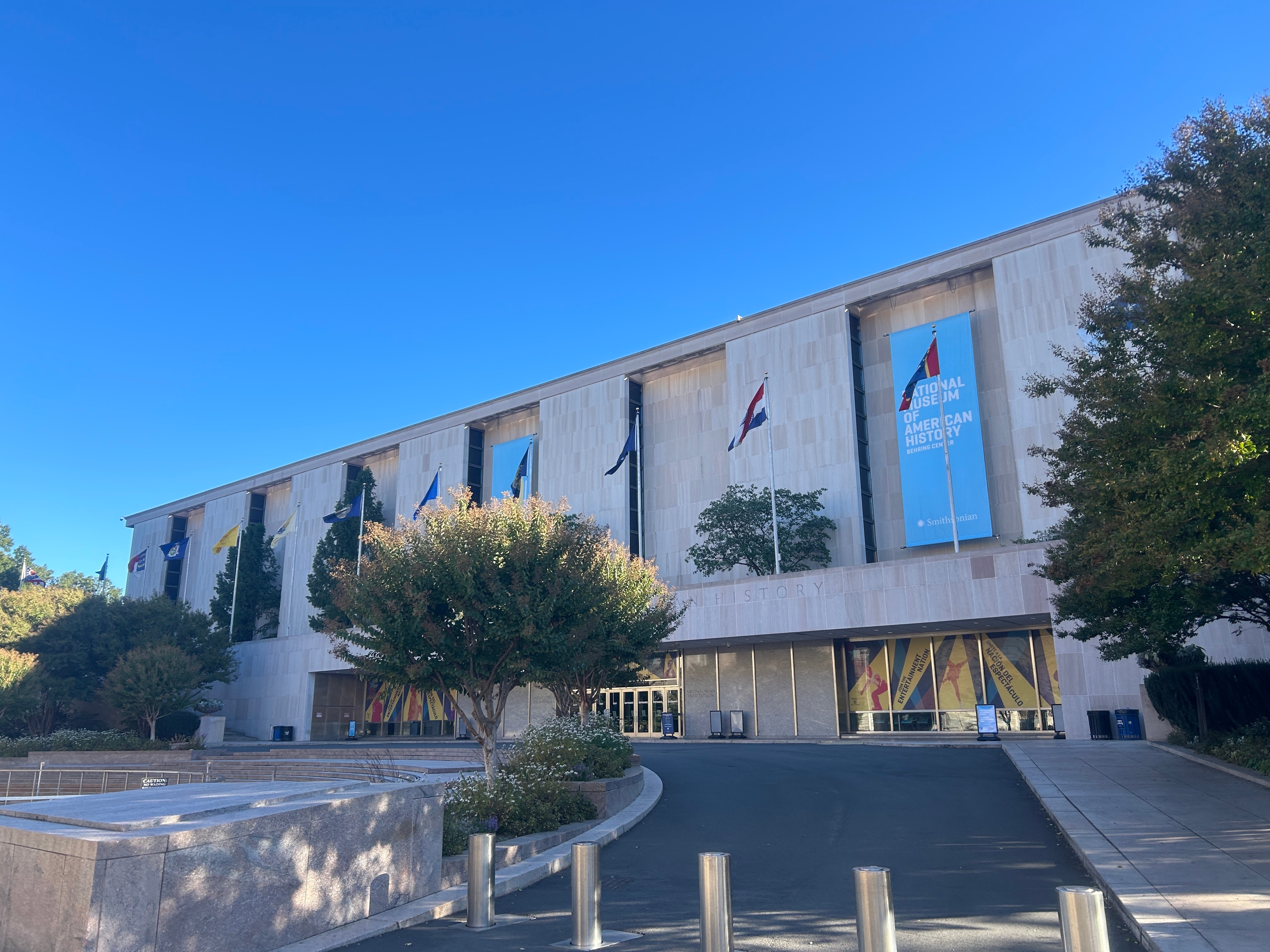
2 © Colinmthompson / Shutterstock.com
Take the January 6, 2021 insurrection at the U.S. Capitol for example. In the immediate aftermath of the January 6 attack, American political leaders almost unilaterally condemned the riot as an act of domestic terrorism that threatened democracy. Now, Trump has called January 6 a “day of love” and the rioters “great patriots.”
And soon after the president issued mass pardons to those convicted of rioting, the Trump administration began reshaping the January 6 narrative by launching investigations into the security failures at the Capitol rather than the insurrection itself.
Last fall, a new House of Representatives panel began work to re-investigate the January 6 Capitol attack with an eye toward recasting the narrative about the events in Washington that fateful day. Speaker Mike Johnson called it a “committee investigating the previous committee” in a CNN interview and said the prior effort spearheaded by Democratic Chairman Bennie Thompson and Wyoming Rep. Liz Cheney, a Republican who served as Vice Chair of the House Select Committee, “was rigged.”
The new panel’s chair, Georgia Rep. Barry Loudermilk, said the committee will be on a fact-finding mission.
“We need to look at it from a factual standpoint,” Loudermilk said. “I think we’re all interested to know, why did the Capitol get breached – regardless of who did it – and how did it get breached?”
But to critics of the new panel, Loudermilk’s rationale is nothing more than a smokescreen for efforts to rewrite the history of the January 6 insurrection – to minimize the culpability of the president and supporters who violently assaulted police officers and ransacked the Capitol in an attempt to disrupt the final certification of Trump’s 2020 election loss to Joseph Biden.
“They can’t even seem to settle on which conspiracy theory they want to advance,” said Democratic Rep. Jamie Raskin of Maryland, who served on the previous January 6 panel. “Was it Antifa? Did it not happen at all? They can’t figure out what it is they want to say, and it’s because it’s just a tissue of lies and conspiracy theories.”
Image Credits:
Geofox (2024 November 29). National Museum Natural History Rotunda Interior with African Elephant Display. Washington, D.C. Visitors [Photograph]. Shutterstock. Retrieved August 17, 2026 from Shutterstock
Colinmthompson (2025 October 16). National Museum of American History. Washington, D.C. [Photograph]. Shutterstock. Retrieved August 17, 2026 from Shutterstock