

Jacqueline Kennedy
Articles
Famous Quotes
View more from News & Articles or Primerus Weekly

By Tom Kirvan
The only first lady to ever win an Emmy Award, Jacqueline Kennedy received the honor in 1962 for her televised special, “A Tour of the White House with Mrs. John F. Kennedy,” a documentary watched by an estimated 80 million Americans and syndicated globally.
The hour-long program first aired in February 1962 on CBS and NBC, though the filming itself took nearly seven hours and showcased her extensive historical restoration of the White House. In sharing the work with the public, the First Lady became a global sensation and solidified her influential role as a cultural ambassador and a champion of American history and the arts.
Born on July 28, 1929 in Southampton, N.Y., Jacqueline Lee Bouvier grew up in Manhattan, where she spent her childhood learning French, practicing ballet, and enjoying horseback riding. After enrolling at Vassar University in 1947, she studied abroad in France before transferring to George Washington University where she earned a degree in French literature. After college, she worked as a photographer for The Washington Times Herald.
In 1952, she met then Congressman John F. Kennedy and the couple married the following year, dividing their time between Washington, D.C. and Hyannis Port, Mass. When her husband was elected president in 1960, Mrs. Kennedy viewed her role in simple terms.
“The major role of the First Lady is to take care of the President so that he can best serve the people,” she said.
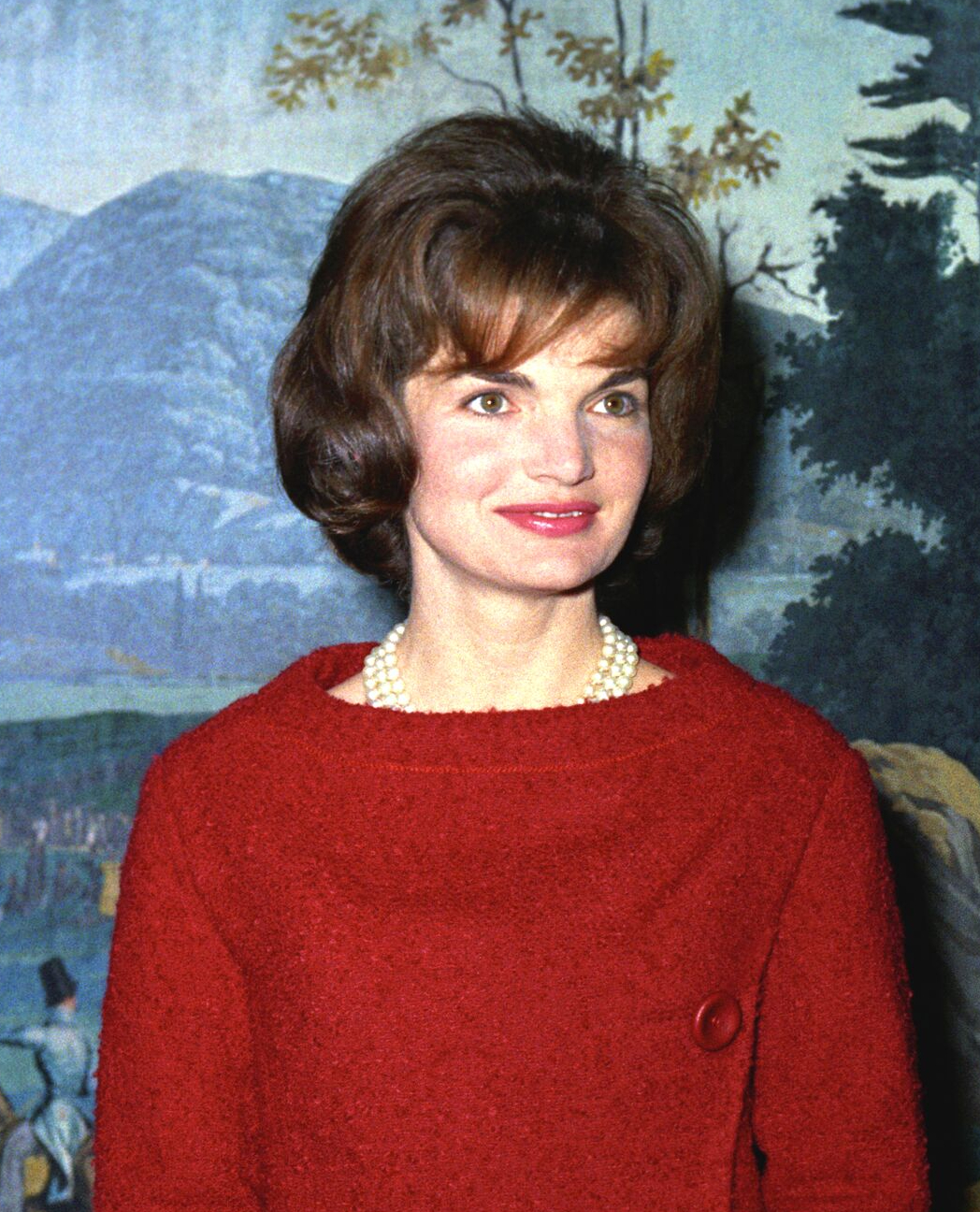
Known for her grace, elegance, and enduring style, the First Lady soon became a cultural icon, helping establish the White House Historical Association while also supporting a number of humanitarian causes that enhanced America’s perception of the presidency. In particular, she championed the rights of children with disabilities, raising public awareness of their challenges and strongly advocating for improved services and support.
“We should all do something to right the wrongs that we see and not just talk about them,” the First Lady implored the American people.
Her life, of course, took a tragic turn on November 22, 1963, when the 35th president of the United States was assassinated while riding in a motorcade through Dallas. Suddenly, she became a widow, left to raise the couple’s two young children alone.
“There will be great presidents again, but there will never be another Camelot,” she said in reflecting on JFK’s presidential administration.
In the wake of her husband’s death, the former First Lady took an instrumental role in the creation of the John F. Kennedy Library, and in 1968 married Aristotle Onassis, a Greek shipping magnate who was committed to her safety and financial security. Following the death of her second husband in 1975, she became an editor for Doubleday while continuing her efforts to advocate for historic preservation in cities across the country.
On May 19, 1994, she died of lymphoma, just six months after being diagnosed with the disease. She is buried next to President Kennedy in Arlington National Cemetery and her legacy as America’s most recognizable first lady endures.
*Robert LeRoy Knudsen, Public domain, via Wikimedia Commons