

Charles Lindbergh
Articles
Famous Quotes
View more from News & Articles or Primerus Weekly

By Tom Kirvan
Long viewed as one of the most complicated figures in American history, Charles Lindbergh was an aviation pioneer who quite literally soared to great heights with his solo flight across the Atlantic in 1927 only to fall to the depths of antisemitism as espoused by Nazi Germany during the run-up to World War II.
Lindbergh was born in Detroit on February 4, 1902 but grew up primarily in Little Falls, Minn. on a family farm, developing a passion for mechanics and nature. He also spent much of his youth in Washington, D.C., where his father, Charles Senior, was a U.S. Congressman.
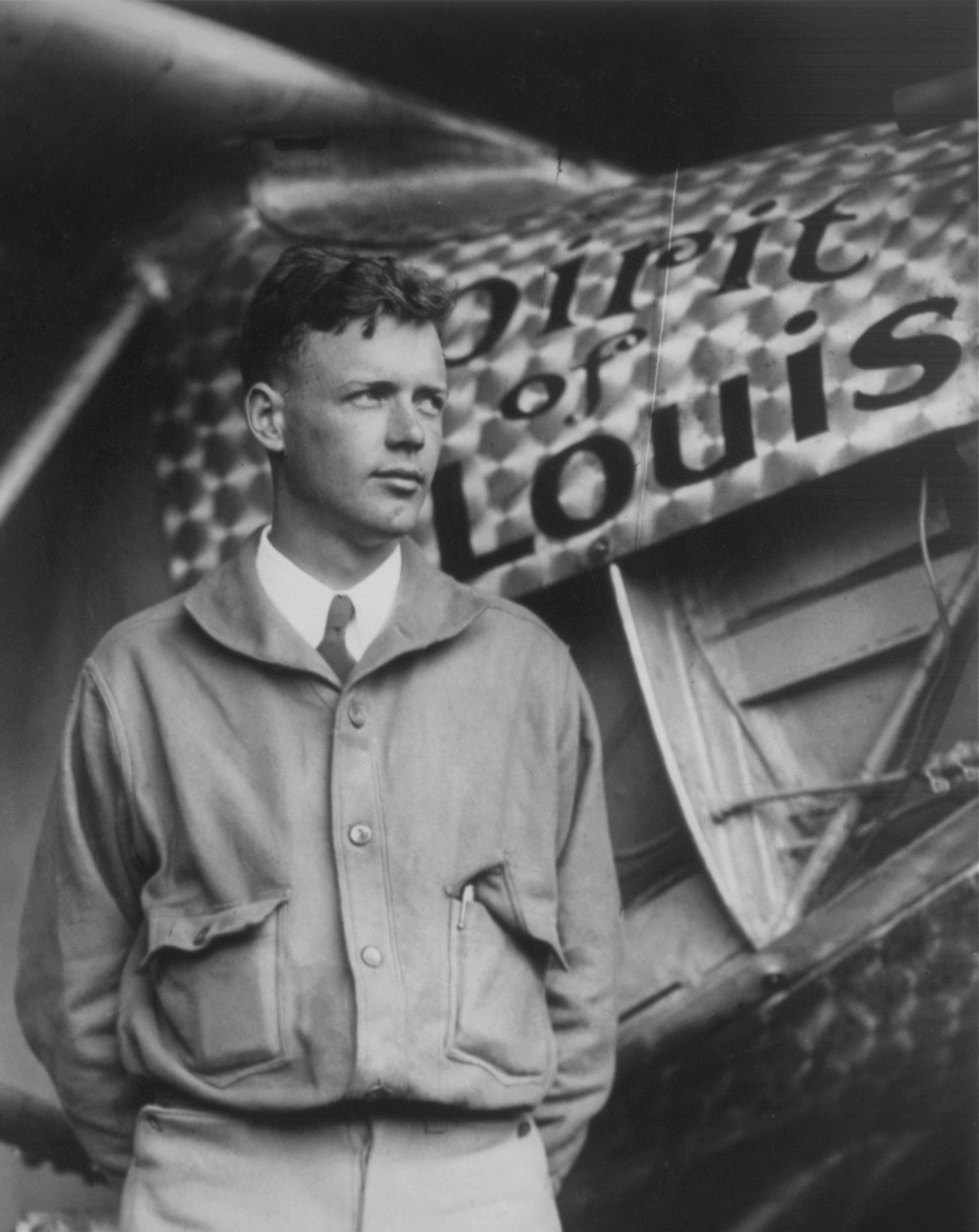
He became a U.S. Army Air Service cadet in 1924, eventually becoming a U.S. Air Mail pilot in the greater St. Louis area, where he began preparations for his famous 1927 flight aboard “The Spirit of St. Louis.” On May 20-21, 1927, he made the first non-stop flight from New York to Paris, a distance of 3,600 miles, flying alone for more than 33 hours.
His achievement, which included the awarding of the Medal of Honor and the Distinguished Flying Cross from former President Calvin Coolidge, also spurred significant global interest in flight training and commercial aviation and made Lindbergh a household name.
“Success is not measured by what a man accomplishes, but by the opposition he has encountered and the courage with which he has maintained the struggles against overwhelming odds,” Lindbergh said in the aftermath of his famous flight. “Life without risks is not worth living.”
Nearly five years after his heroic flight, Lindbergh was again at the center of worldwide attention when his 20-month-old son, Charles Augustus, was kidnapped from his nursery on March 1, 1932. The baby was snatched from his second-floor crib in the family home in Hopewell, N.J. The kidnapper had used a ladder to climb up to the open second floor window and left muddy footprints in the infant’s room, leaving behind a ransom note demanding $50,000, a sum that was later raised to $70,000.
After agreeing to the ransom demands, Lindbergh and his wife, Anne, were told that their son was on a boat called “Nelly” off the coast of Massachusetts. However, after an exhaustive search, there was no sign of the boat or the child.
A month later, on May 12, a renewed search of the area near the Lindbergh mansion turned up the baby’s body. Authorities said the baby had been killed the night of the kidnapping and was found less than a mile from the home. The crime remained unsolved until September 1934, when a marked bill from the ransom money turned up. It was traced to a German immigrant, Bruno Hauptmann. When his home was searched, police found another $13,000 of the ransom money.
After a lengthy trial, Hauptmann was convicted of kidnapping and was executed in the electric chair in 1936.
Years later, after gaining a reputation as a right-wing political activist and Nazi sympathizer, Lindbergh made an interesting observation.
“Isn’t it strange that we talk least about the things we think about most?”
*See page for author, Public domain, via Wikimedia Commons