

PBS series strikes a timely chord as America marches to its 250th
Articles
From the President’s Desk
View more from News & Articles or Primerus Weekly

Emmy Award-winning filmmaker Ken Burns is a spellbinding storyteller, a master at cinematic narratives that have brought history to life for millions of television watchers since he released his first documentary (“The Brooklyn Bridge”) in 1981.
In fact, Burns – who spent his formative years in Ann Arbor where his father was a professor at the University of Michigan – is widely regarded as America’s foremost documentary filmmaker, once prompting best-selling author Stephen Ambrose to proclaim: “More Americans get their history from Ken Burns than any other source.”
Burns has chronicled such topics as the Civil War, the Vietnam War, the Roosevelts, Ernest Hemingway, Baseball, the Holocaust, Mark Twain, Benjamin Franklin, and now “The American Revolution.”
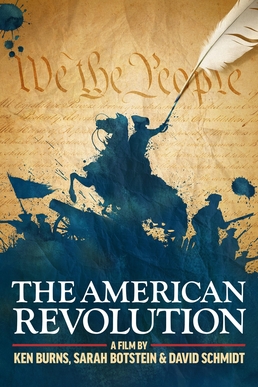
His latest work, a six-part series that began airing in November on PBS stations across the U.S., traces the history of the war of independence from Britain and the beginnings of the American experiment in democracy.
The compelling story is told through the use of historical materials like diaries, letters, paintings, and photographs. The 12-hour-long documentary also features a large voice cast, including the likes of such award-winning actors as Tom Hanks, Meryl Streep, Jeff Daniels, Morgan Freeman, Paul Giamatti, Claire Danes, Josh Brolin, Adam Arkin, and Liev Schreiber.

Burns has attributed much of his success to his educational upbringing, which was heavily influenced by teachers and professors who had an appreciation for the “big picture” in education, instructing him “not to get bogged down by mindless memorization” of names and dates. Such details, of course, are important, but not as critical as an understanding of the underlying message that history invariably tells, according to Burns.
As we approach America’s 250th anniversary on July 4, 2026, the message seems especially important. The milestone, otherwise known as the “Semiquincentennial,” will commemorate and celebrate the signing of the Declaration of Independence, the document signed by 56 of our forefathers that served as the foundation of our constitutional democracy.
While the 18-letter word doesn’t roll off the tongue neatly, next summer’s anniversary should give us reason to reflect on the courage our early forebears displayed in creating a country powered by purpose.
Burns said as much during his recently completed cross-country promotional tour that took six months and made stops in 32 cities. In hoping to strike a hopeful and nonpartisan chord with audiences, Burns recounted powerful stories of resilience and resourcefulness that ignited ideas and created change two-and-a-half centuries ago. In present terms, he talked of “putting the ‘us’ back in the U.S.,” while also describing the American Revolution as “the most significant event in human history since the birth of Christ.”
His declaration comes at a time of deep divisions in the country, which seemingly has lost sight of the sacrifices that our collective ancestry made in the making of America. Perhaps the “Greatest Generation” title that has become the province of those who served valiantly during World War II should also be applied to those who courageously shaped our nation during the Revolutionary War era.
Those stalwarts, of course, included such figures as Washington, Jefferson, Franklin, and Madison. But the war heroes also featured Native Americans, women, free and enslaved Africans, and other groups dedicated to the cause of freedom.
The Revolutionary War, as the documentary depicts, was a battle royale, lasting from 1775 to 1783, an eight-year slog that claimed more than 25,000 American lives in combat. While the number pales in comparison to the casualties suffered during the Civil War some eight decades later, the cost doesn’t include the very real likelihood that the British would quash the colonial uprising and put an abrupt end to the American experiment.
Thankfully, they didn’t. Instead, our victory paved the way for the writing of the U.S. Constitution in 1787 and its formal adoption in 1789, giving birth to the world’s longest surviving written charter of government.
As students of history know well, the beauty of the Constitution lies in its foundational principles, such as popular sovereignty, limited government, and the separation of powers. These were designed to create a system of government with checks and balances to prevent the concentration of power.
Additionally, its enduring strength comes from its protection of individual rights and its framework for protecting minority rights while still allowing for majority rule. The Constitution’s ability to adapt to changing times and to be amended when needed adds luster to its durability, helping ensure that guardrails are in place to prevent a unilateral subversion of the rule of law.
Now, many of our country’s leading legal minds see the looming emergence of authoritarianism as an existential threat to American democracy and the rule of law. They worry about the rise of far-right extremism, which seems to thrive in a hothouse filled with hate, bigotry, and wanton violence. They are deeply troubled by the razor-sharp edge of today’s body politic, threatening the very foundation of who we are as a civilized society.
With all that in mind, we should be reminded of the words of Jimmy Carter, the 39th president of the United States, who two years before his death in 2024 sounded his own alarm bells about the state of the nation.
“I now fear that what we have fought so hard to achieve globally – the right to free, fair elections, unhindered by strongman politicians who seek nothing more than to grow their own power – has become dangerously fragile at home.”
His words echo even louder today as we approach our nation’s 250th anniversary, offering us a reminder to forge a positive path in an otherwise bleak political environment, taking a stand against the forces that perpetually seek to divide us.
Best regards,
Jack Buchanan, President
*PBS. (2025). How to Watch. Ken Burns' "The American Revolution". Retrieved December 1, 2025 from https://www.pbs.org/kenburns/the-american-revolution/about-the-film#sticky-how-to-watch