

Founder of JAL Law driven to success by a love of learning and service
Articles
Spotlight
View more from News & Articles or Primerus Weekly

By Brian Cox
Attorney Juan Antonio Lozada is always ready to take his next step into the future.
And he is applying that same mindset in preparing his law firm for the future.
When Lozada started JAL Law, in 2017, it wasn’t long before he realized that building a successful law firm required skills he hadn’t learned in law school.
First, it became clear to Lozada that if he ran his firm well, it meant the people who worked for him wouldn’t have to worry about missing a paycheck; they wouldn’t have to worry about not getting a bonus; they wouldn’t have to worry about obtaining insurance. All of which would engender commitment and dedication – and a willingness to stay.
“You have to become a good entrepreneur if you want to keep a good team,” says Lozada. “You need to become a good manager. You need to become a good leader.”
You can’t just wing it, he stresses. It must be learned.
So, he set about tackling the challenge of becoming an effective leader. In addition to his juris doctor degree from The Ohio State University Moritz School of College Law, he holds multiple advanced degrees. He has three Master of Law degrees: in international public law from The University of Texas at Austin; in human rights and humanitarian law from American University; and in private law from University of Houston. He also has his Master of Arts in International Relations from St. Mary’s University in San Antonio and his Bachelor of Arts in Latin American Studies from The University of Texas at Austin. On top of all of that, he has completed executive programs at The Wharton School, University of Pennsylvania, WHU – Otto Beisheim School of Management. He is working on his thesis and expects to complete his Executive Master of Business Administration in June 2026 from Frankfurt School of Finance & Management.
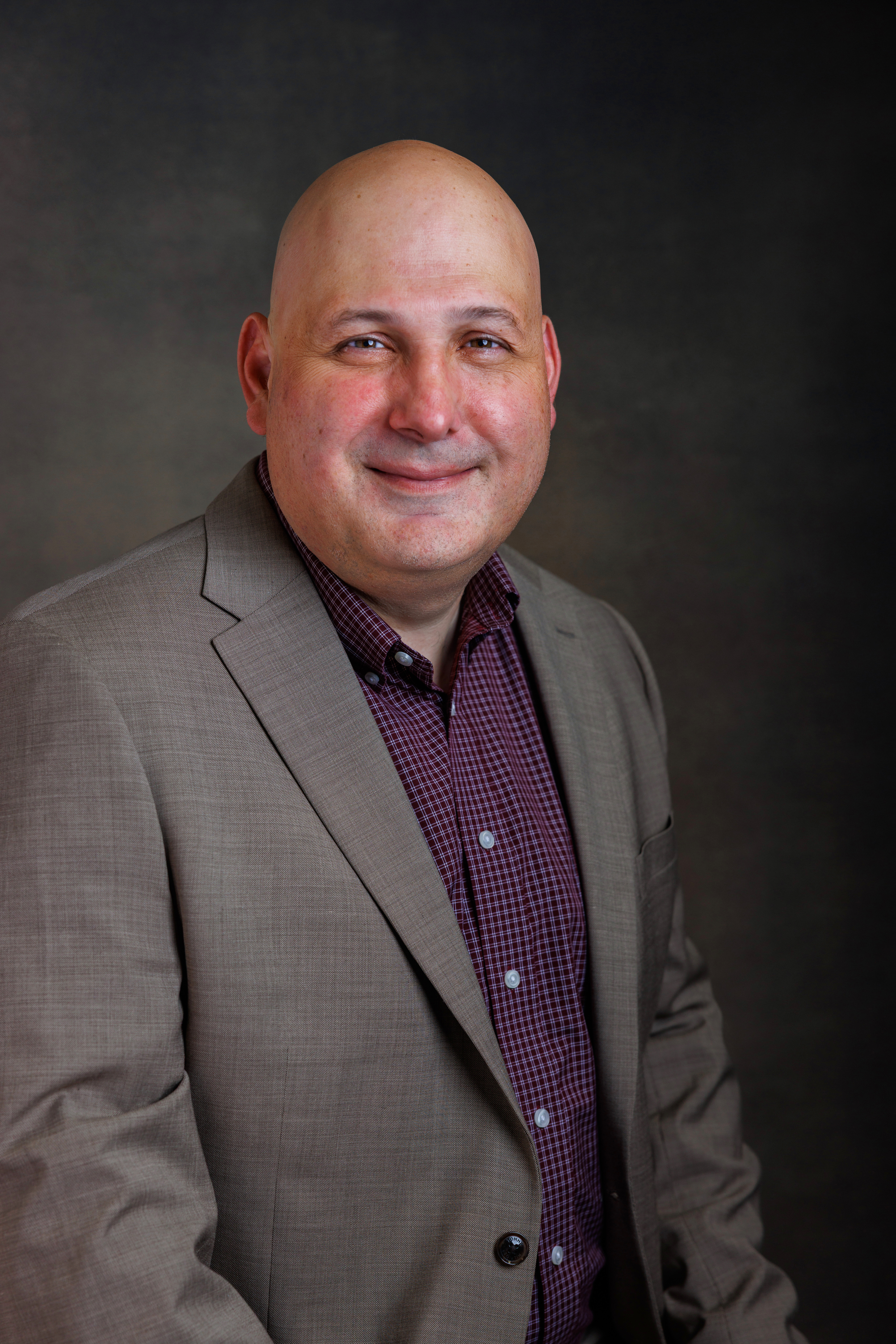
“I always loved school,” he notes, and his academic record reflects it.
Even during law school, he logged 550 hours of voluntary legal work and graduated with the dean’s highest honors as a public service fellow. That hunger to learn has continued throughout his career.
He’s put his learning to good use, deliberately building a team of dedicated and loyal talent that he can rely on, which he says takes time and requires caring for internal stakeholders as well as external clients. He cautions that if you treat your clients very well, but you don’t treat your team well, then there is an asymmetry that is eventually going to catch up with you.
“You have to know how to create a culture of service,” he says. “That doesn’t just happen by accident. It happens because you show the way. You lead by example.”
As part of recognizing the importance of surrounding himself with a good team, Lozada concluded that in order to provide the most effective legal service possible to his clients, he needed people dedicated to specific functions such as technology, marketing, and human resources.
The only way he saw that as possible was by scaling.
The idea was to centralize operations for multiple firms – have one HR department for three or four law firms, for example, because then together, the smaller law firms could afford to pay for that specialized function.
“I realized pretty early that if I didn’t do that, then I was going to have to be a jack of all trades, or I would have to rely on one person to be everything, and we weren’t going to do anything well,” he says.
When Lozada talks about scaling, he isn’t speaking in abstractions. He recently expanded JAL Law’s footprint beyond its two original offices, beginning with the July acquisition of Denver-based Primerus member Zupkus & Angell, P.C. Since then, he has acquired an additional firm and is already pursuing further expansion to provide clients with a full spectrum of representation capabilities. Lozada grew up in Venezuela and came to the United States at 20 to study at the University of Texas. English was not his first language, and the transition into law school – especially during that first year – was a challenge.
“I was getting used to the legal language,” he says. “I definitely had to work really hard to make sure I was able to do well.”
But he pushed through, helped by a scholarship offer from Ohio State, where he externed for a federal magistrate and found his footing in civil litigation while working in the Ohio Attorney General’s Civil Rights Division.
His family’s history made the law feel like a natural calling. His paternal grandfather, Antonio José Lozada, had been Venezuela’s attorney general and later a justice on the country’s Supreme Court.
“I figured if I became a lawyer, at least I would have some instincts,” he says.
Yet, he also arrived in the U.S. with a sense of gratitude that would shape his choices for years. He was barely two weeks into law school when the attacks of September 11 happened. Watching some of his classmates get activated for deployment left a deep impression.
“I was very grateful to the United States,” Lozada says. “I promised myself that as soon as I graduated from law school, I would try to join the Army and volunteer to go to Iraq.”
He kept that promise. After a short stint as an assistant district attorney in East Texas, Lozada was commissioned as a U.S. Army officer in June 2006 and assigned to Fort Hood in Killeen, Tex. Two years later, he deployed to Iraq with the 4th Infantry Division as a JAG prosecutor. It was an intense trial-by-fire. He worked cases involving sexual assault, detainee abuse, fraud, organized crime, and theft, often traveling by Black Hawk to remote forward operating bases.
“Every time I was riding in a Black Hawk, I thought, ‘Wow, I come from this small town in Venezuela and here I am as a captain in the United States Army jumping into a Black Hawk helicopter to go investigate some war crime.’ It never ceased to feel a little surreal.”
The assignment had personal stakes as well. He had a young wife at home and a son born while he was overseas, and he spent much of his deployment in areas frequently targeted by rocket attacks.
“For 14 months, I was in places that were constantly being rocketed,” he says.
Yet he came out of it with a sharpened perspective and what he describes as a deep appreciation for the country that gave him an opportunity.
“I was very lucky to be able to earn my place in this country that way,” he says.
After Iraq, he spent two years as a defense counsel in Germany, defending soldiers across Europe, followed by assignments in Texas as an ethics counselor with the medical command and then as chief of international law and strategic engagement for U.S. Army South.
“I trained foreign militaries in human rights and the law of armed conflict,” he says of an experience that layered his legal skills with diplomatic and cross-cultural insight. He was promoted to major before leaving the Army after a decade of service.
He moved next to the Department of Justice as a federal prosecutor, then to Liberty Mutual as a trial attorney, taking a pay cut to go there because he wanted to be in the courtroom. The decision paid off. Civil litigation offered the full texture of trial work: depositions, expert witnesses, and cross examinations.
“I loved it,” he says. The work convinced him that civil litigation was where he belonged.
By 2017, he was ready to build something of his own. Starting his practice from scratch required the same resilience he had relied on in earlier chapters of his life. He was also a husband and now father of four, with extended family spread across Texas and in Barcelona.
His wife, Gixel, works alongside him at the firm. He says she was and is central to everything he has been able to build.
“She is my anchor. She’s my partner and biggest supporter and mentor. If it wasn’t for her, I don’t think any of this would be happening.”
As the firm grew, Lozada’s strategic instinct – shaped by both military discipline and academic exposure – pulled him toward technology. He began studying digital transformation, taking programs at Wharton, Stanford University, and WHU in Germany, searching for ways to integrate technology into the practice of law. His firm has since built its own software to track financial KPIs and invested in an internal IT team with three developers.
“Technology has been a priority for us,” he says.
He co-founded a technology company focused specifically on increasing access to justice for law firms. The company now spends significant time exploring how AI can streamline mechanical tasks so lawyers can focus on higher-value work.
“I think both paralegals and lawyers of the near future are going to be working in ways that we have never seen before,” he says.
Consolidation, he predicts, is coming quickly. New regulatory models in states like Utah, Arizona, and Washington, D.C. allow forms of non-lawyer ownership, increasing the likelihood that large technology companies could enter the legal market. Most firms, he argues, have not adequately invested in technology and will need to join forces to survive. His own expansion – with multiple firms under a centralized operational structure – reflects that belief.
Still, for all the emphasis on systems, strategy, and scale, Lozada remains grounded in people. He hires disabled veterans whenever he can. Many of the lawyers in his firm are either a disabled veteran or the child of one. He volunteers regularly on the U.S.-Mexico border and uses his Spanish-language social media channels – followed by more than 200,000 people – to educate immigrants about their rights.
“It’s my way of kind of giving back to the Spanish-speaking community,” he says.
Much of that commitment, he believes, comes from the examples set by his own family. His mother’s side of the family were immigrants from Corsica who settled in rural Venezuela. His grandmother, who had only a sixth-grade education, was a single mother of three who taught herself Morse code and became the town telegraphist. To ensure her children received an education, she moved from town to town where schooling was available. They finally ended up in the capital city where Lozada’s uncle became a civil engineer and graduated first in his class, going on to receive a scholarship to the Imperial College of London. Her children and grandchildren have attended top colleges in the U.S., Europe, and LATAM – one even received a doctorate from Carnegie Mellon University.
“When you have an example like that then anything is possible,” says Lozada.