

Enrico Fermi
Articles
Famous Quotes
View more from News & Articles or Primerus Weekly

By Tom Kirvan
On December 2, 1942, President Franklin D. Roosevelt received a coded message: “The Italian navigator has landed in the new world.”
The cryptic message relayed word that Nobel Prize-winning physicist Enrico Fermi had ushered in the nuclear age by directing the first nuclear chain reaction in his laboratory beneath the bleachers of Stagg Field at the University of Chicago.
A native of Italy, Fermi displayed an early aptitude for mathematics and physics, earning a doctoral degree in physics at the age of 21 from the University of Pisa. In 1927, he was elected Professor of Theoretical Physics at the University of Rome, a post he held until 1938 when he emigrated to the United States after winning the Nobel Prize. He and his wife, Laura, who was Jewish, never returned to their native land that, at the time of their departure, was ruled by Mussolini’s fascist regime that was aligned with Nazi Germany.
Upon his arrival in the U.S., Fermi joined the faculty of Columbia University in New York, where he recreated many of his experiments that confirmed the potentially explosive power of an atomic bomb. His work prompted Albert Einstein and physicist Leo Szilard to collaborate on a letter sent to President Roosevelt in 1939, warning him that Germany may be working on a fission bomb and that the U.S. should begin work on its own nuclear weapons research program. The result was the so-called “Manhattan Project,” the code name for the program that produced the atomic bombs that brought an end to World War II in the Pacific.
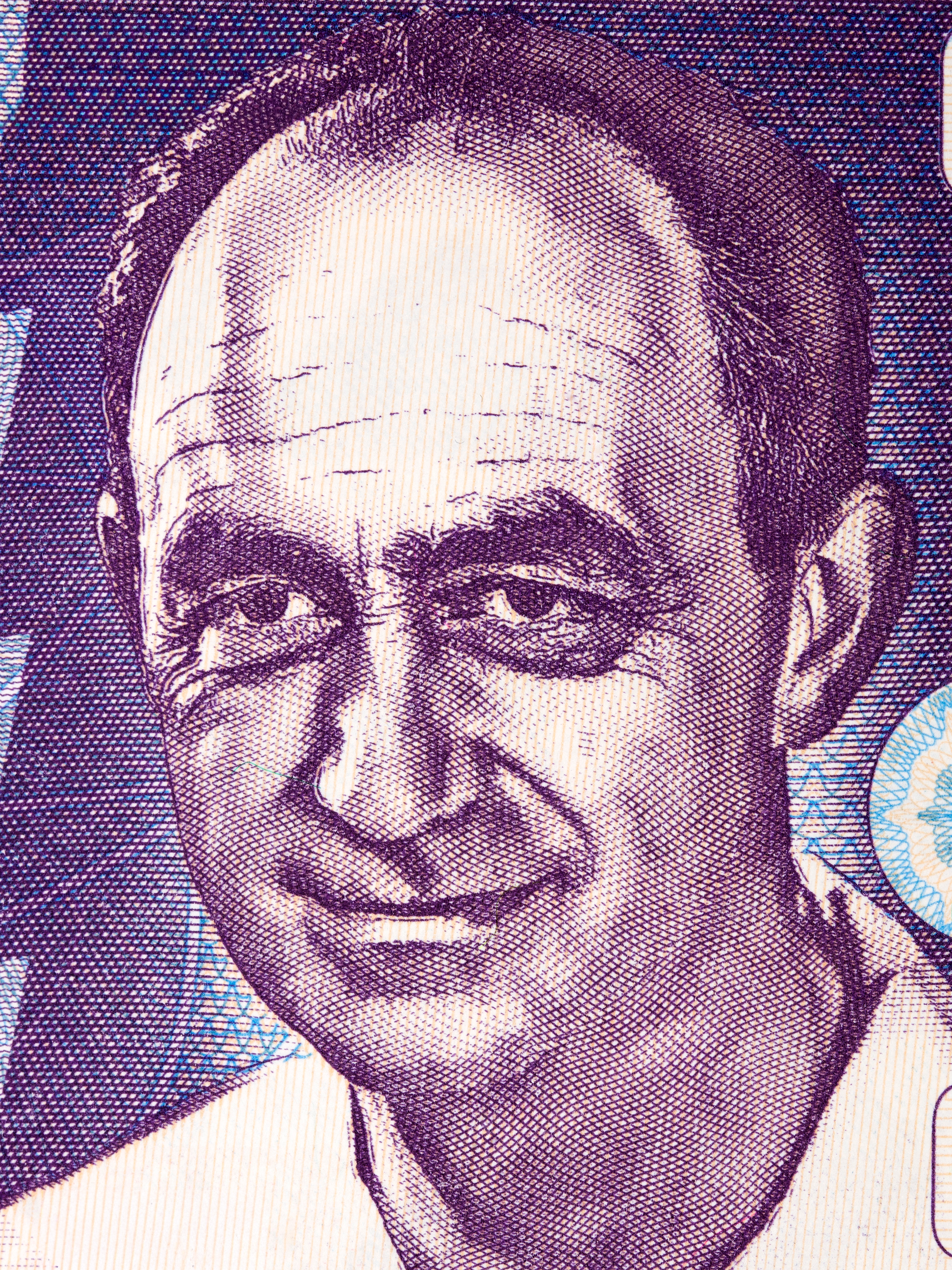
“Whatever nature has in store for mankind, unpleasant as it may be, it is unwise to try to stop knowledge from going forward,” Fermi said of his nuclear research efforts. “Ignorance is never better than knowledge.”
Fermi served as associate director of the laboratory at Los Alamos, the New Mexico site where the atomic bomb was developed during World War II and was a witness to the first test explosion in July 1945, a year after he officially became an American citizen.
At the end of the war, Fermi accepted a professorship at the University of Chicago’s Institute for Nuclear Studies, a post he held until his death from stomach cancer in 1954 at the age of 53.
During his battle with the disease, Fermi offered this outlook on life: “We’re born alone, we live alone, we die alone. Only through our love and friendship can we create the illusion for the moment that we’re not alone.”
*Department of Energy. Office of Public Affairs, Public domain, via Wikimedia Commons